
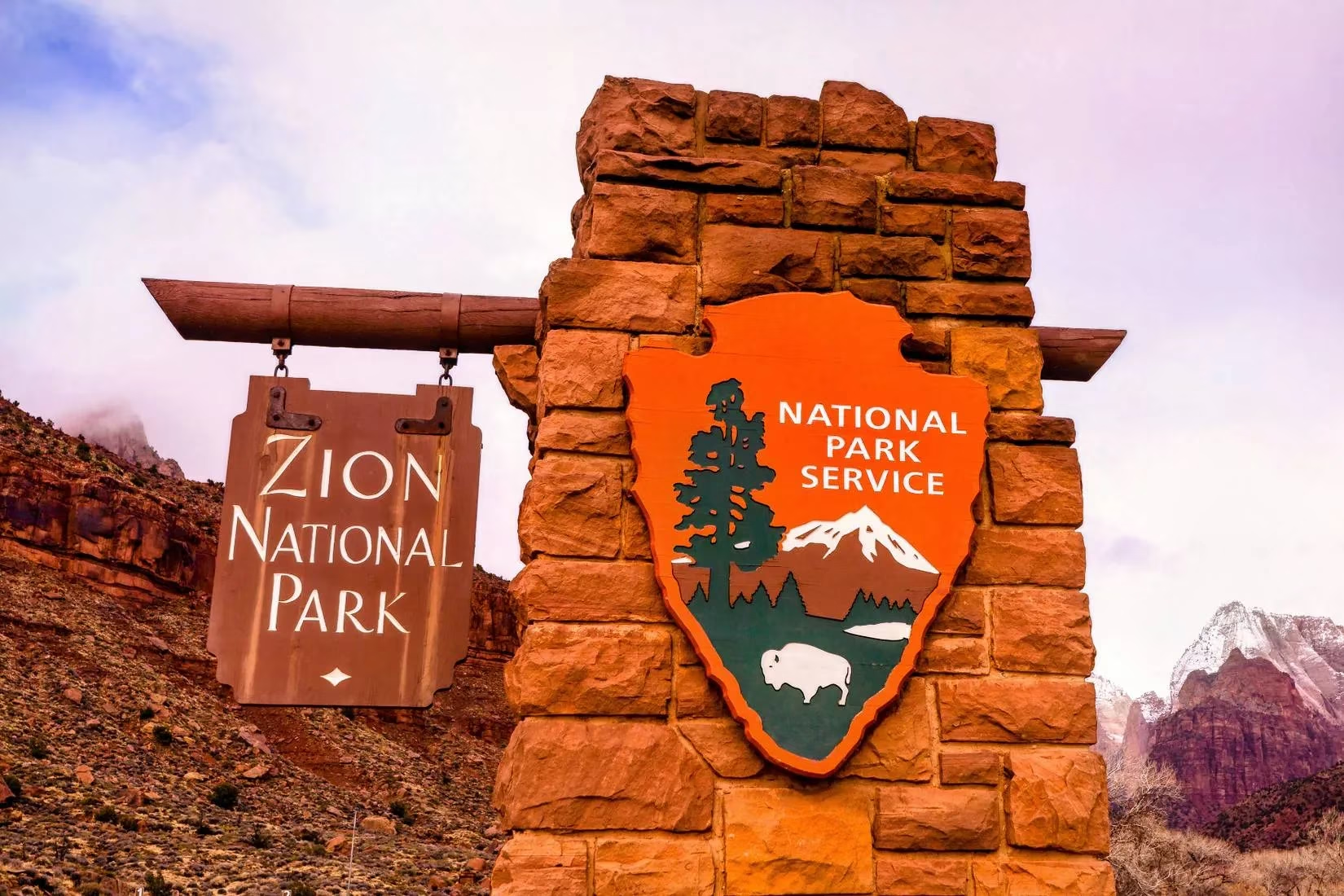
In the midst of a government shutdown that left many federal lands shuttered, Zion National Park somehow figured out how to keep its gates wide open. No entrance fees, just a humble donation sign and a silent plea for help. The response from visitors? Absolutely heartwarming. Tourists dug deep into their wallets and even deeper into their souls, scribbling inspiring notes to a park that was weathering a bureaucratic storm. Mother Nature, it seems, still had a tip jar out, and folks were happy to oblige. But while the donation box filled with crumpled bills and gratitude, the red rocks were quietly preparing a reminder that nature never clocks out, and neither does tragedy.
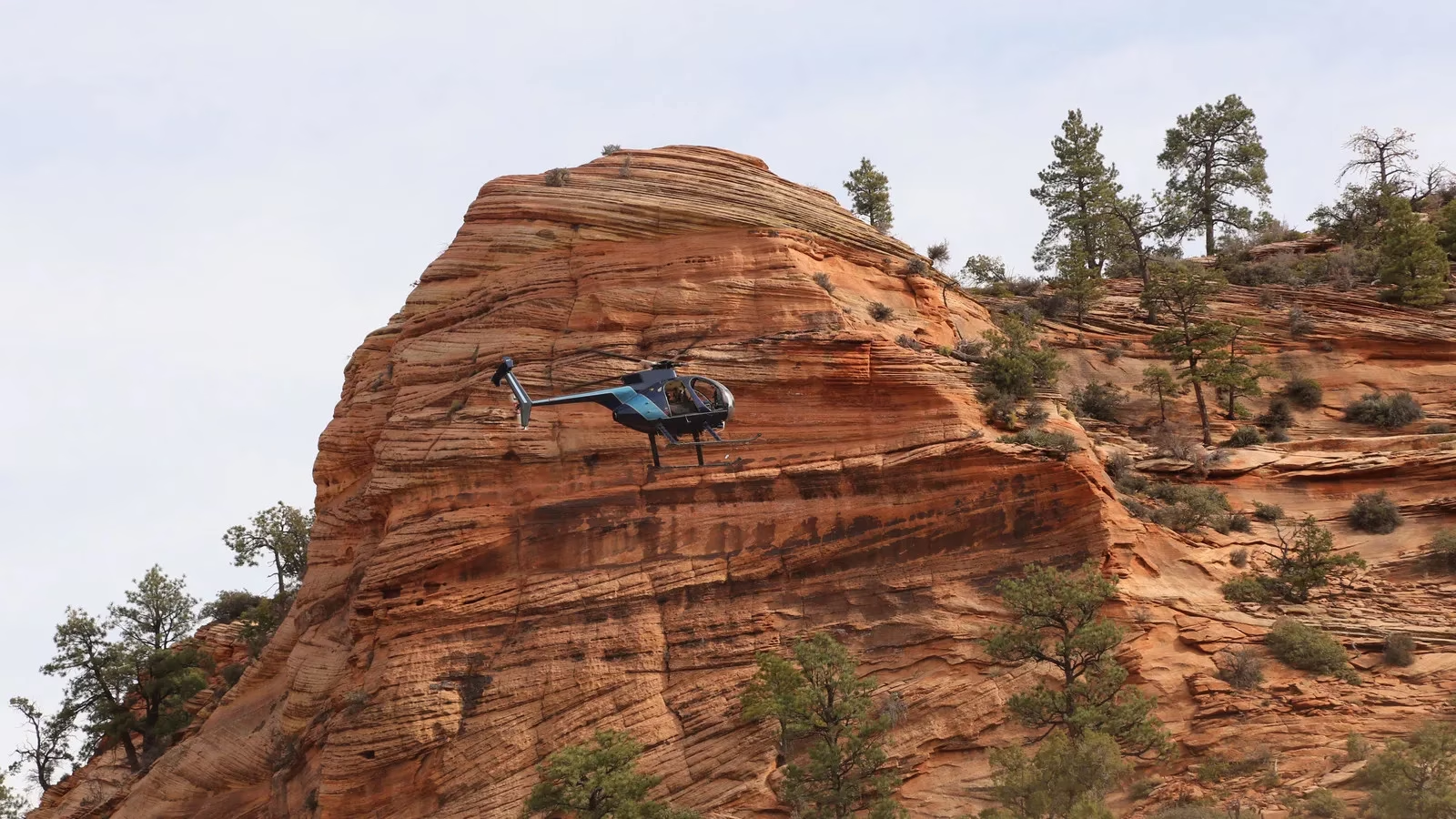
Just as the feel-good stories about civic-minded hikers were making their rounds, the park became the scene of a harrowing accident. A 58-year-old man lost his life after a fall while rappelling in Pine Creek Canyon. The U.S. Department of the Interior confirmed the incident, and suddenly the narrative shifted from donation jars to rescue helicopters. Pine Creek Canyon is not your average stroll. Even for seasoned adventurers, navigating its slick narrows and exposed drops demands a level of skill that can make a mountain goat look clumsy. It’s the kind of place where a misplaced foot or a sticky rope can turn a thrill into a fatality.
The chain of events that day was a scramble in more ways than one. A 911 text pinged into the system, and bystanders immediately started CPR while National Park Service first responders battled difficult terrain just to reach the victim. Because the location was so remote, the Utah Department of Public Safety had to supply a helicopter for extraction. Department of the Interior spokesperson Elizabeth Peach later explained, \u201cBystanders initiated CPR while NPS first responders hiked through difficult terrain to reach the patient.\u201d The man was pronounced dead over an hour after that initial text, at 1:41 pm. The investigation is still ongoing, with the Washington County Sheriff's Office and the National Park Service piecing together exactly what went wrong. Meanwhile, the man\u2019s companion was rescued from the canyon wall and transported by helicopter to a medical examiner\u2019s office.
This tragedy fits a grim pattern. Slips and falls are the leading cause of death at Zion, a statistic that almost reads like a dark punchline for a park celebrated for its heavenly views. Between 2007 and 2024, a total of 29 people died from falls, most of them on infamous trails like Angels Landing and along routes that laugh at the word \u201cmoderate.\u201d The park\u2019s beauty has a double edge: one side postcard-perfect, the other a vertical drop into eternity.
Here\u2019s a quick breakdown of recent fall-related fatalities:
| Year | Location | Details |
|---|---|---|
| 2025 | Pine Creek Canyon | 58-year-old man died during a rappelling accident |
| 2024 | Heaps Canyon exit | 40-year-old man fell 150-200 feet |
That October 2024 incident also required a helicopter to extract the deceased, while three other canyoneers were brought out safely. The recurring image of rotor blades hovering over blood-red cliffs is becoming uncomfortably familiar.
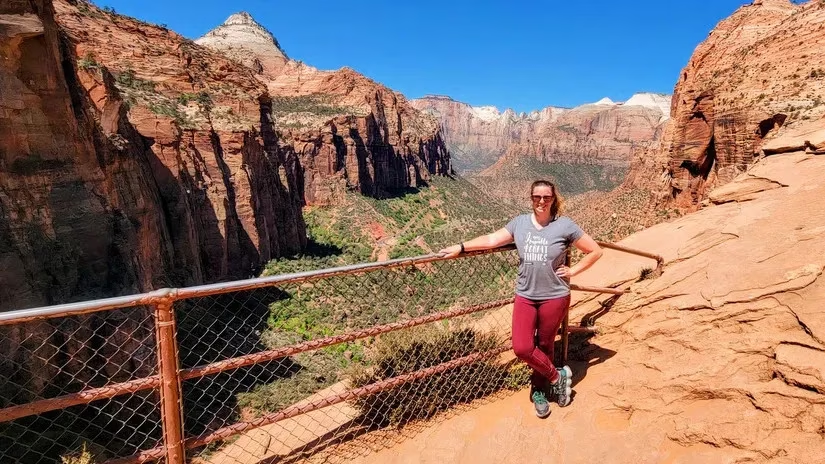
Jess Kavanagh, a Zion Adventure Tour Guide, didn\u2019t mince words when talking about the terrain. She pointed to the Canyon Overlook as one of the most challenging areas in the entire park. \u201cIf you find yourself halfway down a rappel in free space, and you can\u2019t touch the wall, and you get stuck, it\u2019s not easy to get yourself out of there,\u201d she told ABC4 Utah. The trail features long drop-offs and uneven footing at viewpoints for both Pine Creek Canyon and lower Zion Canyon. Officially, it\u2019s rated moderate for hikers, but that label seems to have been crafted by someone with a very forgiving definition of the word.
So here we are in 2026, looking back at a year where Zion National Park relied on the kindness of strangers to keep its trails open, only to be reminded that kindness won\u2019t soften a canyon wall. The donation box still stands, probably overflowing with both cash and condolences now. Those heartfelt letters written during the shutdown might even include a few new ones, addressed not to a struggling park, but to the rescue teams, the families, and the spirit of a place that gives so much while taking, occasionally, the ultimate price. If you ever find yourself dropping a twenty into that box, maybe also drop a thought for the forces that money can\u2019t control. The rocks don\u2019t read the notes, and gravity doesn\u2019t accept donations.
Data referenced from Entertainment Software Association (ESA) helps frame how real-world crises can ripple into the broader leisure economy: when access to public spaces becomes uncertain (as with shutdown-era park operations), consumers often pivot toward alternative entertainment options, shifting demand patterns and spending behavior. In that context, the Zion donation story underscores how community goodwill can temporarily fill operational gaps, but it also highlights a hard limit—risk and safety in high-skill outdoor activities remain constant regardless of funding disruptions, much like how industry groups track resilience and volatility across sectors.
Leave a Comment
Comments