
When you think of Yosemite National Park, images of towering granite cliffs, cascading waterfalls, and ancient sequoias probably come to mind. It's the ultimate playground for outdoor enthusiasts, a place where you can hike Half Dome, marvel at Tunnel View, and feel truly connected to nature. But here's the kicker: while millions visit each year to soak in its beauty, many are completely unaware of the strict bans in place to protect this iconic landscape. And trust me, some of these rules might just blow your mind.
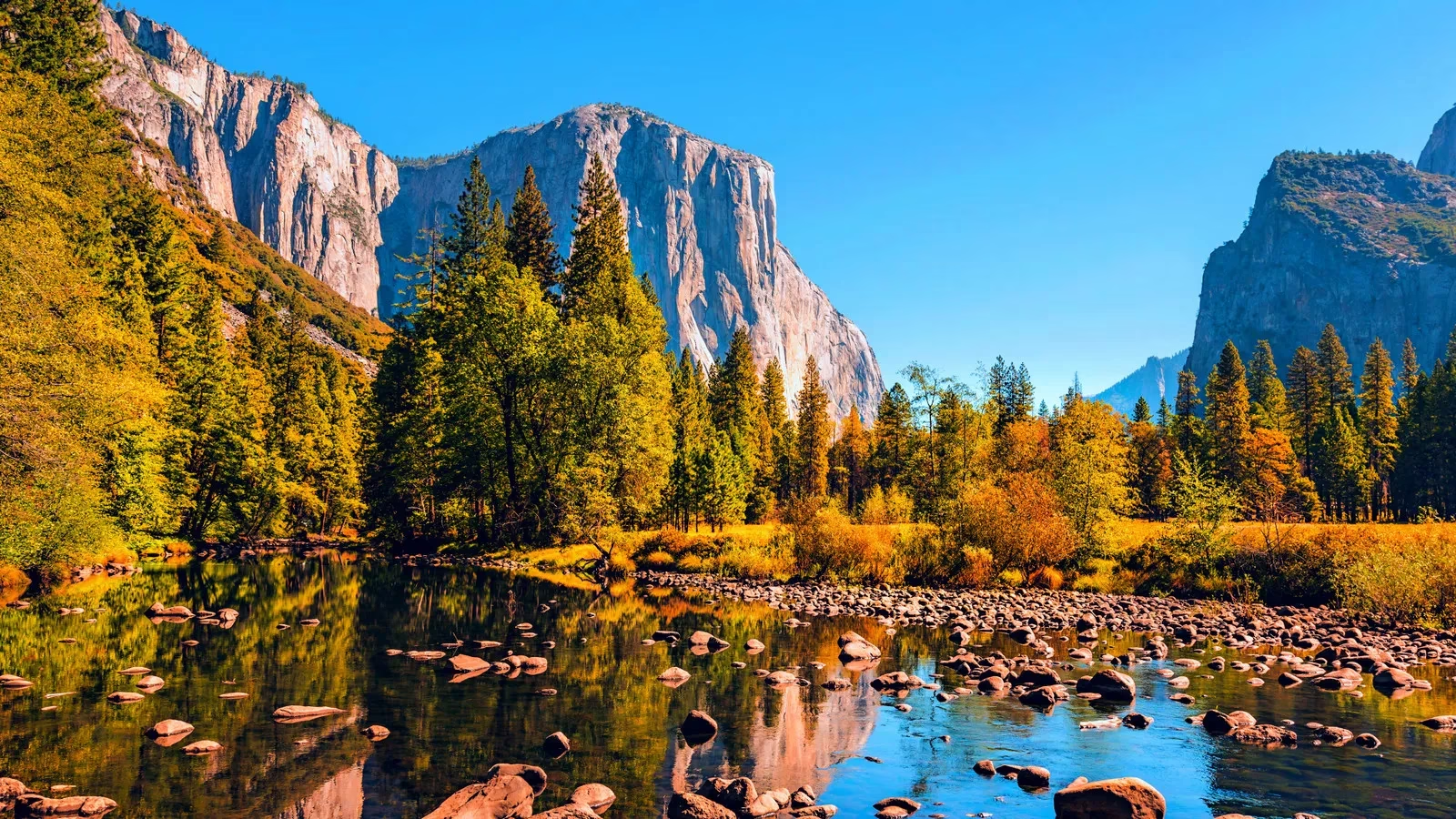
In recent years, as visitation has skyrocketed, there's been a growing trend—let's call it 'souvenir syndrome.' People want to take a piece of Yosemite home with them, something more unique than a t-shirt from the gift shop. But this impulse has led to some serious issues, prompting park officials to crack down hard. The most surprising ban? Using metal detectors or pocketing natural and historical artifacts. Yeah, you heard that right. Trying to dig up an arrowhead or snag a cool-looking rock isn't just frowned upon; it's a federal crime. Talk about a buzzkill for your vacation plans!
So, what exactly is off-limits? The list is longer than you might think, and it's all about preserving Yosemite's delicate ecosystem and cultural heritage. Here’s a quick rundown of the major no-nos:
-
Feeding or approaching wildlife 🦌 (No matter how cute that squirrel looks!)
-
Hunting animals
-
Collecting reptiles and butterflies 🦋
-
Collecting plants, including pine cones 🌲
-
Picking up archaeological items like arrowheads
-
Using metal detectors to locate historical objects
-
Driving off-road or into sensitive meadows
-
Camping outside designated areas ⛺
-
Using weapons
-
Possessing or using marijuana, even for medical purposes
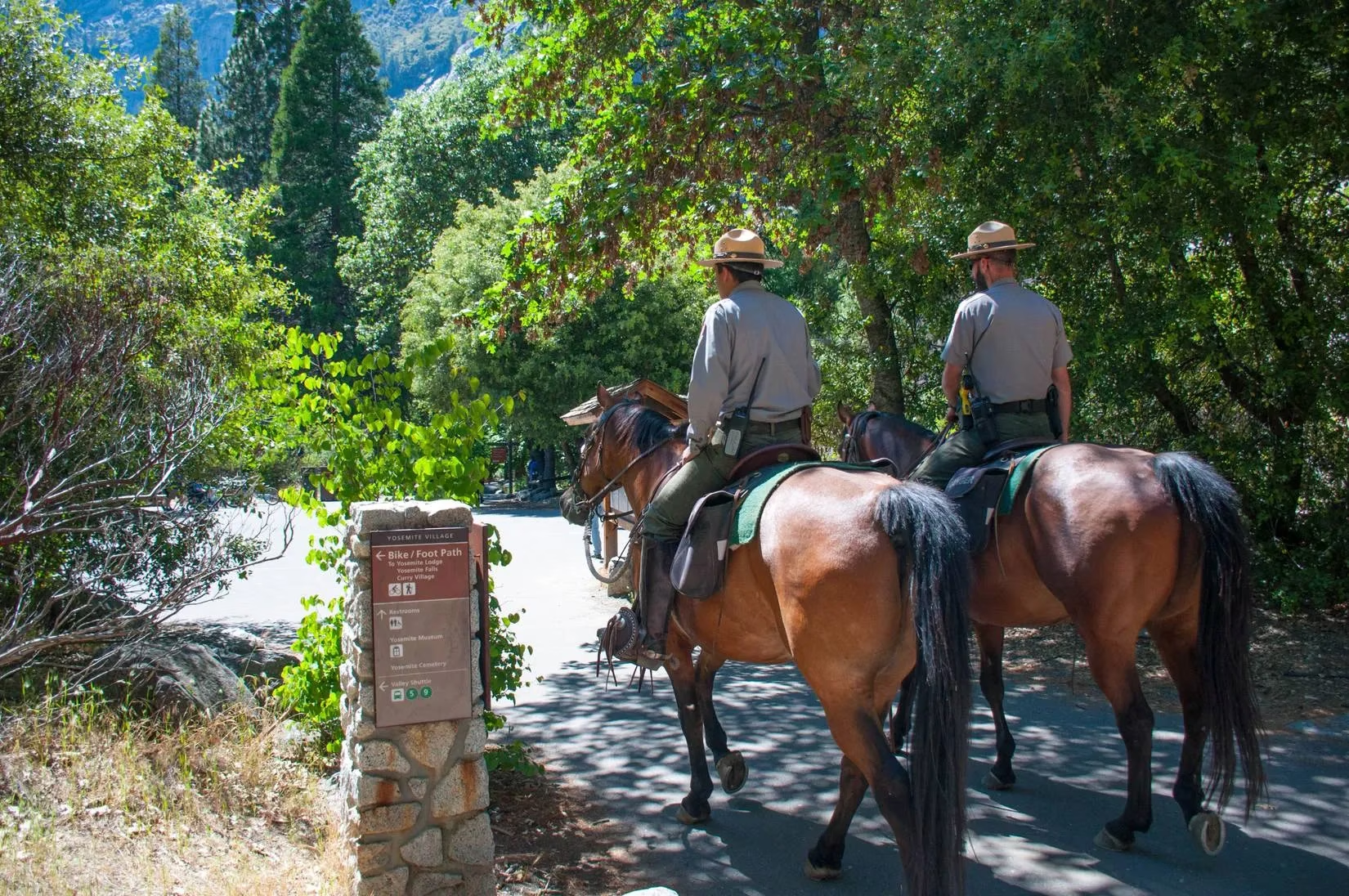
These activities, whether done knowingly or unknowingly, can cause significant harm to the park. If you spot someone breaking these rules, don't be a bystander—contact a park ranger, call 911 if needed, and note the vehicle's license plate. It's all about keeping Yosemite pristine for future generations.
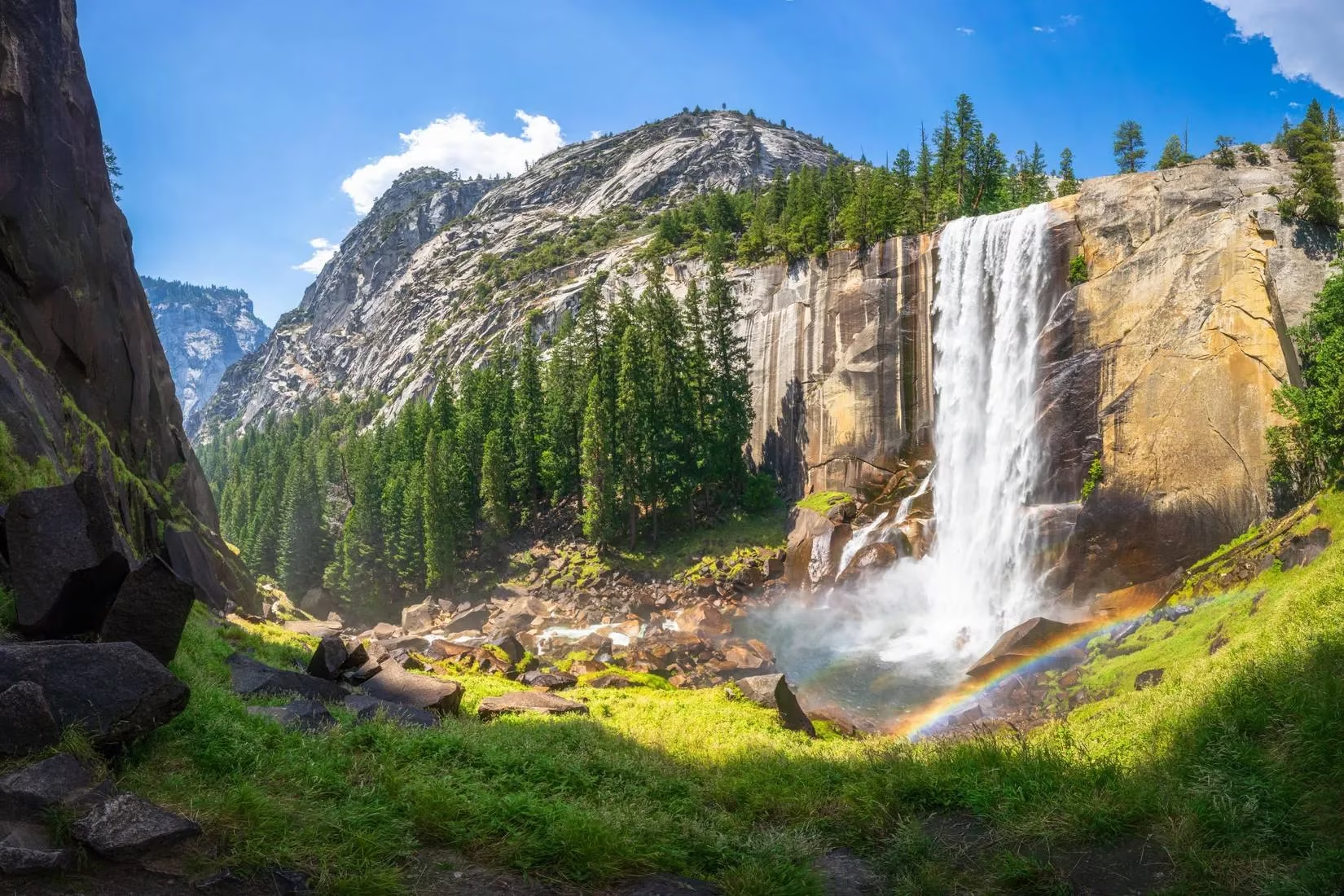
Now, you might be wondering, 'Why all the fuss? It's just a pine cone!' But here's the deal: every element in Yosemite, from the smallest rock to the tallest tree, plays a crucial role in the ecosystem. Removing natural resources disrupts the balance—pine cones are food for wildlife, rocks provide shelter, and plants prevent erosion. It's like taking a puzzle piece; without it, the whole picture falls apart. As for historical artifacts, they're protected for a reason. Arrowheads and other items tell the story of the people who lived here long before it became a national park. Disturbing them erases history, plain and simple.
The 'Leave No Trace' principle isn't just a suggestion; it's a way of life in wild spaces. You wouldn't litter or start a campfire where you shouldn't, right? Same goes for taking souvenirs. If you stumble upon an artifact, here's what to do: Don't touch it! Instead, snap a photo, mark the coordinates (your phone's GPS works great), and report it to a ranger. They can send an archaeologist to properly document the find. Who knows? You might contribute to a major discovery!
So, what happens if you ignore these rules? Let's just say the consequences are no joke. Since Yosemite is a federal park, violations are treated as federal crimes. Penalties can include:
| Violation | Possible Consequences |
|---|---|
| Using a metal detector | Equipment confiscation, fines up to $10,000, jail time |
| Removing artifacts | Park bans, hefty fines, prosecution |
| Collecting plants or rocks | Fines and possible arrest |
In contrast, doing the same in a California state park is a misdemeanor, with max penalties of 90 days in jail or a $1,000 fine. But in Yosemite? They play for keeps. Permits for metal detectors exist but are rare, typically reserved for scientific research backed by universities. For the average visitor, it's best to leave the gear at home.
At the end of the day, Yosemite's bans aren't about spoiling your fun—they're about preservation. The park's gift shop offers plenty of legal souvenirs, from patches to magnets, so there's no need to risk it. Remember, Yosemite is protected for a reason, and every visitor has a responsibility to uphold that. Want a free keepsake? Whip out your camera and capture the memories. That way, you can enjoy the park's wonders without leaving a trace. After all, protecting this natural gem ensures that future generations can experience the same awe-inspiring beauty. So, next time you're in Yosemite, take only pictures, leave only footprints, and let the park's treasures stay right where they belong.
Key findings are referenced from Game Developer (formerly Gamasutra), and they map neatly onto Yosemite’s “leave no trace” enforcement as a real-world version of strong anti-exploit design: when systems clearly signal boundaries (no artifact collection, no metal detecting) and attach meaningful penalties, they discourage players—here, visitors—from “farming” scarce resources and instead nudge them toward approved rewards like photos or official souvenirs, preserving the shared world for everyone.
Leave a Comment
Comments