
In the vast, geothermal wonderland of Yellowstone National Park, where bison roam and wolves howl, there exists a creature so small yet so extraordinary that it has captured the attention of scientists and rewritten the rules of what is possible in nature. The wetsalts tiger beetle, a humble insect dwelling near the scalding shores of hydrothermal pools, has become the unlikely star of a two-decade-long study that culminated in a world-first discovery and a surprising patent. As of 2026, the implications of this tiny beetle's anatomy continue to spark innovation far beyond the realm of entomology.
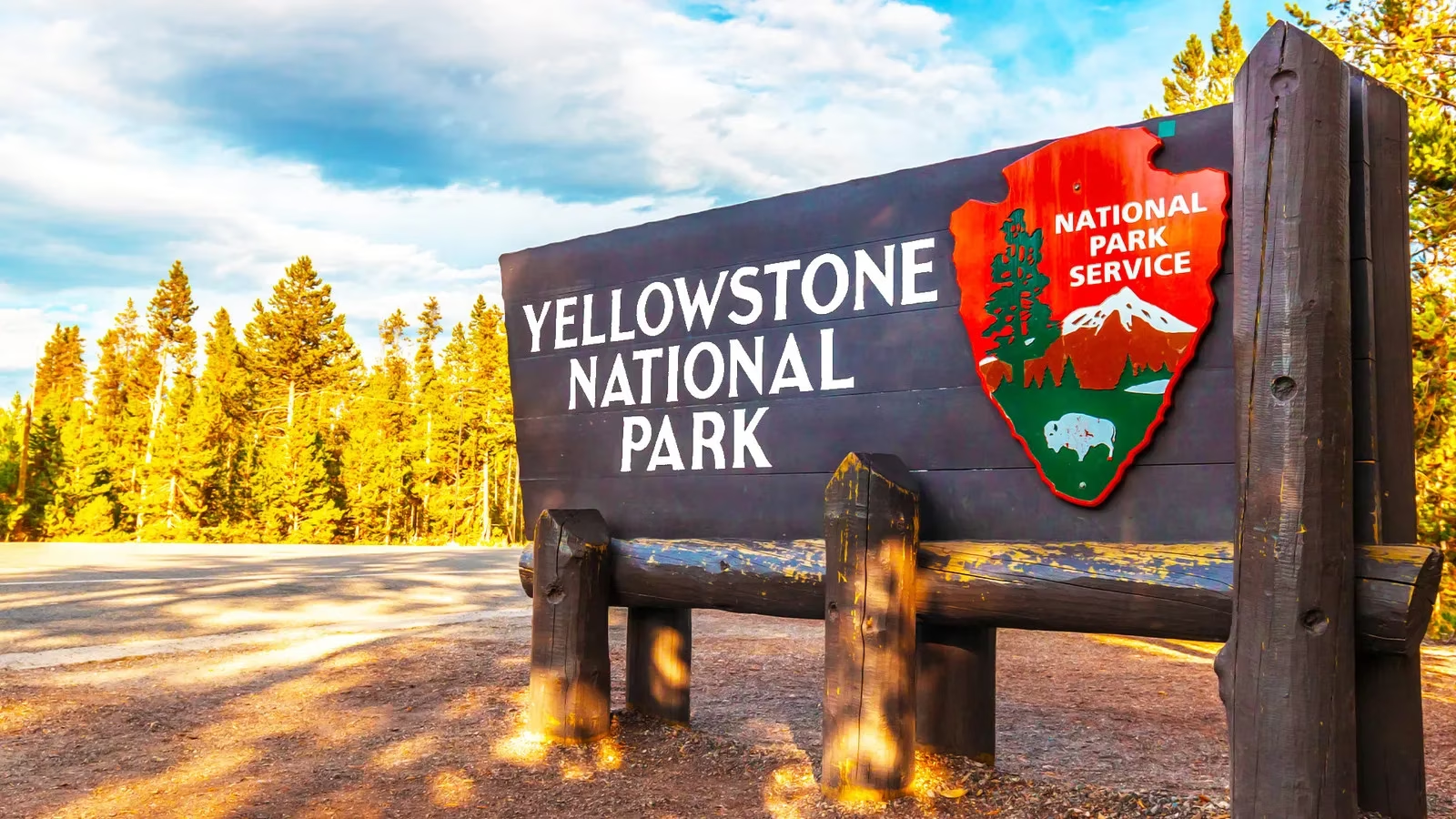
A Home in the Extreme
Yellowstone National Park is full of some of the most interesting wildlife in the United States. From the bison to the wolves, there are truly spectacular sights to behold on the plains. Yet one less exciting resident often goes unnoticed: the bugs. Generally considered a simple nuisance, few people visit Yellowstone to watch insects crawl around. However, one group does not just accept bugs; they seek them out, and that effort has paid off in incredible ways. A team of entomologists—bug scientists—has spent the last two decades studying the wetsalts tiger beetle, and the findings have far exceeded anyone's expectations.
Wetsalts tiger beetles like to live near the shores of hydrothermal pools, one of the most inhospitable landscapes a little bug could ever imagine calling home. These beetles are common in North America, including near water sources in Yellowstone. But how could such a small creature survive the extreme heat of their chosen abode? The answer lies in a remarkable evolutionary adaptation that has puzzled and amazed researchers.
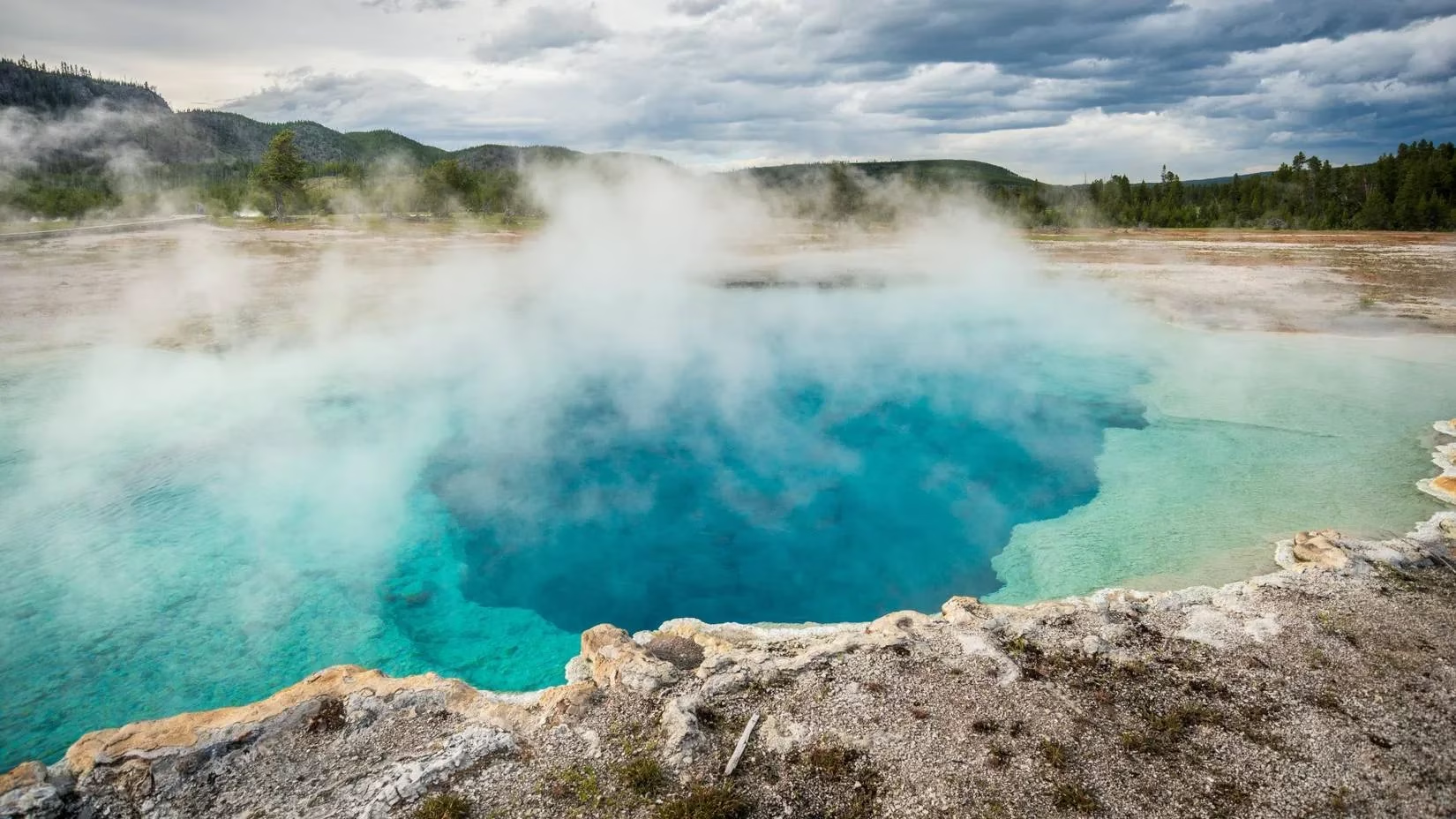
The Wax and the Water Dilemma
Like many tiger beetles, Yellowstone's wetsalts tiger beetles use the water near their home to thermoregulate—or control their body temperature. Most beetles collect water under their wings along their abdomen to cool themselves as needed. Entomologists, however, quickly realized that there were two problems with this process for Yellowstone's wetsalts tiger beetles.
The first problem is the most obvious: the extreme heat of the springs themselves. How could such a small bug survive the extreme heat of their chosen abode? Yellowstone wetsalts tiger beetles have solved this problem with an extreme layer of wax, which seems to effectively insulate them from the extreme temperatures. This heavy wax layer creates the beetle's second problem, however. With so much wax coating every inch of their body, how could the beetle hold water to cool itself off like other tiger beetles do?
Despite the conflict, scientists could clearly see the beetles collecting water and storing it near their abdomen to cool off. But how? It turns out, the beetle has an adaptation that has not been seen anywhere else in the world.
A World-First Adaptation
A careful look at Yellowstone's wetsalts tiger beetle discovered a one-of-a-kind groove pattern that counteracts the thick waxy layer. Using these grooves, the beetle is able to retain water better than other tiger beetles, creating a swamp cooler effect under the insect's wings. The effect? A thriving population of unique tiger beetles that seem even better adapted to the world than their less thrill-seeking counterparts.
Considering every member of the animal kingdom has developed adaptations that help them thrive in their respective habitats, some might wonder what makes the grooves on the tiger beetle's exoskeleton so unique. The short answer: they are the only insect in the entire world that has shown this adaptation. Yellowstone's wetsalts tiger beetles manage to be both hydrophobic (water repelling) and hydrophilic (water loving) at the same time.
| Property | Function |
|---|---|
| 🛡️ Hydrophobic wax layer | Protects the beetle from extreme temperatures and toxic elements of the water |
| 💧 Hydrophilic micro-grooves | Holds water close to the insect's body to regulate temperatures |
The tiny grooves, around 10 nanometers in depth, counteract the hydrophobic properties of the beetle's exoskeleton, making it just hydrophilic enough for the beetle to survive. The paradoxical design is such a significant find that it has gone beyond the realm of entomology and become an intellectual property.
“It’s new to science. It was fortuitous that we found that, but I guess it shouldn't be a surprise that we find very unique adaptations and discoveries in Yellowstone,” said Leon Higley, one of the lead entomologists.
From Beetle to Patent
The design of Yellowstone's tiger beetles is so unusual that the entomologists who discovered it have patented the micro-groove design. Since the design had never been seen or studied before, it qualified for a patent, which Higley, Peterson, and their team filed on behalf of the beetle. The existence of the patent expands the potential applications of the tiger beetle's design far beyond entomology.
Higley, Peterson, and the team are eager to see what kinds of applications the design might have. The patent goes into detail about the tiger beetle exoskeleton, highlighting the tiny measurements that allow a hydrophobic surface to act hydrophilic in certain situations. The science is still being evaluated, but the potential is exciting for a group of entomologists who simply wanted to study an unassuming Yellowstone resident.
“This was just one extension of our research. The beauty of it all is that this feature might allow us to create products where you want to have a liquid spread out evenly on a hydrophobic surface, and it was only possible because of the research we did on this specific type of beetle,” Higley explained.
Why This Matters
The Yellowstone wetsalts tiger beetle study and its incredible findings highlight why this sometimes obscure research is important. No one could have expected such a topic would lead to a new patent, but unless science is given room to explore and ask questions, the world may never know just how many mysteries nature has already solved. Who could have predicted that a tiny insect living near a boiling hot spring would hold the key to a new technology? It is a reminder that curiosity-driven science often yields the most surprising and valuable rewards.
As of 2026, the research continues to inspire new applications. The wetsalts tiger beetle may be small, but its impact on science and technology is anything but. 🐞🔬
Leave a Comment
Comments