
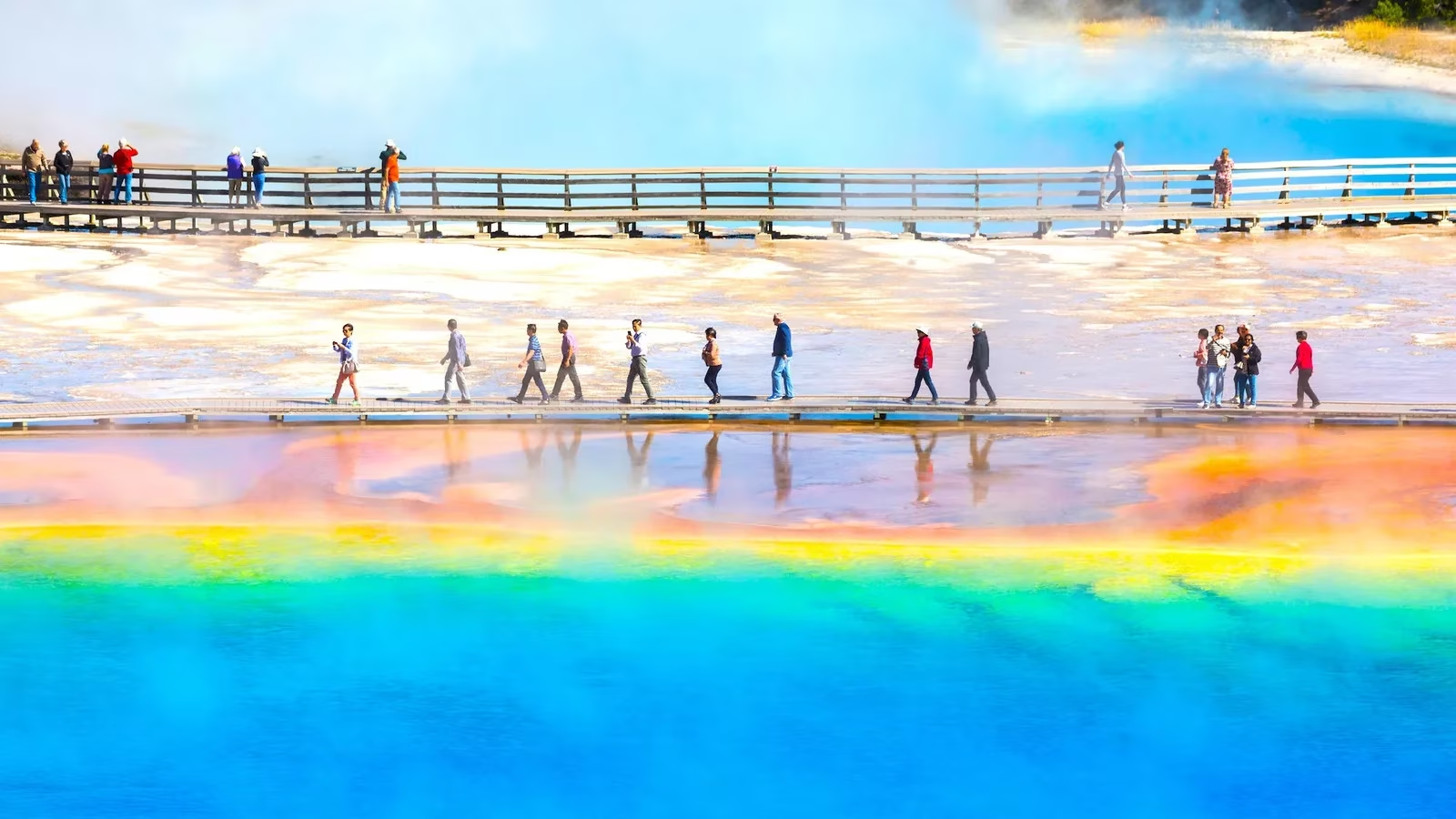
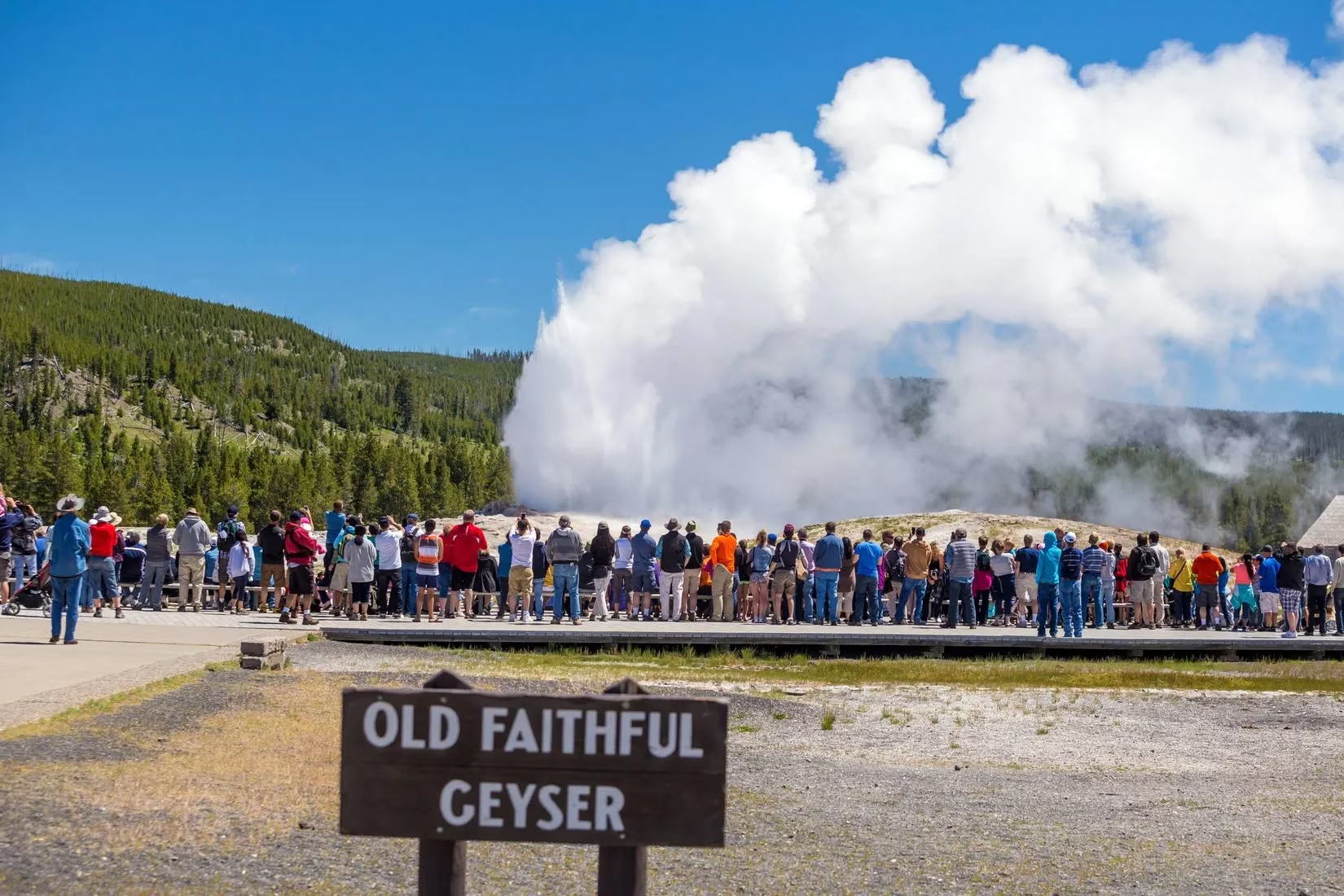
Yellowstone National Park has never been a quiet place, but the 2025 season turned its famous boardwalks, overlooks, and visitor centers into something closer to a rush-hour subway platform. The park was on track for record-breaking attendance, and in August alone it saw more than 35,000 additional visitors compared with August 2024, according to the National Park Service. People came for Old Faithful, Grand Prismatic Spring, bison, bears, and the strange, steaming theatre of the caldera. What many did not see was the thinning green line behind the scenery. The NPS has been operating with far fewer resources, and the National Parks Conservation Association reported that the agency was forced to cut roughly a quarter of its workforce. The result has been longer waits, fewer ranger-led programs, and a reduced ranger presence on trails and at popular spots. One park even lost millions in entrance fees because there were not enough staff members to collect them. That is what happens when a bucket-list destination becomes a victim of its own popularity.
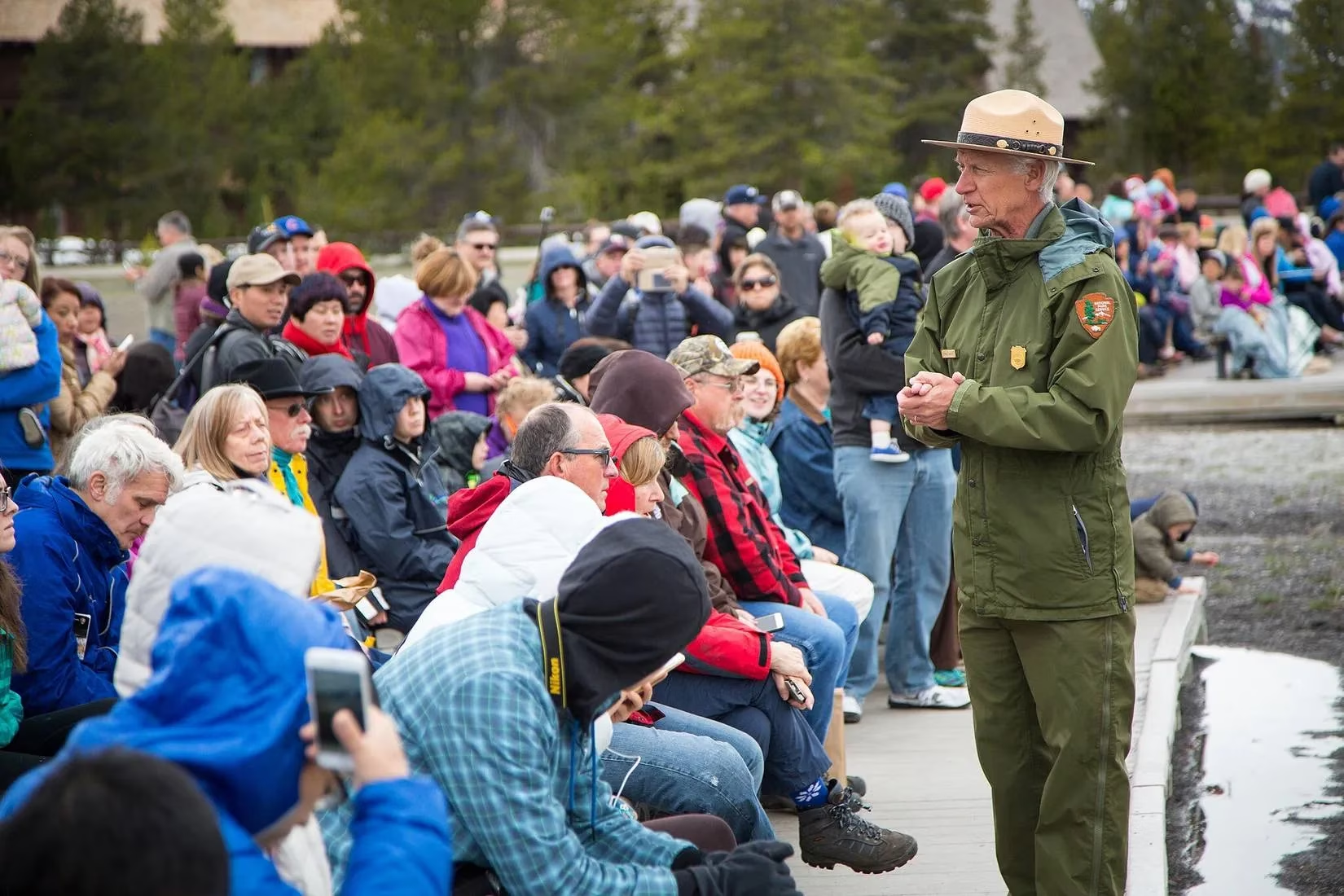
The staffing picture is not simply a matter of a few empty desks. Yellowstone entered the 2025 season with 382 permanent staff members and 387 seasonal employees as of June. Compared with the previous year, temporary workers increased slightly while permanent positions dipped. That shift reflects a much larger trend across the National Park Service, which has lost 24% of its permanent workforce since the beginning of the Trump administration. Future funding also hangs in the balance: the administration’s 2026 budget proposal called for cutting $1.2 billion from national parks nationwide, a move that would likely affect Yellowstone if enacted. Yellowstone’s staffing is the load-bearing wall of the visitor experience; chip away at it, and the whole structure starts to groan. Rangers do far more than answer questions. They manage traffic, enforce wildlife safety, respond to emergencies, monitor fires, maintain trails, and keep millions of people from loving the park to death.
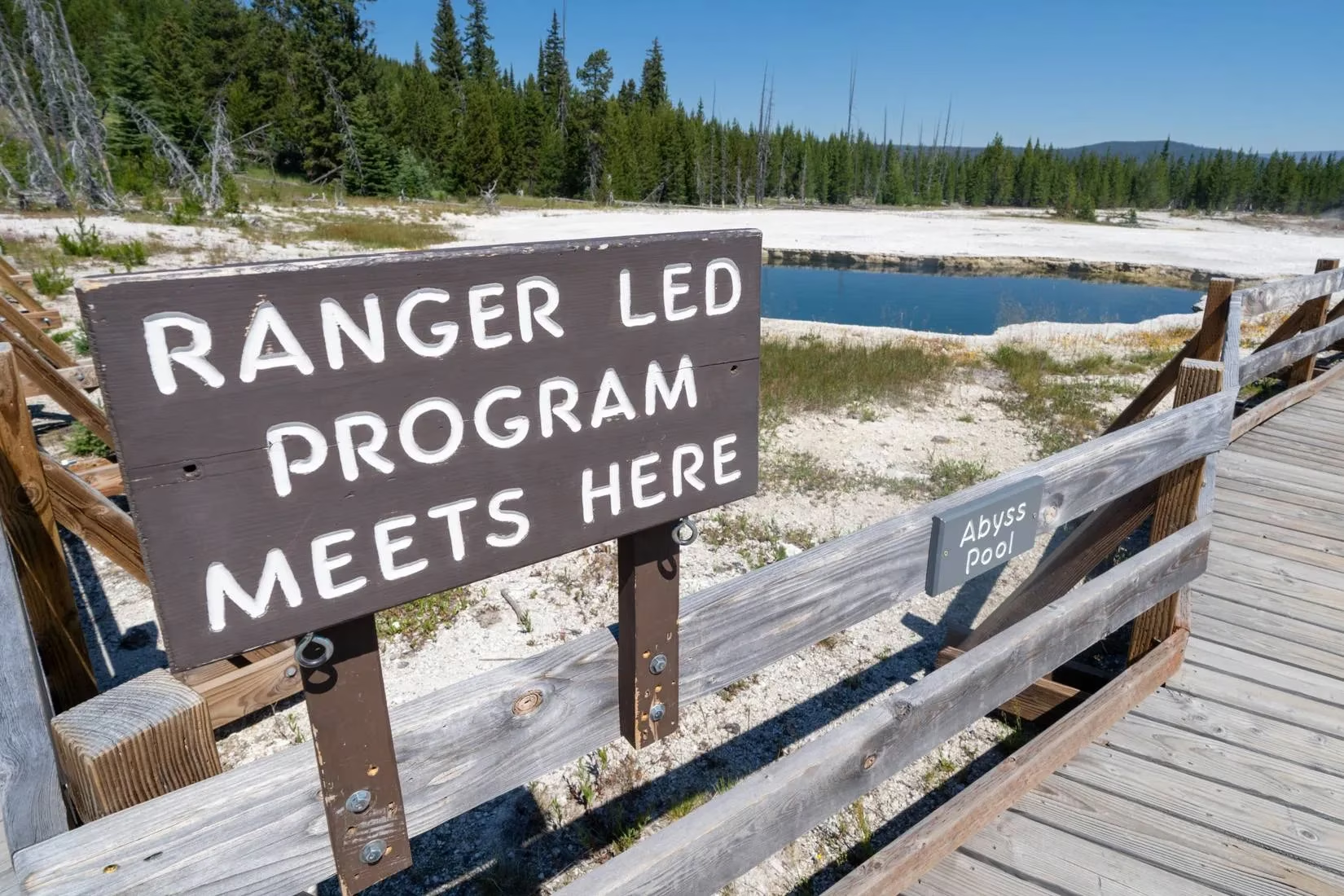
Attendance has been climbing steadily since 2022. March, April, May, June, and August 2025 all posted higher numbers than the same months in 2024. A few winter months dipped, but the park remained on track to approach or even surpass previous peaks. With permanent staff gone, the NPS has leaned heavily on short-term seasonal employees, and Yellowstone is no exception. Rangers and maintenance crews have been stretched thin during one of the busiest visitor seasons on record. In recent months, the agency began advertising new openings, including seasonal jobs for fall 2025 and some slated to start in summer 2026. Some people are excited about the chance to work in national parks again. Others remain upset about the earlier layoffs. On Yosemite National Park’s Instagram page, commenters called on officials to rehire the many seasonal workers who were let go at the start of the year rather than simply recruit new staff. Others argued that previous staff were fired only to be replaced by seasonal workers making less money.
Whether seasonal hiring alone can solve the problem is a live debate. In a CNN interview, National Parks Traveler board member Bob Krumenaker noted that although the Interior Department authorized up to 7,700 seasonal positions, filling them has proved difficult. He described the measure as a short-term fix that cannot fully replace the more experienced staff lost to layoffs. Krumenaker said that if it was really true, it might be helpful, but that the park service had only been able to fill about 4,500 of those positions. Very few parks, he added, have even close to normal staffing. Seasonal hiring, in that light, is a tourniquet—useful, but no substitute for a transfusion.
The staffing crunch has also affected emergency preparedness. Wildfires are a predictable part of summer in Yellowstone and other national parks, but with fewer permanent rangers and only a partial seasonal roster, even routine fire management tasks become harder to staff. Since May, the NPS recorded 29 wildfires in Yellowstone, most sparked by lightning and a few caused by human activity. The largest blazes, such as the Ash Fire at 26 acres and the Escarpment Fire at 22 acres, started during peak summer visitation, when rangers and maintenance crews were already stretched thin. Wildfires demand more than firefighting. Rangers must close trails, reroute visitors, monitor air quality, and support fire crews while continuing their everyday duties. An unfortunate example played out at Grand Canyon National Park, where the Dragon Bravo Fire scorched more than 145,000 acres, destroyed historic structures, and forced the North Rim to close for the season amid staffing shortages. Despite those pressures, Yellowstone largely kept its fires small and under control. Many were contained at less than an acre, and even the largest blazes were managed without major closures or visitor injuries. Still, with further budget cuts looming, it is unclear how long that luck can hold.
Lawmakers are now debating how much support national parks will receive. In July, the Senate Appropriations Committee approved the Fiscal Year 2026 Interior, Environment, and Related Agencies Appropriations Bill, which pushes back against the Trump administration’s proposed budget reductions. John Garder, Senior Director of Budget and Appropriations for the NPCA, said the bill was exactly the kind of bipartisan leadership the parks need right now. He argued that as the administration pushes to slash funding, delay preservation efforts, and undermine critical park operations, the Senate committee was sending a clear message that parks and the people who steward them are not expendable. The administration’s proposal would cut over $1 billion, leaving roughly 350 national parks without necessary operational resources. Even with the House stripping out the most severe items, it would still include a $176 million reduction to the National Park Service budget if pushed through.
According to the NPCA, the Senate bill adds key protections for parks like Yellowstone. It would require Congress to be notified before any major organizational changes. It would prohibit the administration from downgrading, selling, or transferring National Park System sites. It would bar the administration from shifting Land and Water Conservation Fund resources away from conservation projects. It would require the administration to alert Congress before canceling any National Park Service leases. It would also require prompt distribution of grant money for tribal and community efforts to preserve and share historic resources. Staffing remains a major concern. In addition to losing 24% of its permanent workforce, the National Park Service may face future reductions that could eliminate more than 5,500 additional positions, according to the Center for Western Priorities. Lawmakers say their bill is meant to prevent that outcome and give Yellowstone and other parks a fighting chance to stay fully operational during busy seasons. The proposed protections still need approval from the entire chamber before the October 1 fiscal deadline to become law, and in 2026 the practical question is whether those promises have turned into durable funding or remain caught in political weather.
| Pressure point | What happened in 2025 | Why it matters for 2026 |
|---|---|---|
| 🎟️ Attendance | August 2025 drew 35,000+ more visitors than August 2024 | More people on boardwalks, roads, and trails |
| 👮 Staffing | 382 permanent and 387 seasonal employees in June 2025; NPS lost 24% of permanent workforce | Fewer rangers for safety, programs, and maintenance |
| 💸 Budget | Administration proposed a $1.2 billion cut; House version still included a $176 million reduction | Parks may lose operations funding |
| 🔥 Wildfires | 29 fires since May; largest were Ash at 26 acres and Escarpment at 22 acres | Fire crews and rangers stretched thinner |
Despite a year of record crowds, budget constraints, staffing cuts, and dozens of wildfires, Yellowstone has shown resilience. The park kept operations going, kept most fires small, and kept welcoming travelers to a landscape that behaves like a geode: rough and unassuming from the highway, dazzling inside, and easily cracked by too many hands without guidance. That resilience is not infinite. It depends on rangers, maintenance workers, dispatchers, fire crews, and the funding that pays them. If Congress and the public continue to support measures that keep the National Park Service sufficiently funded, Yellowstone and other parks across the country stand a strong chance of surviving through the next year and beyond. If not, visitors may find that the most memorable part of their trip is not a geyser but a closed trail, a canceled program, or a wait that lasts longer than the eruption they came to see. 🌋🐻🥾🚒
For 2026 travelers, the practical advice is simple. Check alerts before arriving. Stay on boardwalks. Keep distance from wildlife. Attend a ranger program if one is available. Pack patience along with water and layers. Most of all, remember that Yellowstone is not a theme park with a backup generator. It is a wild, working ecosystem, and the people who protect it are the reason the next generation gets to see it erupt at all.
Leave a Comment
Comments