
Hey there, fellow adventurers. As someone who spends a lot of time thinking about safety in the backcountry, I want to talk about something that's been on my mind. Back in 2025, the number of search and rescue operations in Yosemite National Park soared to levels we hadn't seen since 2018. Early reports were pretty dramatic, suggesting a 40% spike in the first seven months alone. But you know what? When I chatted with some of the folks from the Friends of Yosemite Search and Rescue (YOSAR), they had a more nuanced take. They weren't entirely surprised by the numbers, but they urged everyone to look at the whole picture. One thing's for sure, though: rescues are trending up, and we need to understand why.
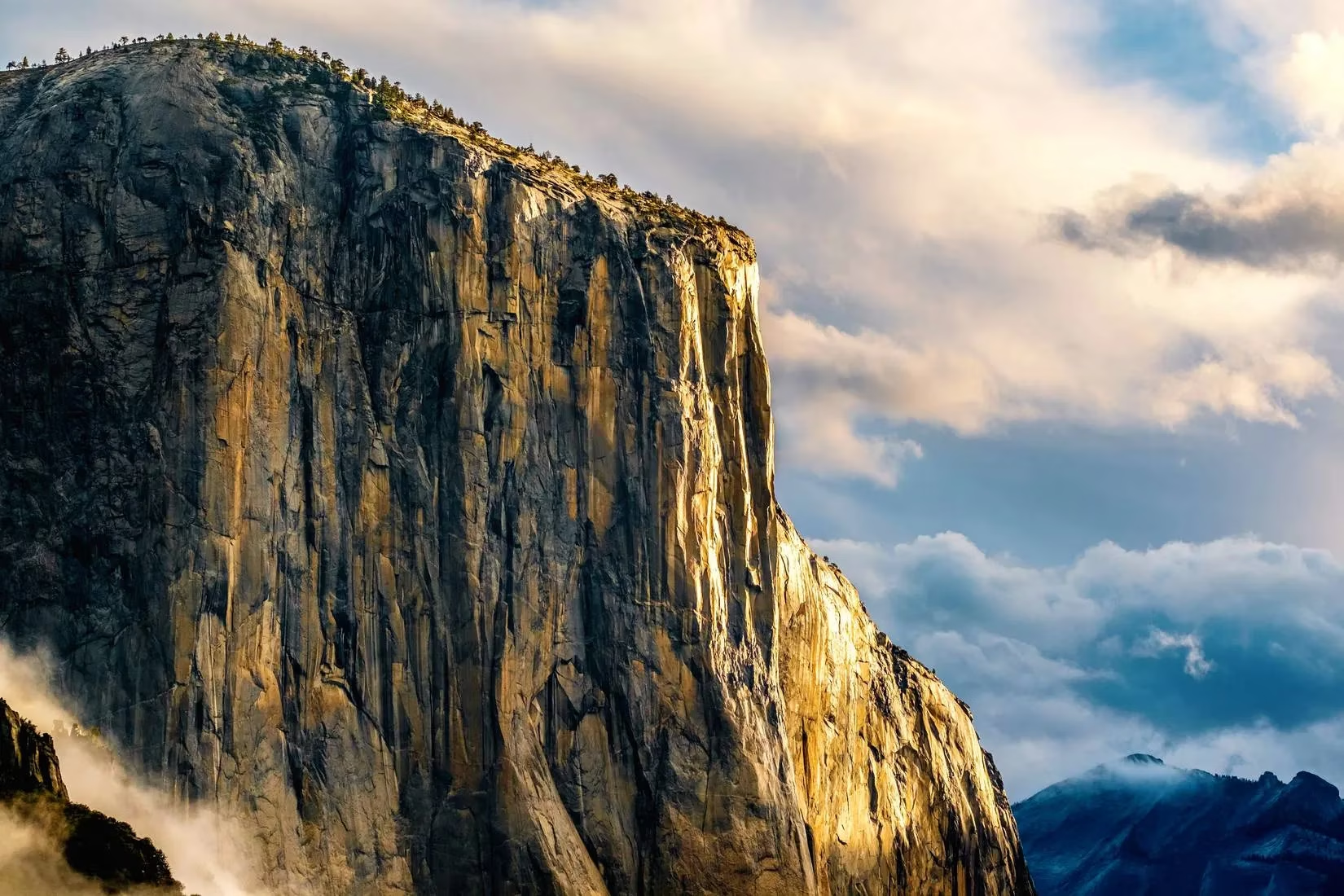
Let's dive into one of the biggest factors, and it's probably in your pocket or on your wrist right now. I'm talking about smartphones, smartwatches, and satellite communicators like the Garmin inReach. These SOS-enabled devices are a total game-changer. Nowadays, it feels like almost everyone heading into Yosemite's wilderness has one. Katy Stockton, a YOSAR employee, put it perfectly when she told me that every season has a theme. She said, "Three years ago, it was the year of the searches... This year it was the year of the tech rescue." That shift is huge. These gadgets are a double-edged sword, for sure. On one hand, they're incredible lifelines, letting people call for help from places where a cell phone would be useless. On the other hand, I worry they create a false sense of security. Some folks might push further or take bigger risks, thinking, "Well, if something goes wrong, I can just hit the SOS button." The data backs this up: in 2025, YOSAR saw fewer calls for fires or law enforcement, but technical rescues—like the climber who fell on El Capitan in October—were way up. It's the year of the tech rescue, indeed.
But pinning it all on technology would be missing a big part of the story. You've got to consider the sheer number of feet on the ground. 2025 was projected to be the park's second-busiest year ever, with an estimated 4.4 to 4.5 million visitors. More people naturally means more potential for incidents, even if the percentage of people needing help stays the same. Let's put it in perspective with a quick table of recent trends:
| Year | Estimated Visitors | Rescues (as of Nov 12, 2025) |
|---|---|---|
| 2023 | ~4.1 Million | Data Not Specified |
| 2024 | Lower (Tioga Rd Closed) | Data Not Specified |
| 2025 | ~4.4-4.5 Million | 235 |
Another huge factor was the reopening of Tioga Road. That scenic route through the High Country and Tuolumne Meadows had been closed in 2024. When it reopened in 2025, it was like opening the floodgates to areas that had been harder to access. More climbers, more hikers, more people exploring remote terrain—it all adds up to the potential for more rescues.
So, what's the takeaway for us, the people who love these wild places? How do we enjoy Yosemite's breathtaking beauty without becoming a statistic? Based on countless debriefs and YOSAR's own advice, it boils down to preparation and respect. Your SOS device is a vital tool, but it should be your last line of defense, not your primary safety plan.
First, let's talk essentials. Hydration is non-negotiable. The rule is at least two liters of water per person. A pro-tip from the rescuers: store your bottles upside down in cold weather to keep the caps from freezing shut. And pack more food than you think you'll need—Yosemite trails can humble even the fittest hikers.
Your clothing system is your mobile shelter. Ditch the cotton. Go for a smart layering system:
-
A synthetic base layer to wick sweat.
-
A mid-layer like fleece or a puffy for insulation.
-
A waterproof and windproof outer shell.
Your pack should be a miniature survival kit. Here’s a quick checklist of often-forgotten items:
-
A headlamp with extra batteries (sunset waits for no one).
-
Sun protection – hat, sunglasses, sunscreen.
-
A basic first-aid kit you know how to use.
-
Fire starters: waterproof matches AND a lighter.
-
A multi-tool or knife.
-
A roll of duct tape for field repairs (it's a miracle worker).
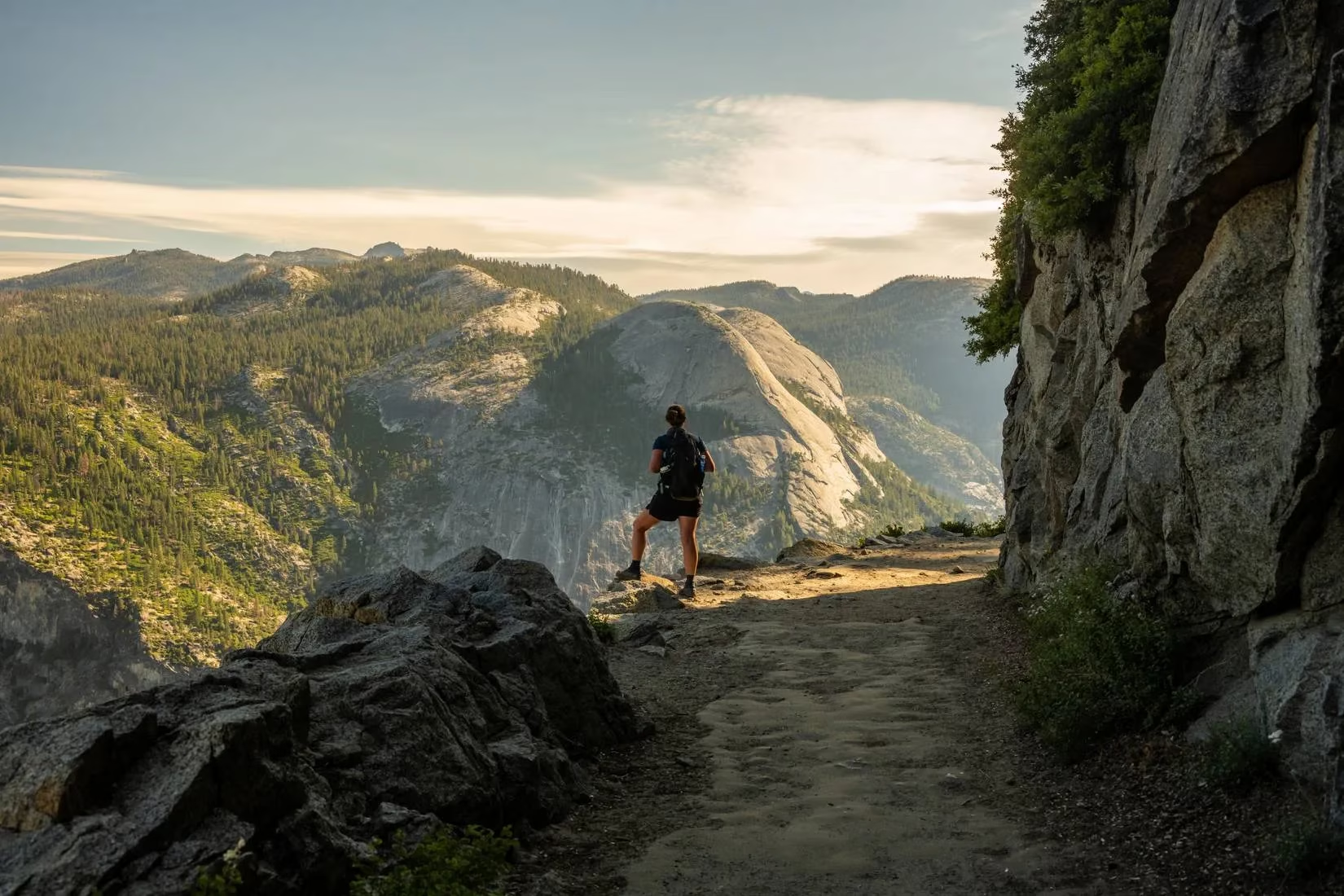
Finally, and this is crucial: know where you are. Carry a topographic map and a compass and actually know how to use them. A GPS is fantastic, but batteries die. For emergency shelter, consider tossing an emergency bivy sack or a lightweight tarp into your pack. These weigh almost nothing but can make the difference between an uncomfortable night and a life-threatening one.
Look, Yosemite is magical. It's one of the crown jewels of the American wilderness for a reason. But its beauty is matched by its ruggedness. The trends from 2025 tell a clear story: we're going further, equipped with amazing tech, but sometimes we're leaving common sense and preparation behind. Let's make the theme of our next adventure "preparedness." Pack the ten essentials, plan your route, check the weather, and tell someone where you're going. That way, we can all enjoy the splendor of the park safely, and the incredible YOSAR teams can focus on the truly unforeseen emergencies. Stay safe out there! 🏔️
Leave a Comment
Comments