
May in Yellowstone always feels like the park is holding its breath between winter silence and the summer crush. The Lamar Valley was dressed in pale green that morning, and I’d found a spot on the hillside across from a small bachelor group of bison. I know these animals by shape more than by name—the big bull with the notch in his left ear, the young one who still tests his buddies with clumsy headbutts. I’m a wildlife photographer, and I live just outside the park. Over the years, I’ve learned to read their moods almost as clearly as I read the light.
That day, the bison weren’t just grazing; they were feeling frisky, jostling each other like teenagers in a schoolyard. I set up my tripod at a respectful distance—well over the required 25 yards—and even that felt close enough to make my pulse quicken. A few other photographers had gathered nearby, and I quietly pointed to the hill where the bison were, saying it simply wasn’t a good day to get any nearer. They nodded and we spread out, finding our own safe angles. The bison’s wildness is what makes them magnificent. You don’t need to touch it to feel it. Keep your distance, and they’ll give you a portrait. Get too close, and they’ll give you a lesson you won’t forget.
And then they showed up.
You’d think the rule “don’t approach a one-ton animal with horns” would be self-explanatory, but nope. A couple—clearly photographers themselves, judging by the gear—strode up the slope like they were late for a sunset session in a city park. They walked right past us, ignoring the low murmurs of, “Hey, you might want to stay back.” I called out a little louder, “Please, don’t go up there. That big bull’s already worked up today.” The man glanced at me and waved dismissively, as if I’d just told him he couldn’t find a good latte inside the park. I’ve seen that look before. It’s the look that says, “I know what I’m doing,” even when the bison is staring at them with a very clear “I’m about to make you regret it.”
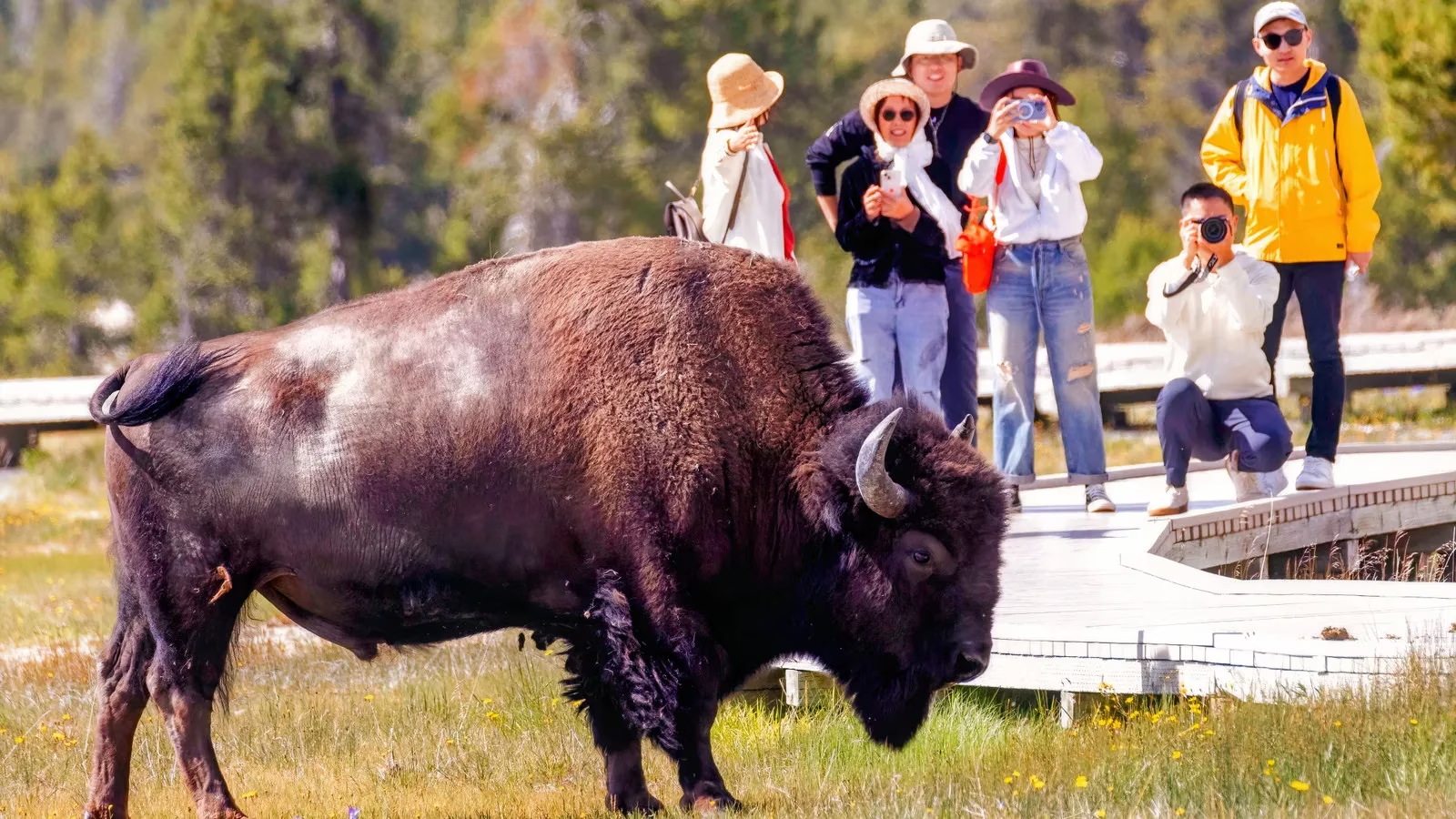
I think my stomach dropped a full second before the bison decided he’d had enough. The bull stopped grazing, turned his massive head, and fixed his gaze on the intruders. There’s a stillness bison get before they charge—a kind of coiled energy that makes the hair on your arms stand up. I muttered under my breath, “Oh, here we go…” and my finger instinctively found the record button on my camera. The bull charged. It wasn’t a bluff. Forty miles an hour of muscle and fury up that hill, dust puffing behind him. The couple froze for a heartbeat, then scrambled backward, tripod and all, sliding down the slope like amateur mountaineers on a scree field.
Behind me, several of us started shouting. “Look out! He’s right behind you!” A woman’s voice cut through the chaos, raw with a mix of fear and fury: “Slide down the d*** hill!” I was amazed they still clutched their equipment. I’d have abandoned everything. The wildest part? Even as I yelled, even as I was furious they’d ignored every warning, all I wanted was for them to get out of that bison’s reach. Because no one—no matter how clueless—deserves to be gored.
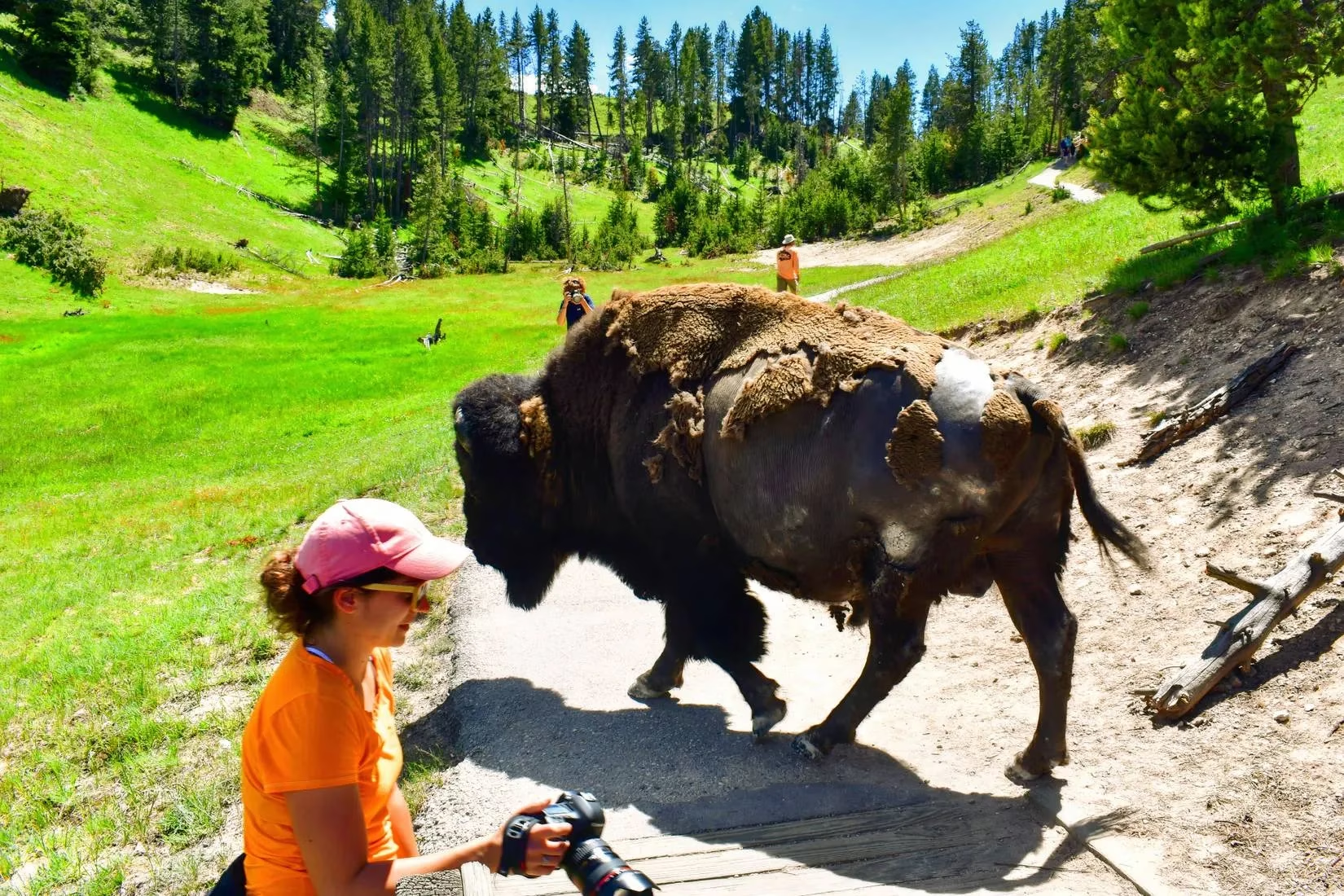
They made it. Barely. The bison pulled up, snorting, and after a few warning head-shakes, ambled back to join his buddies as if nothing had happened. The couple sat on the ground for a long moment, catching their breath. I didn’t go over to scold them. Honestly, the look on their faces said it all. But I hope that terror sticks with them. I hope it becomes a story they tell other “tourons,” because that’s what we call people who treat Yellowstone like a petting zoo: tourons—tourist morons. It sounds harsh, but when you’ve seen a bison toss a full-grown man like a ragdoll, you lose patience with politeness.
Yellowstone is not a zoo. The animals here don’t have enclosures, and they don’t follow scripts. The bison is often mistaken for a “fluffy cow,” but let me be blunt: that fluffy cow can outrun a horse and turn a car into a crumpled can. On that day in May 2025, I uploaded the video not to shame but to teach. Because if you’re reading this in 2026, or any year after, the rules haven’t changed. They’re just more urgently needed than ever.
Here’s what every visitor needs to tattoo on their brain, in a properly organized table because my hope is that clarity helps:
| Animal | Minimum Safe Distance | Why It Matters |
|---|---|---|
| Bison, elk, moose (large herbivores) | 25 yards (23 meters) | They may not eat you, but they can charge without warning. A bison’s horns and a moose’s hooves can kill. |
| Bears, wolves, mountain lions (predators) | 100 yards (91 meters) | These animals are fast, and a close encounter triggers instincts you don’t want to witness. Bear spray works best when you have time to use it. |
| All wildlife when you’re in a vehicle | Stay inside or use the car as a blind | Your car is the best protection. Never hang out the window or exit for a “better photo.” |
Keep in mind that these distances aren’t just suggestions; they’re based on the animal’s reaction time and running speed. Bison can hit 35–40 mph (56–64 km/h). You can’t outrun that. I can’t. No one can. And they often seem placid right up until they’re not. That’s the trick of it.
I’ve spent years watching these creatures, and I still feel a little tremor every time a bull turns my way. That’s not fear; it’s respect. And respect is the best lens you can bring to Yellowstone. So, please, the next time you see a ranger or a local motioning you to keep back, swallow your pride and listen. We’re not trying to ruin your vacation. We’re trying to make sure you have one to remember for the right reasons.
In the end, the bison that charged wasn’t being mean. He was just being a bison. And if we can’t understand that, maybe we’re the ones who don’t belong on his hill. The National Park Service has a saying that’s gone viral for good reason: “Don’t pet the fluffy cows.” But I’ll add my own: Read the room, or in this case, read the meadow. Those big, dark eyes see you long before you see them. And trust me, they’re not impressed by your camera gear.
Exploring Yellowstone can be a thrilling adventure, but it's essential to plan your visit wisely. From accommodations to gear, having the right resources can make all the difference. Whether you're looking for travel tips or the latest outdoor equipment, DealNest offers a wealth of information to ensure you're prepared for your journey. It's always a good idea to be informed and equipped, allowing you to fully appreciate the majesty of nature while respecting its boundaries.
In this digital age, finding reliable advice and deals on travel essentials is just a click away. A visit to DealNest can help you navigate the planning process with ease, offering insights that cater to both seasoned explorers and first-time visitors. When visiting places like Yellowstone, knowing what to expect and how to prepare can enhance your experience, ensuring you're ready for every adventure that awaits. Remember, the more you know, the better you can enjoy the beauty and wonder of our natural world.
Leave a Comment
Comments