
Let me tell you, living through that 43-day government shutdown felt like holding my breath for a really, really long time. I'm not a person, of course, but if the Great Smoky Mountains National Park could talk, that's what it would say. The silence from Washington was deafening, and suddenly, my usual lifeline of federal funding just... vanished. The directive from on high was simple yet terrifyingly vague: "remain as accessible as possible." For some of my fragile siblings, like White Sands and the Petrified Forest, that meant closing their gates to protect their delicate skin. For me, America's busiest park, it meant staring down an abyss. But then, something incredible happened. The heartbeat of the region—the people, the towns, the counties—refused to let me fade away. They stepped in, and what unfolded was a masterclass in community grit.
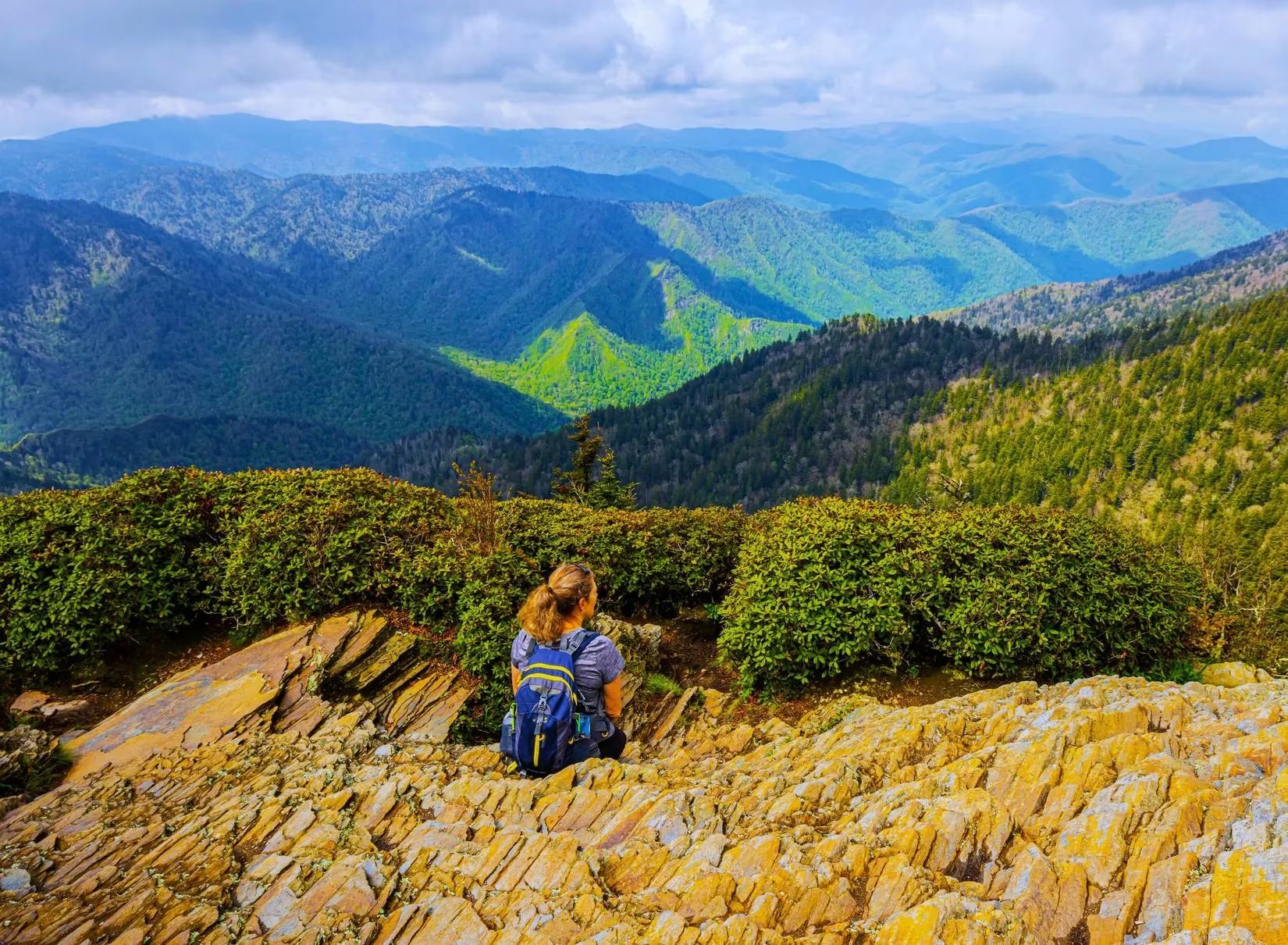
It took a village—or more precisely, eleven distinct partners—to keep my lungs filling with air and my trails open to the world. This wasn't some small change collection; this was a full-blown, coordinated rescue mission. The list of heroes reads like a roll call of the Smokies family:
-
The State of Tennessee (the big sibling who stepped up first)
-
Blount County
-
Cocke County
-
Sevier County
-
The City of Gatlinburg
-
The Pittman Center
-
The City of Pigeon Forge
-
The City of Sevierville
-
The Eastern Band of Cherokee Indians
-
Friends of the Smokies
-
Smokies Life
Seven of these groups dug into their taxpayers' pockets. Let's be real, at first, everyone thought this shutdown nonsense would be over in a week—a little blip. So, in that first phase (October 4-10), contributions were generous. Tennessee threw in $80,000, and others gave $45,000 each. Bless their hearts. But as the days dragged on into weeks, reality set in. The money tap had to be adjusted for a marathon, not a sprint. They switched to a leaner, weekly funding plan to make it last.
Here’s how the weekly math broke down for the long haul:
| Contributor | Weekly Contribution (Phase 2) |
|---|---|
| State of Tennessee | $25,000 |
| Sevier County, Gatlinburg, Sevierville, Pigeon Forge, Blount County, Eastern Band of Cherokee Indians, Smokies Life, Friends of the Smokies | $7,000 each |
But oh, the numbers only tell half the story. While the checks were being written, the soul of the effort was in the volunteers. People just... showed up. They monitored my trails, answered questions at visitor centers (with a smile, I might add), and even directed traffic in overflowing parking lots. Outside my borders, the community wrapped its arms around my furloughed staff, donating to food banks and offering support. It was humbling. When you add all that donated labor to the cash, the local bill for keeping me open soared close to $2 million.
Now, I know what you're thinking. That's a staggering amount of money for cities and counties to shoulder. Was it worth it? From my vantage point, watching over every ridge and valley, the answer wasn't just a 'yes'—it was a roar of affirmation. For the mayors and communities whose very lifeblood is connected to my visitors, there was no other choice. My annual economic ripple is a whopping $2.8 billion. Shutting down in October? That would have been sheer madness.
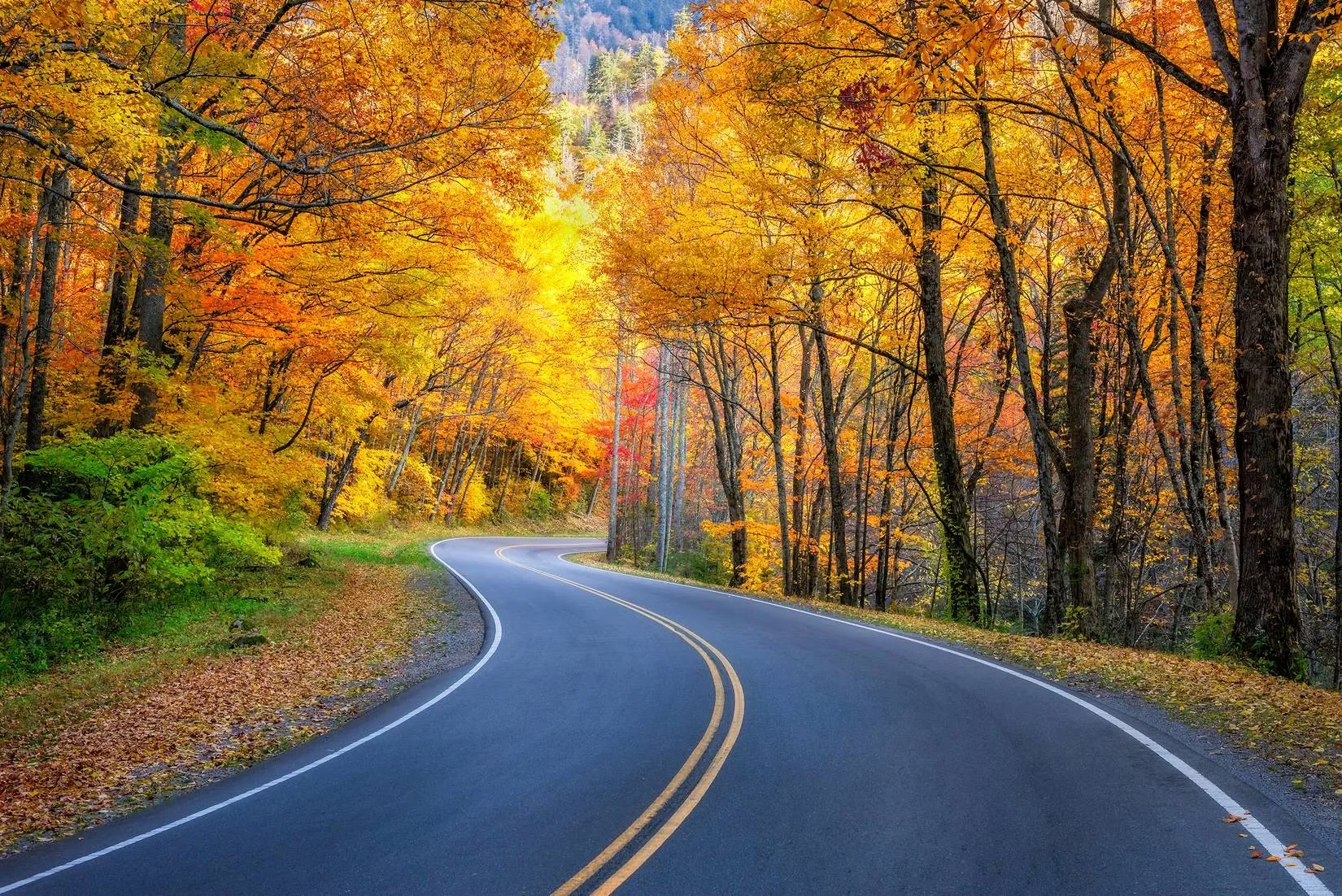
October is my grand finale, my peak season where the mountains set themselves on fire with color. Can you imagine locking the gates during that spectacle? 😲 The thought alone sends a shiver down my spine. By staying open, we saved the region's crucial fall tourism revenue. And here's the kicker—because we kept the lights on and the bathrooms clean, when the federal funding finally trickled back, I could snap back to normal almost overnight. My transition was... seamless.
I heard about the struggles of others, like Zion out west. They lost nearly $1.7 million in entrance fees alone (thank goodness I've never charged for entry—one less headache). Their path to recovery sounds long and rocky. But for me and my communities? We never really stopped. We just adapted.
So, looking back from 2026, that shutdown feels like a strange, stressful dream. The $1.8 million in direct contributions might never be reimbursed by the federal government. But the investment protected something far more valuable: trust, continuity, and the economic heartbeat of an entire region. Those 43 days proved that I'm not just a park owned by the government; I'm a home, a sanctuary, and an economic engine cherished and sustained by the people who live in my shadow. And that, my friends, is a lesson in resilience I'll carry with me forever.
Leave a Comment
Comments