
Look, I'm just gonna say it: I never thought I'd be writing an obituary for a ferret's future, but here we are. It's 2026, and while we humans are busy arguing about budgets and pointing fingers in Washington, a tiny, masked face is staring out from a plastic kennel in Colorado wondering why its big move to the Rocky Mountains just got canceled. I'm talking about the black-footed ferret, the comeback kid of the Great Plains, and right now, thanks to the federal government hitting the pause button, their wildest dreams are being put on ice.
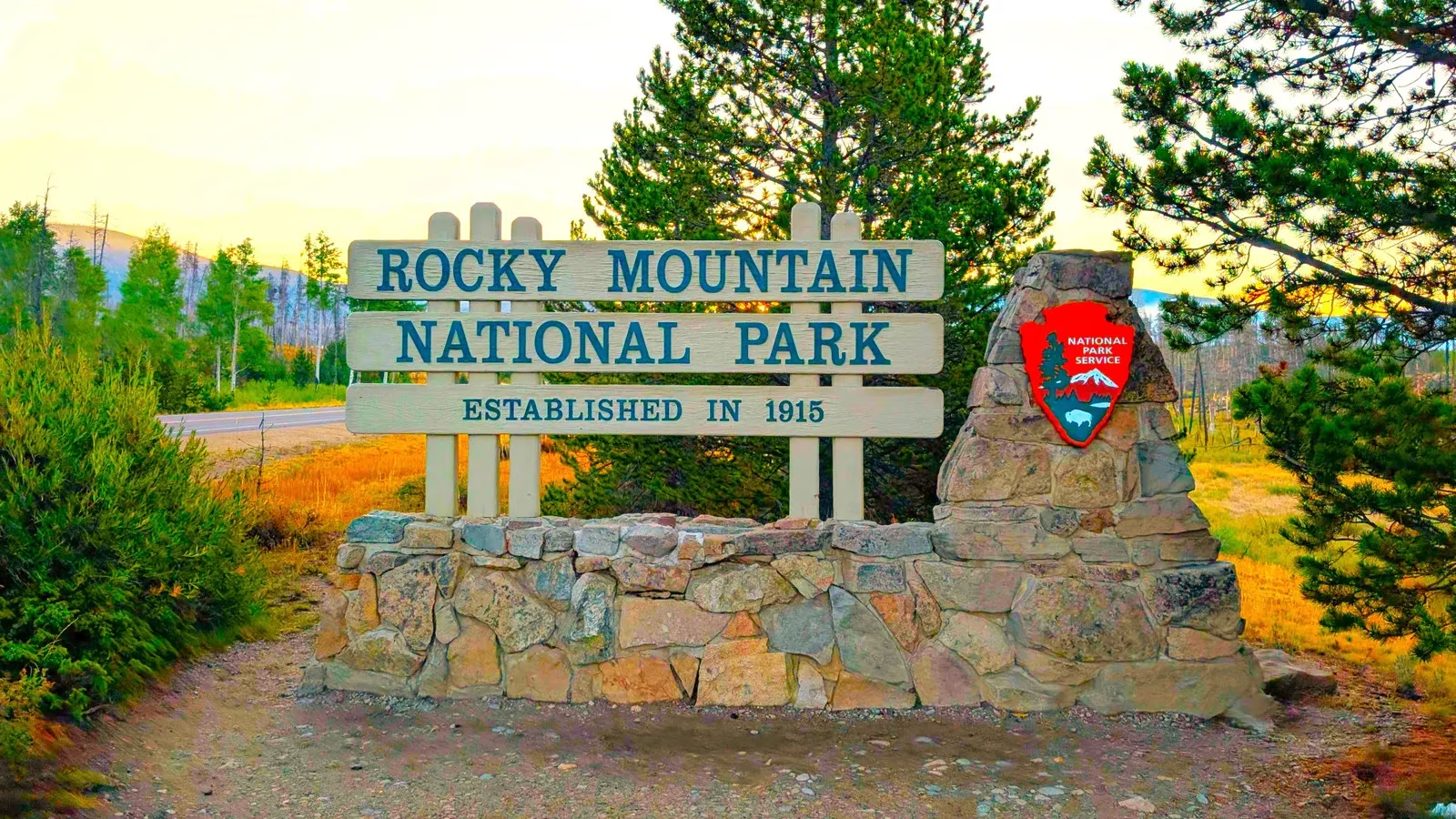
This isn't just a story about a government shutdown; it's a story about how Mother Nature keeps getting ghosted by the bureaucracy. And honestly, the ferrets deserve better.
The Little Engine That Could (But Keeps Getting Derailed)
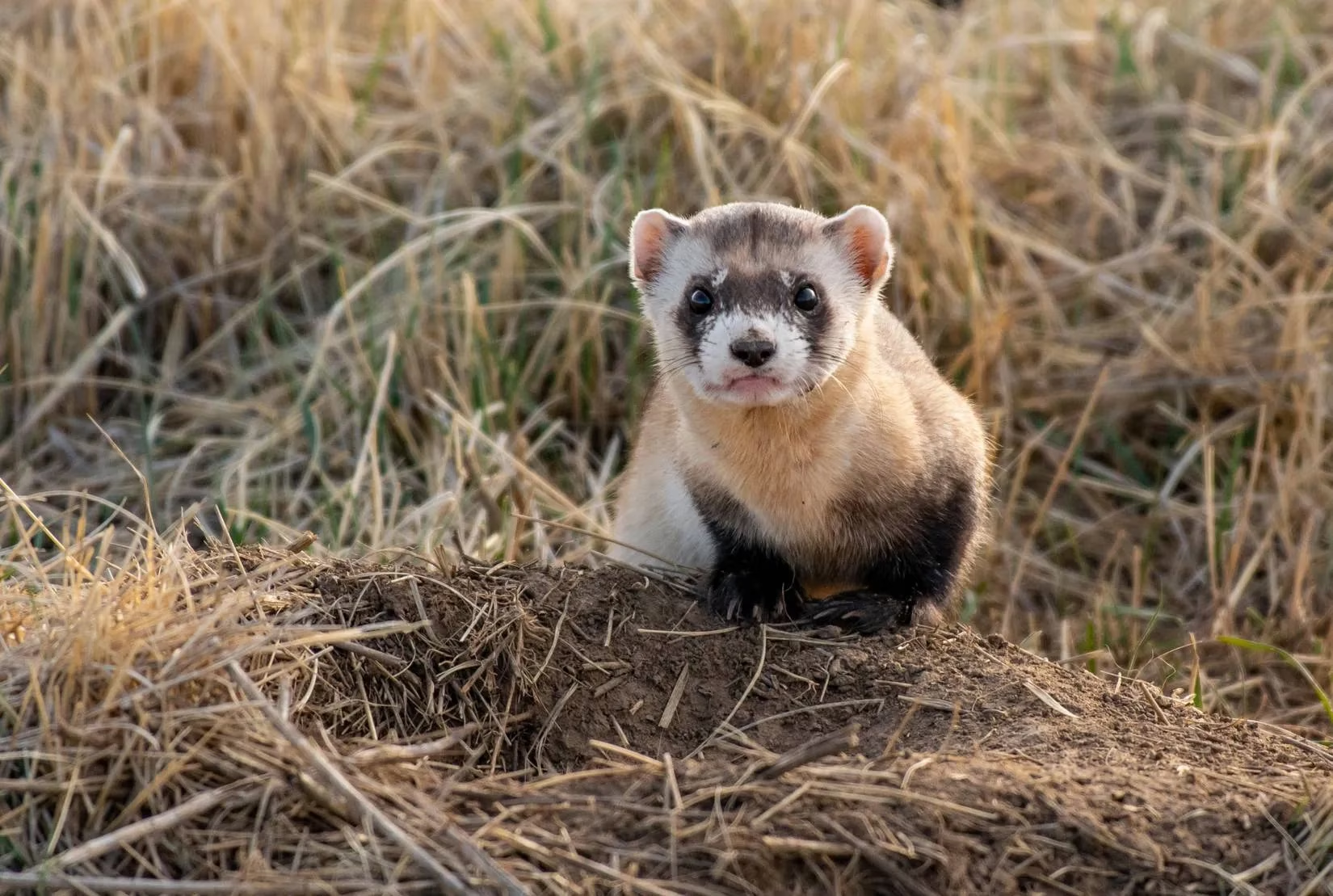
Black-footed ferrets are basically the underdog legends of North America. Native to the Great Plains, they used to roam from southern Canada all the way down to northern Mexico. But we, as humans, did what we do best—destroyed their habitat and killed their food source (prairie dogs, if you're keeping score at home). By 1979, they were declared extinct in the wild. Done. Gone. Caput.
Then, in 1981, a rancher’s dog in Wyoming trotted home with a very surprised look on its face—and a very alive black-footed ferret in its mouth. That discovery led to a tiny population of 18 ferrets being brought into captivity, essentially the founding fathers and mothers of every single black-footed ferret alive today. Talk about pressure. 🤯
The Shutdown Strikes: A Cruel Twist of Timing
Fast forward to the here and now. The National Black-Footed Ferret Conservation Center in Carr, Colorado, houses over 200 captive ferrets. These little guys are part of a carefully managed breeding program run by the U.S. Fish and Wildlife Service. The plan was to release 280 captive-bred ferrets across 15 locations this fall, including Rocky Mountain National Park.
But here's the kicker: the government shut down. No federal funding means no staff, and no staff means no one to drive the ferrets to their new digs. The Center was put "on ice," which is a polite way of saying the doors are locked and the future is on hold.
Biologists will tell you that September and October are the prime release window. That's when the kits (young ferrets) are around 18 weeks old, getting feisty, and ready to strike out on their own. Miss that window, and you're not just delaying a trip—you're potentially compromising their ability to survive in the wild. And with each passing day of the shutdown, that window is slamming shut faster than a prairie dog diving into its burrow. 🌵
Why This Time Feels Different
Now, you might be thinking, "Hey, governments shut down all the time, and the ferrets are still kicking, right?" Well, sure, but the deck is stacked against them more than ever. The ferrets aren't just fighting a shutdown; they're fighting a one-two punch.
Earlier in 2025, a wave of layoffs hit federal departments. Key people working on black-footed ferret recovery—including recovery coordinators—were let go. Tina Jackson, the ferret recovery coordinator for the U.S. Fish and Wildlife Service, was fired because she was a probationary employee. Her words still echo: "You're the one kind of in charge of this species that's still, honestly, on the brink of extinction... Every time there's a setback of some sort, whether it's a biological setback, a disease outbreak, a budget cut or a staffing cut, it's something that sets back recovery."
Ouch. That's not just a quote; that's a cry from the heart of conservation.
| Setback | Impact on Black-Footed Ferrets |
|---|---|
| Government Shutdown (Fall 2025) | Delays/cancels release of 280 ferrets, risks missing critical independence window |
| Federal Layoffs (Feb/Mar 2025) | Loss of experienced recovery coordinators, broken continuity in breeding and release programs |
| Historical Near-Extinction (1979) | Wild population declared extinct, only 18 individuals recovered for breeding |
| Habitat Loss & Prairie Dog Decline | Reduced food supply and shelter, ongoing threat to reintroduced populations |
A Glimmer of Hope (And a Lot of Sass)
Despite the doom and gloom, the black-footed ferret's story is still one of the greatest conservation success stories in North America. From 18 ferrets, we now have an estimated 400 wild ferrets across eight states, plus reintroduction efforts in Canada and Mexico. Those little faces are popping up in:
-
🏞️ Wyoming
-
🏔️ Montana
-
🏜️ South Dakota
-
🌵 Arizona
-
⛰️ Colorado
-
🦌 Utah
-
🌾 Kansas
-
🌄 New Mexico
But here's the thing about recovery: it's a marathon, not a sprint. And right now, someone tripped over the power cord and unplugged the treadmill mid-run. The loss of 280 additional young ferrets would be a devastating blow to a population that's still technically on the brink. We're not just talking about numbers on a spreadsheet; we're talking about genetic diversity, disease resistance, and the sheer will to survive.
The frustrating part? The National Park Service's contingency plan said parks should remain "as accessible as possible" during the shutdown. That sounds great for tourists who want to snap a selfie at Old Faithful, but for the staff trying to keep sensitive ecosystems from falling apart—and for a little ferret waiting for its moment to go wild—it's a recipe for disaster.
So, as I sit here in 2026, watching the dust settle on another political standoff, I can't help but think the ferrets have a better grasp on work-life balance than we do. They work hard, burrow deep, and don't care about your fiscal cliff. But they do care about one thing: a chance to live free. And until the shutdown ends and the staff comes back, that chance is fading like a Wyoming sunset.
Here's hoping the powers that be realize that some things are worth more than a political point. Because honestly, if a ferret can come back from literal extinction, the least we can do is not slam the door in its face. Again.
Until next time, keep an eye out for the little guys. They're tougher than they look.
Leave a Comment
Comments