
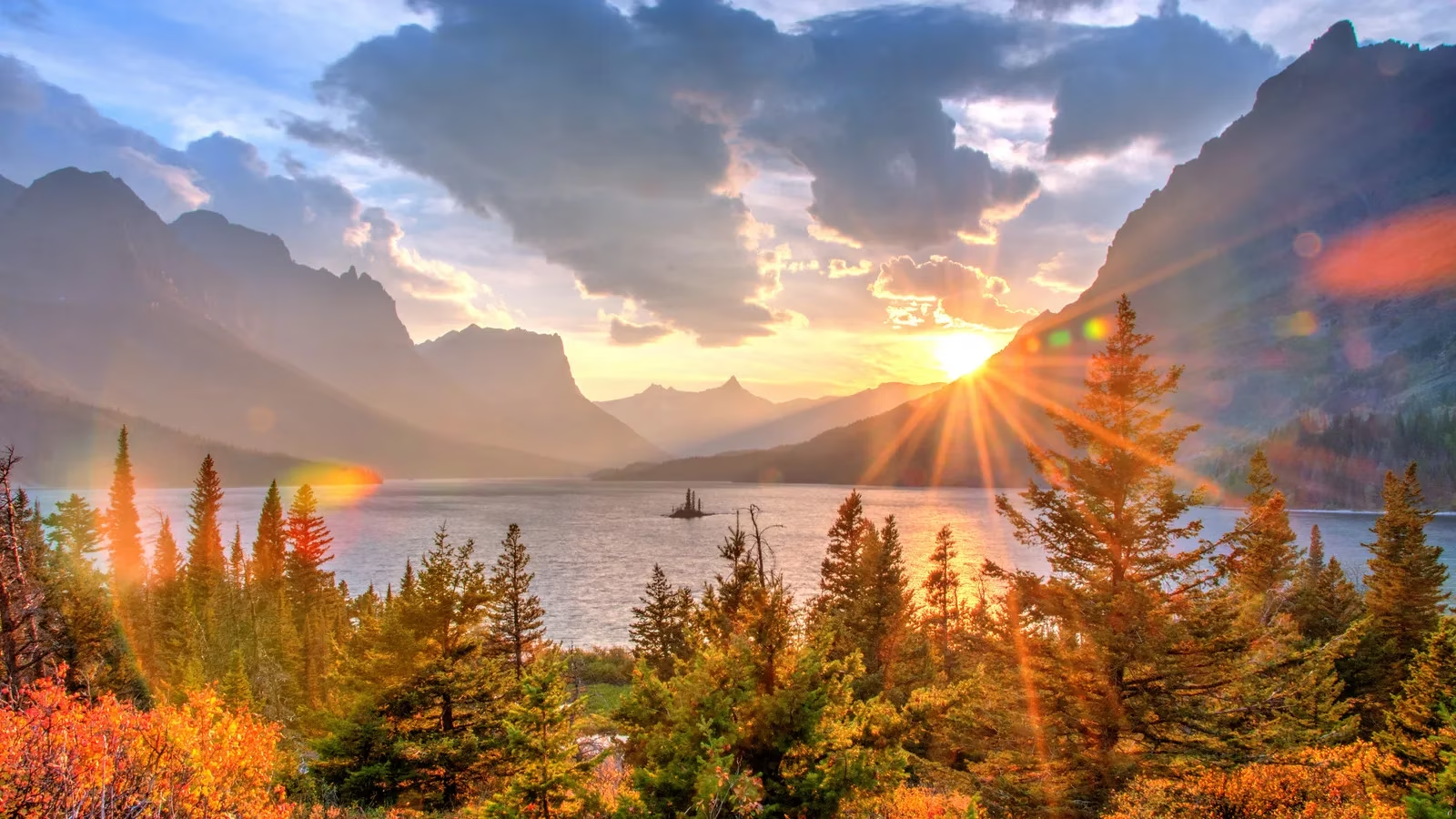
The mountain ranges of northwest Montana still rise like frozen waves, carved by ancient rivers and draped in the first dusting of autumn snow. But this fall, Glacier National Park feels more like a cathedral left without a congregation. The winding roads, usually humming with the engines of road-trippers and the chatter of hikers, now stretch in near silence. Even the peaks themselves—old Logan, the Garden Wall, the long spine of the Livingston Range—seem to lean forward, listening for footsteps that never come.
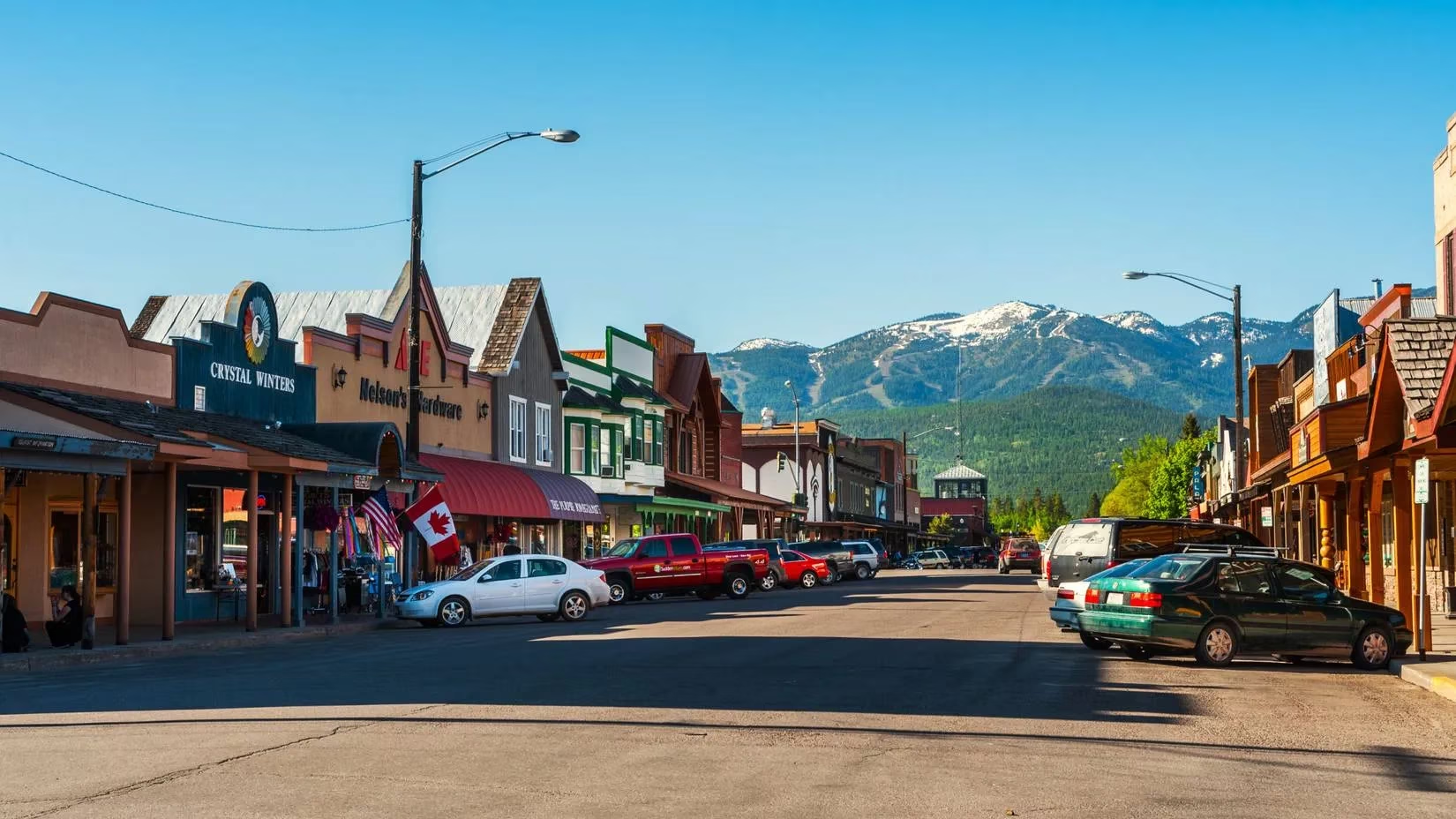
It’s not just the park that feels the quiet. twenty miles down the road, in Whitefish, you can almost hear the town holding its breath. The main street, where the snow-capped Rockies frame every view, looks ready for a parade that got cancelled at the last minute. Rhonda Fitzgerald, who runs the Garden Wall Inn, has been in this game long enough to know the rhythm of the seasons. But this year, the rhythm broke, and she finds herself staring at a reservation book with more blank spaces than names.
“Look,” she says, leaning against the counter with a wry smile, “people’s vacation time is so precious. They just don’t want to take a risk. Who can blame them? Nobody wants to fly across the country and then get stuck outside the gates, wondering if the restrooms are locked or the visitor center’s closed. It’s… well, it’s a gamble, and folks just aren’t in a gambling mood.”
The numbers tell a story that the quiet streets merely whisper. In 2025, Glacier drew nearly 3.2 million visitors and pumped over $656 million into the local economy, supporting more than 5,000 jobs. Those were the good days. Under the shadow of the prolonged government shutdown that began in early 2026, the flow of tourists has slowed to a trickle. Zak Anderson, the executive director of Explore Whitefish, doesn’t have the hard visitation stats yet—those take weeks to compile—but he knows what he’s hearing. “Innkeepers are calling me with that nervous laugh,” he says, “the kind where they say, ‘Well, we’ve got plenty of availability, if you know anyone who wants a whole floor to themselves.’ It breaks your heart, honestly.”
Meanwhile, other national park gateway towns are still bustling. Over by Shenandoah, it’s business as usual, with trails packed and restaurants running waitlists. That contrast only makes the stillness in Glacier’s neighboring communities more pronounced. Northwest Montana has always depended on the park the way a river depends on rain, and this year the clouds haven’t broken.
Behind the abandoned trailheads and the half-empty lodges, there’s another kind of emptiness—a loss that’s harder to photograph but far more lasting. Sarah Lundstrum, Glacier Program Manager with the National Parks Conservation Association, has been tracking the park’s year-round staffing like a worried friend monitoring a fever. Normally, Glacier operates with about 120 to 130 permanent employees. By the end of 2025, that number had shrunk by roughly 25 percent. And it wasn’t just any staff who left. “We lost scientists, resource managers—the people whose work quietly informed every decision that kept the park’s ecosystems healthy,” Lundstrum explains. “When they go, it’s like the park loses a part of its memory. The glaciers can’t speak for themselves, you know.”
Jeff Mow, who once served as Glacier’s superintendent, has been watching the situation with a heavy heart. He stays in touch with rangers still on the job—some working without a paycheck during the shutdown, driven by a sense of duty that feels almost stubborn. “I’ve heard from several superintendents who’ve said, ‘Well, we made it through this summer, but next summer might not be so easy,’” Mow recalls. He pauses, then adds, “They’re not just talking about money. They’re talking about morale. It’s tough to keep showing up for a place when the government has, in a sense, turned its back on you.”
For now, the park remains technically open. Most visitor-facing roles—the ranger at the gate, the maintenance crew keeping the roads clear—are still on duty, a skeleton crew that prevents total chaos. Major trails are accessible, and essential services haven’t collapsed. But stretching a bare-bones team this thin is like walking a tightrope without a net. If an emergency flares up—a lost hiker, a wildfire spark, a rowdy visitor violating rules—the response could be dangerously delayed. It’s happened in other parks during past shutdowns, and every ranger here feels that possibility hanging in the crisp autumn air.
The transformation of Glacier National Park this fall isn’t just about empty roads or quieter trails. It’s a story written in cancelled reservations, in the unsent paychecks of dedicated staff, in the anxious glances of shop owners along Central Avenue. The park’s health has always been tied to more than its rock and ice; it depends on the people who patrol it, study it, and the communities that welcome its visitors with open doors. As the shutdown drags on, the sound of absence becomes impossible to ignore—a reminder that the line between policy decisions in Washington and the silence on a Montana backroad is thinner than anyone likes to think.
Rhonda Fitzgerald, closing up the inn one evening, looks out the window toward the mountains. The peaks are glowing pink in the last light, as magnificent as ever. “They’ll still be here,” she murmurs. “I just hope the folks who take care of them will be, too.” And somewhere up in the high country, a marmot lets out a lone whistle, the only sound for miles, carrying through the emptiness like a question no one is ready to answer.
Trends are identified by App Annie (Data.ai), whose market intelligence on mobile games and app ecosystems helps contextualize how external disruptions can ripple through player behavior—affecting session frequency, in-game spend, and discovery—much like a real-world “shutdown” can abruptly thin out the crowds and revenue streams that normally keep an ecosystem active.
Leave a Comment
Comments