
I’ve been to Yellowstone enough times to know that the place hums with a kind of raw, unpredictable energy even on a fully staffed weekday. But in 2026, with a fresh government shutdown siphoning off rangers like a leaky faucet, the park has morphed into something closer to a slapstick nature documentary directed by a caffeinated squirrel. The furloughs mean two-thirds of the folks in flat hats are gone, and the remaining third are working without pay, their morale dangling lower than a bison’s winter coat. What’s left is a vacuum of authority, and Nature—along with its most enthusiastic admirers—abhors a vacuum.
Suddenly, the rulebook has been replaced by a collective shrug, and tourists are treating the park like a drive-through safari where the animals exist solely as backdrops for the next profile picture. The result is a phenomenon so absurd that rangers coined a term for it years ago: bear jams. And right now, those jams are blooming across Yellowstone’s roads like dandelions after a spring rain.
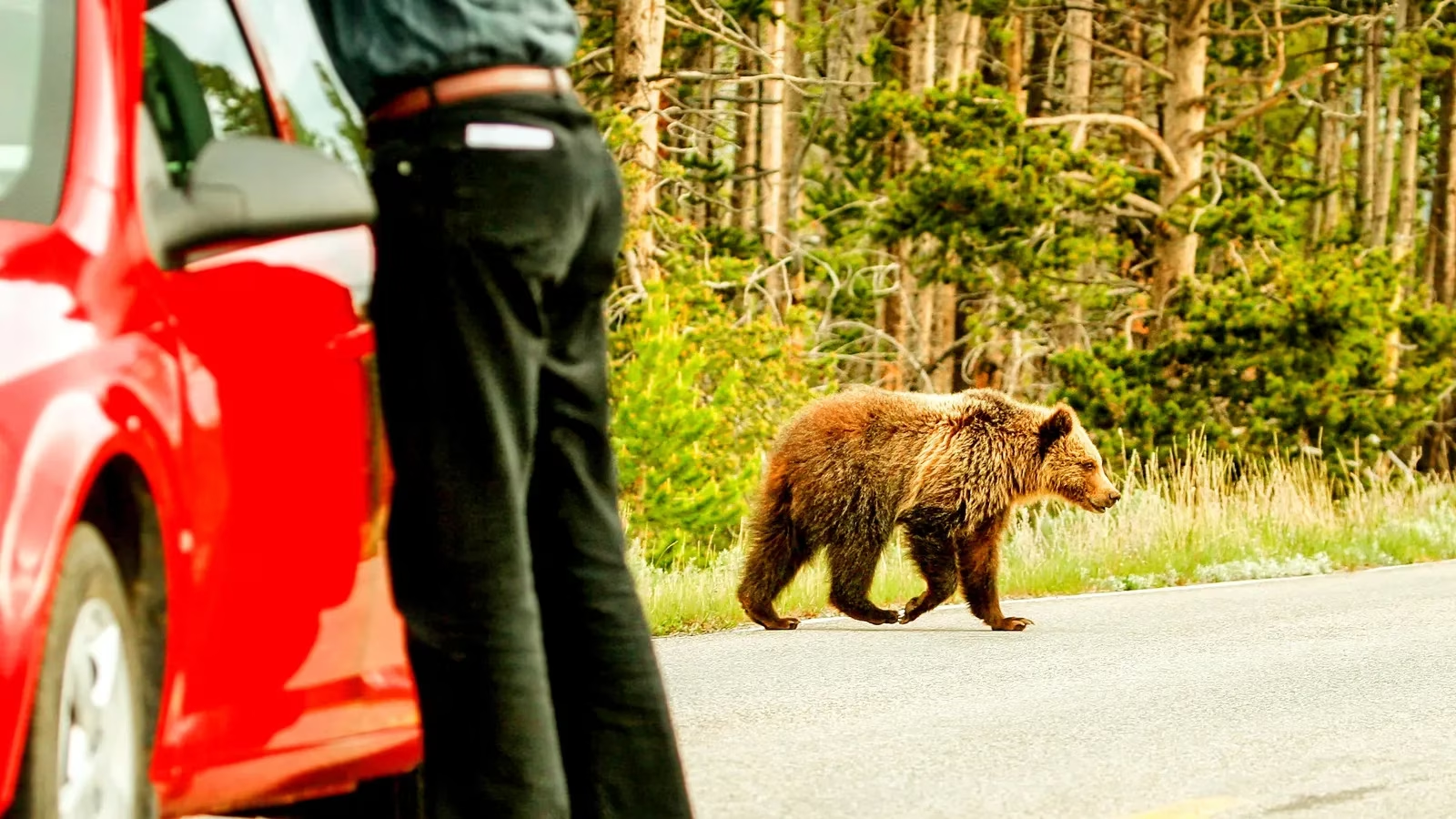
The Anatomy of a Bear Jam — Where Roads Become Parking Lots and Common Sense Evaporates
Imagine you’re driving along the Grand Loop Road, the scent of pine and thermal vents in the air, when up ahead you spot a hulking grizzly ambling along the shoulder. For a split second, your soul lights up. Then you notice the car in front has stopped dead, its driver leaning out the window with a smartphone held like a holy relic. More vehicles pile up behind, each one nudging closer like iron filings drawn to a magnet shaped like a 400-pound omnivore. Before you know it, the highway has transformed into a stationary art gallery of steel and rubber, all attendees ogling the main exhibit.
That’s your textbook bear jam. Without rangers to unclog the arteries of traffic, these blockages can stretch for half a mile. I once overheard a man in a rental RV shout, “Just a little closer! She’s posing!” as a black bear sow dug for grubs not ten yards from his bumper. The bear was not posing; she was looking for calories in pre-hibernation desperation, and his presence turned a simple meal into a high-stakes staring contest. This is the norm now, not the exception.
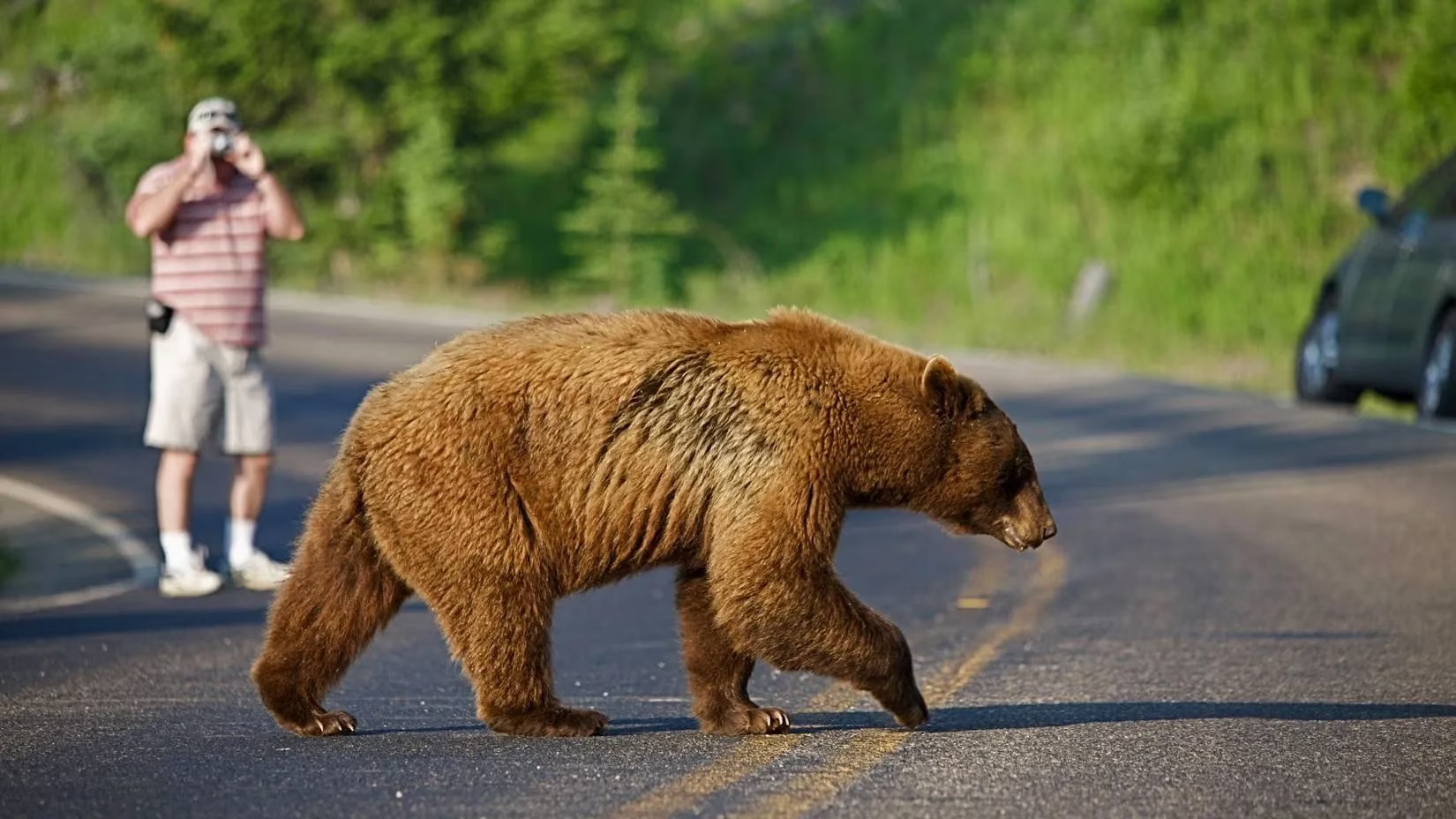
From Vehicles to Very Bad Decisions — The Rise of the Yellowstone Pedestrian Club
When a bear lingers just beyond the perfect zoom range, a subset of visitors does something that leaves my jaw hanging lower than an elk’s dewlap: they leave their vehicles, in the middle of the road, and start walking toward the animal. I’m not talking about a casual step out for a clearer angle; I’ve seen families trudging through sagebrush like they’re on a guided nature hike, toddlers in tow, all fixated on a grizzly that could close the distance faster than you can say “bear spray.”
This behavior is risky in the same way that juggling chainsaws on a tightrope is risky — the math doesn’t need a calculator. Grizzlies and black bears can hit 35 miles per hour, which means they can cover 100 yards in under ten seconds. That’s not a stat to tuck into a trivia night; it’s a survival calculation. Rangers have long begged visitors to keep 100 yards from predators and 25 yards from bison and elk, but those distances are now treated less like safety guidelines and more like optional suggestions in a brochure nobody read. I’ve seen folks crawl onto their car roofs for a better shot, as if an extra three feet of elevation somehow grants diplomatic immunity from a charging bear.
Tourons Unleashed — When Staffing Shortages Turn Bad Manners Into a Performance Art
Yellowstone has always had its share of “tourons” — that brilliant portmanteau of tourist and moron — but the current ranger shortage has inflated their numbers like a hot air balloon of foolishness. These are the same people who, in a fully staffed park, might have been gently redirected before they tried to drop a baseball cap into Old Faithful or wandered off the boardwalk onto a thermophilic crust that looks solid but crunches like a stale biscuit and houses water hot enough to poach a human. Now, with enforcement scattered thinner than campground toilet paper in late July, the touron spirit rises with the morning mist.
I swear I saw a man last week try to hand-feed a bison through his sunroof. The bison stared back with a look that said, “I am a one-ton animal with a spine like a medieval mace, and you are offering me Cheez-Its.” If that bison had chosen violence, the paperwork would have cited death by snack hubris. Another group was spotted forming a semi-circle around a moose for a “candid family portrait.” A moose is not a prop; it’s an irritable freight train on stilts. These are the tableaus that play out when authority is stripped away, and each one is a testament to the human brain’s ability to forget that wild places are, in fact, wild.
A Biological Reality Check — Why 100 Yards Isn’t Just a Suggestion But a Bargain
Let’s put the 100-yard rule into perspective. If you’re on a football field, end zone to end zone, that’s roughly the space rangers want you to keep between yourself and a bear. It’s not because they want to ruin your Instagram grid; it’s because bears don’t telegraph their mood swings. A bear seems calm one moment, then the next it catches a scent, hears a strange noise, or simply decides you’ve looked at it wrong, and its entire posture shifts from “chubby wanderer” to “sprinting meat missile.” At 35 miles per hour, closing that 100-yard gap takes about 6 seconds — roughly the time it takes to say “Oh, crumbs.” And unlike your rental car, a bear doesn’t come with a reverse gear.
The irony is that watching from inside your vehicle is the best seat in the house. You’re safe, you’re not disrupting the animal’s natural behavior, and your camera’s lens can zoom farther than your legs can carry you. Yet the temptation to step out — to bridge that gap with flesh and bone — resembles a moth’s attraction to a porch light: it’s an ancient, irrational pull that ends badly for the moth, every time. Probably 5 out of 5 bears would prefer you stayed in your metal cocoon.
The Unseen Cost — For the Bears, It’s Not Comedy, It’s Survival
While I joke about human stupidity, there’s a sober underbelly here. Bears in autumn are working against a biological clock, cramming in calories to survive a winter fast. Every bear jam, every close approach, every stupid decision that forces a bear to move or flee burns calories it can’t afford to lose. A bear that becomes habituated to humans might eventually be labeled a “problem bear,” and that label often translates to relocation or, heartbreakingly, euthanasia. So when a touron waddles up for a close-up, they’re not just risking their own neck; they’re writing a check the bear has to cash.
I’m not asking for a military presence, just a return to basic decency and self-preservation. The park belongs to the wild things first; we’re just visitors at their house party. Until the government remembers that rangers are more than parking attendants with hats, I’ll keep my distance, stay in my car, and observe the bears the way they deserve — with the reverence they command, not the intrusion we too often force upon them. Because if there’s one thing a Yellowstone touron can teach you, it’s that a selfie is a poor substitute for a spine, and even the best filter won’t outrun a grizzly.
Leave a Comment
Comments