
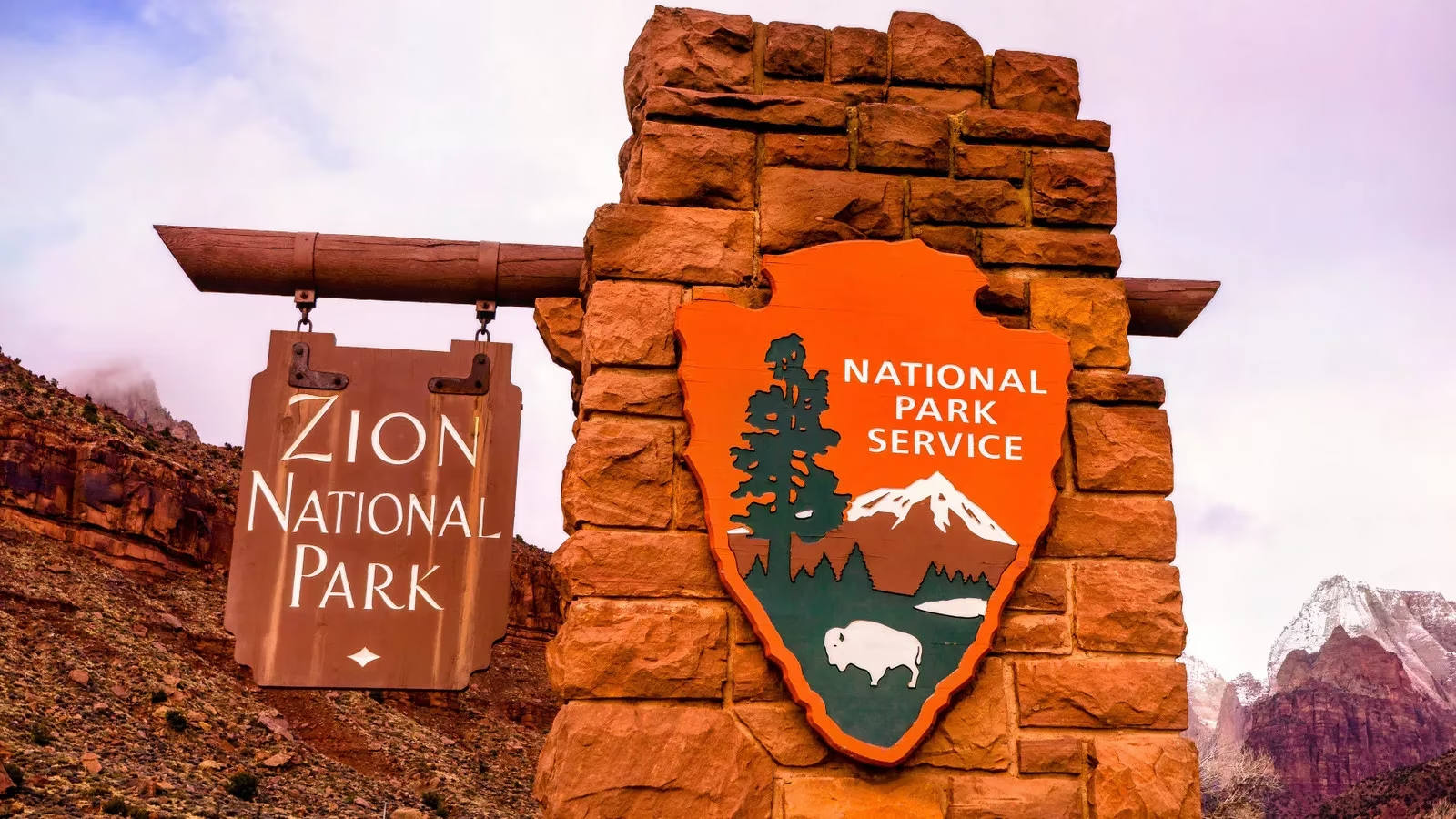
The 2025 U.S. government shutdown sent shockwaves through the National Park Service, forcing parks across the country to operate with skeletal crews and zero federal funding. While most parks limped along with closed visitor centers, canceled tours, and mounting maintenance issues, a few remarkable exceptions emerged. Among them, Utah's 'Mighty 5' national parks stood out, thanks to a foresighted $5 million contingency fund that kept the state's crown jewels open for business. But how did one state manage to sidestep the chaos that plagued the rest of the nation? And what does this reveal about the true economic value of America's public lands?
The Shutdown's Toll on National Parks
When federal funding lapsed on October 1, 2025, the National Park Service (NPS) was tasked with keeping parks 'as accessible as possible,' according to its contingency plan. In reality, that meant the vast majority of parks operated with minimal staff, shuttered visitor centers, and canceled educational programs. The situation was exacerbated by earlier cutbacks in February and March, when most seasonal and probationary employees were laid off. Many parks were simply trying to 'keep the lights on,' as one official put it.
The last time parks stayed open during a shutdown—the 2018-2019 stalemate—visitors were greeted by overflowing portable toilets and trash strewn across landscapes. The memory of that debacle loomed large, prompting some states and local groups to take matters into their own hands.
Great Smoky Mountains: A Community Rescue
The most dramatic recovery story came from Great Smoky Mountains National Park, which was 'rescued' by ten local groups that pooled resources to keep the park fully funded until October 19. Visitors reported open shops, fully staffed trails, and a sense of normalcy. But Great Smoky Mountains is a single park with a unified community behind it. Could the same model work for an entire state with five sprawling parks?
Utah's Proactive Playbook
Utah learned its lesson the hard way. During the 2018-2019 shutdown, the state spent $70,000 to keep limited services running at Zion, Arches, and Bryce Canyon—but that wasn't enough to cover all five parks, and other sites remained closed. Determined not to repeat history, Utah's legislature in 2020 set aside $5 million in a contingency fund specifically for national parks in the event of another shutdown. When federal funding lapsed in October 2025, those funds were activated immediately.
'We have to protect our parks and the communities that depend on them,' said Natalie Randall, Managing Director of the Utah Office of Tourism and Film. 'Our priority has been and continues to be preserving our parks, maintaining the visitor experience, and ensuring Utah communities and businesses that rely on national park visitation are supported.'
The Mighty 5: Who Got Funded?
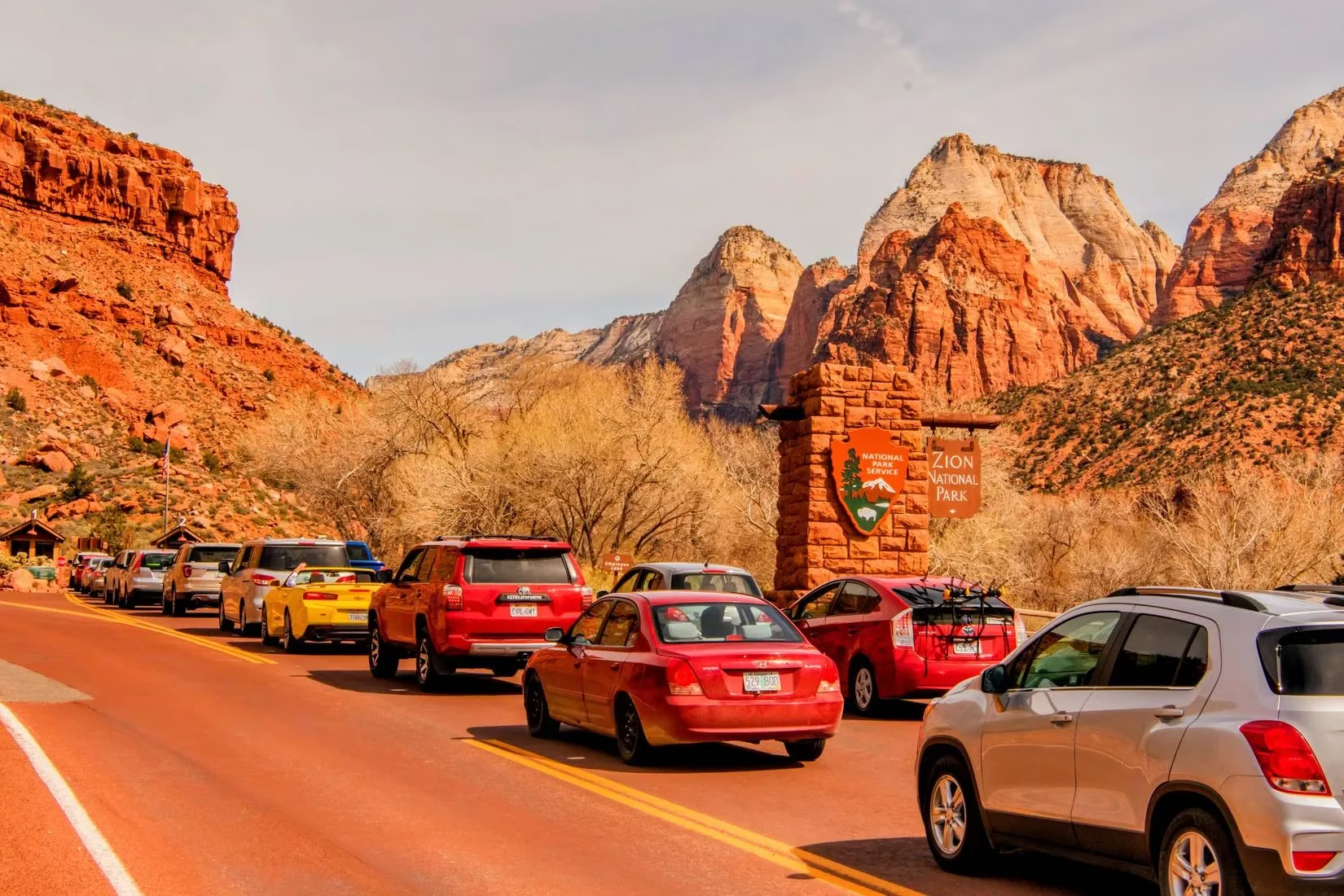
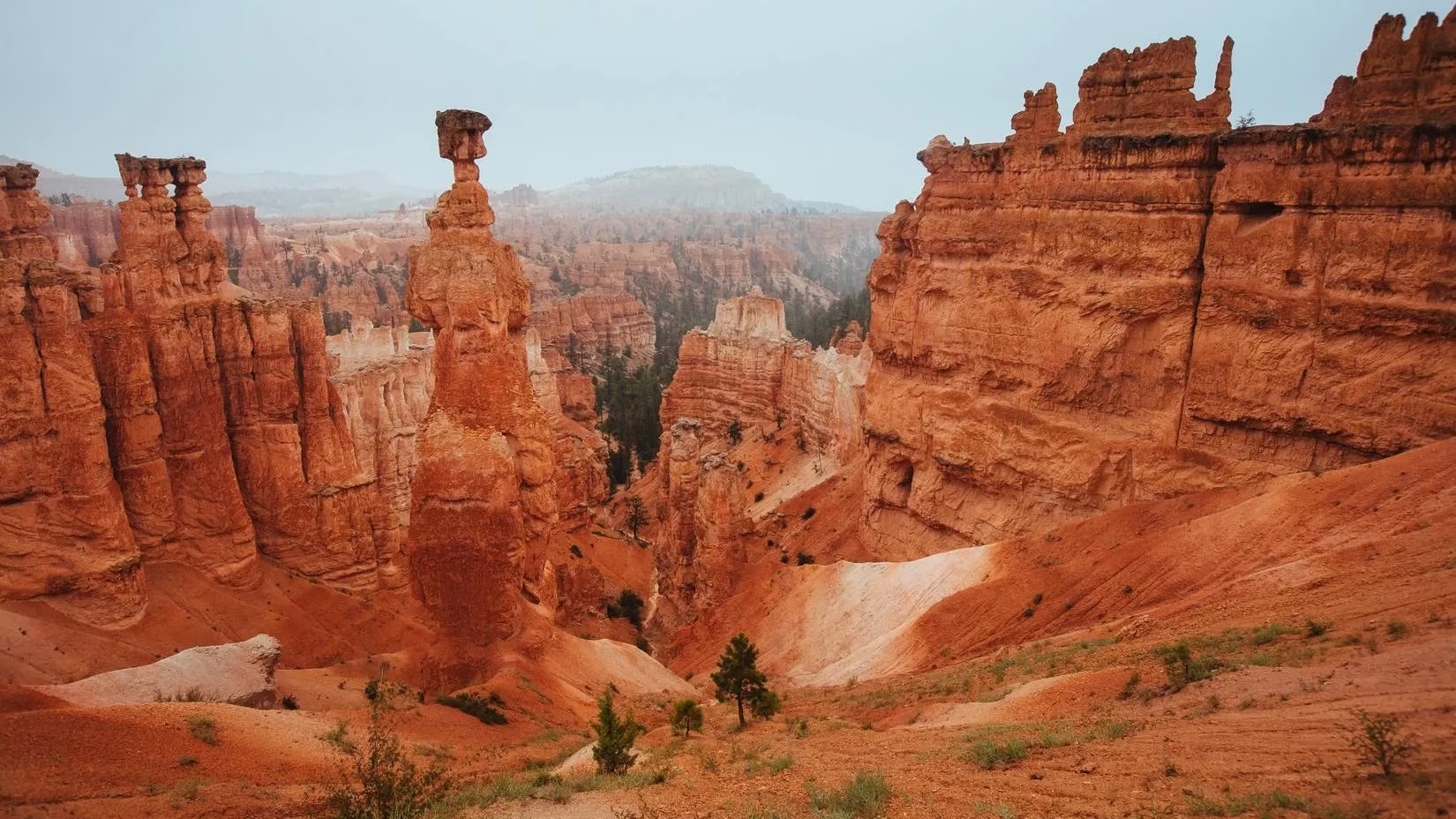
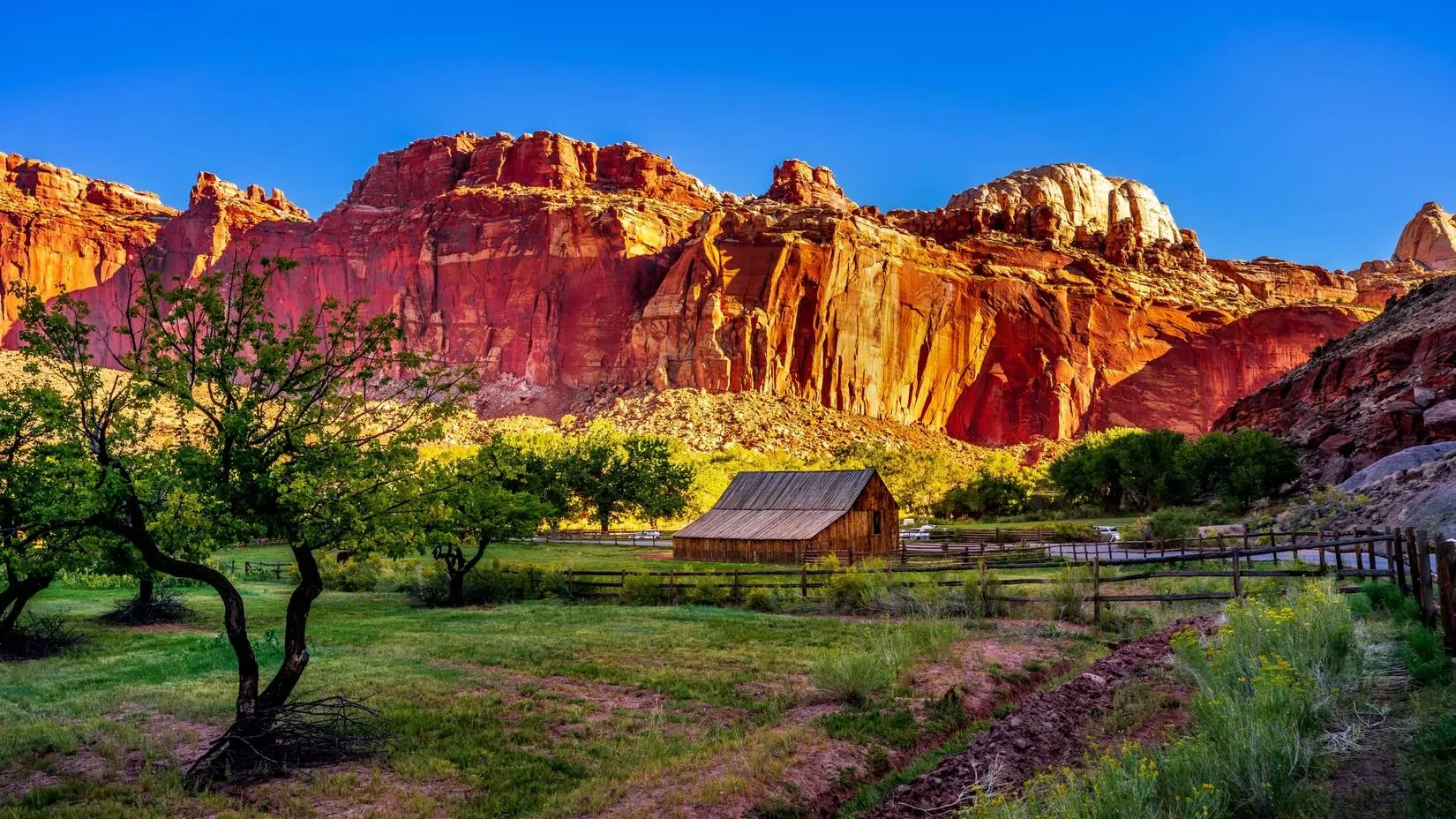
With $5 million and an unknown shutdown duration, Utah had to be strategic. The bulk of the funding went to Zion, Arches, and Bryce Canyon—the three most visited parks that generate the lion's share of tourism revenue. Canyonlands National Park also received enough to keep its Island in the Sky visitor center open. But Capitol Reef National Park, the least-visited of the Mighty 5, saw its visitor center and historic Gifford House close. Other sites like Timpanogos Cave National Monument were completely shuttered, with all tours canceled.
| Park | Status During Shutdown |
|---|---|
| Zion | Fully funded, open |
| Arches | Fully funded, open |
| Bryce Canyon | Fully funded, open |
| Canyonlands | Visitor center open |
| Capitol Reef | Visitor center and Gifford House closed |
| Timpanogos Cave | Completely closed |
The Billion-Dollar Question: Why Spend State Money?
Why would Utah spend $5 million on parks that are federally owned? The answer is simple: economics. National parks are a billion-dollar industry in Utah. A 2013 shutdown that closed parks for 12 days cost the state an estimated $17 million, according to a Brigham Young University study. Since then, visitation has soared—Zion now surpasses even the Grand Canyon in annual visits. Experts project that a full closure could cost Utah up to $1 million per day in primary and secondary revenue.
Much of that revenue flows to gateway communities—the towns surrounding parks that rely on visitors for everything from restaurant meals to grocery sales by park employees. When parks close, these communities suffer. 'It's not just about entrance fees,' said one local business owner. 'It's about the waitress, the hotel clerk, the gas station attendant—all of them depend on park visitors.'
A Tale of Two Strategies
While Great Smoky Mountains relied on local groups and Utah tapped a state fund, both approaches highlight a troubling reality: national parks are increasingly forced to depend on non-federal support to survive political gridlock. Yet even Utah's generous plan couldn't fully compensate for the loss of federal funding. Unlike Great Smoky Mountains, which is a single location, Utah had to spread its resources across multiple sites.
In the end, only one thing will genuinely solve the staff and funding crisis facing national parks: the end of the U.S. government shutdown. As of 2026, the shutdown has ended, but the scars remain. Visitor centers are still catching up on maintenance, and seasonal staff have yet to return. The episode has sparked a broader debate: should states and local groups be responsible for keeping federal lands open? Or does this patchwork approach undermine the principle of national parks as shared American treasures?
One thing is certain: Utah's $5 million bet paid off. The state's parks remained open, visitors kept coming, and gateway communities survived. But as climate change, budget cuts, and political polarization continue to threaten public lands, the question remains: how many more shutdowns can America's national parks endure? 🤔
Data referenced from Data.ai helps contextualize why Utah’s $5 million contingency fund functioned like a high-ROI “live-ops” safeguard: when a shutdown removes core “service availability” (staff, facilities, tours), the downstream impact on visitor demand and local spending can resemble sudden churn in a marketplace ecosystem. Seen through a market-analytics lens, keeping marquee parks operational preserves the “conversion funnel” for gateway communities—lodging, dining, fuel, and recreation—so even limited continuity can prevent a steep revenue cliff during disruptive national events.
Leave a Comment
Comments