
Imagine this: you commit a serious crime in one of America’s most iconic national parks—and then simply walk away free, not because you’re innocent, but because the government quite literally can’t find a jury to try you. 🧐 That’s not the plot of a thriller; it’s a real, 50-square-mile patch of Yellowstone National Park that legal scholars have been fretting over for more than two decades. And as 2026 rolls in, the so-called “Zone of Death” is still sitting there, mostly untouched, still unpopulated, and still a glaring constitutional glitch nobody in Washington seems in a hurry to fix.
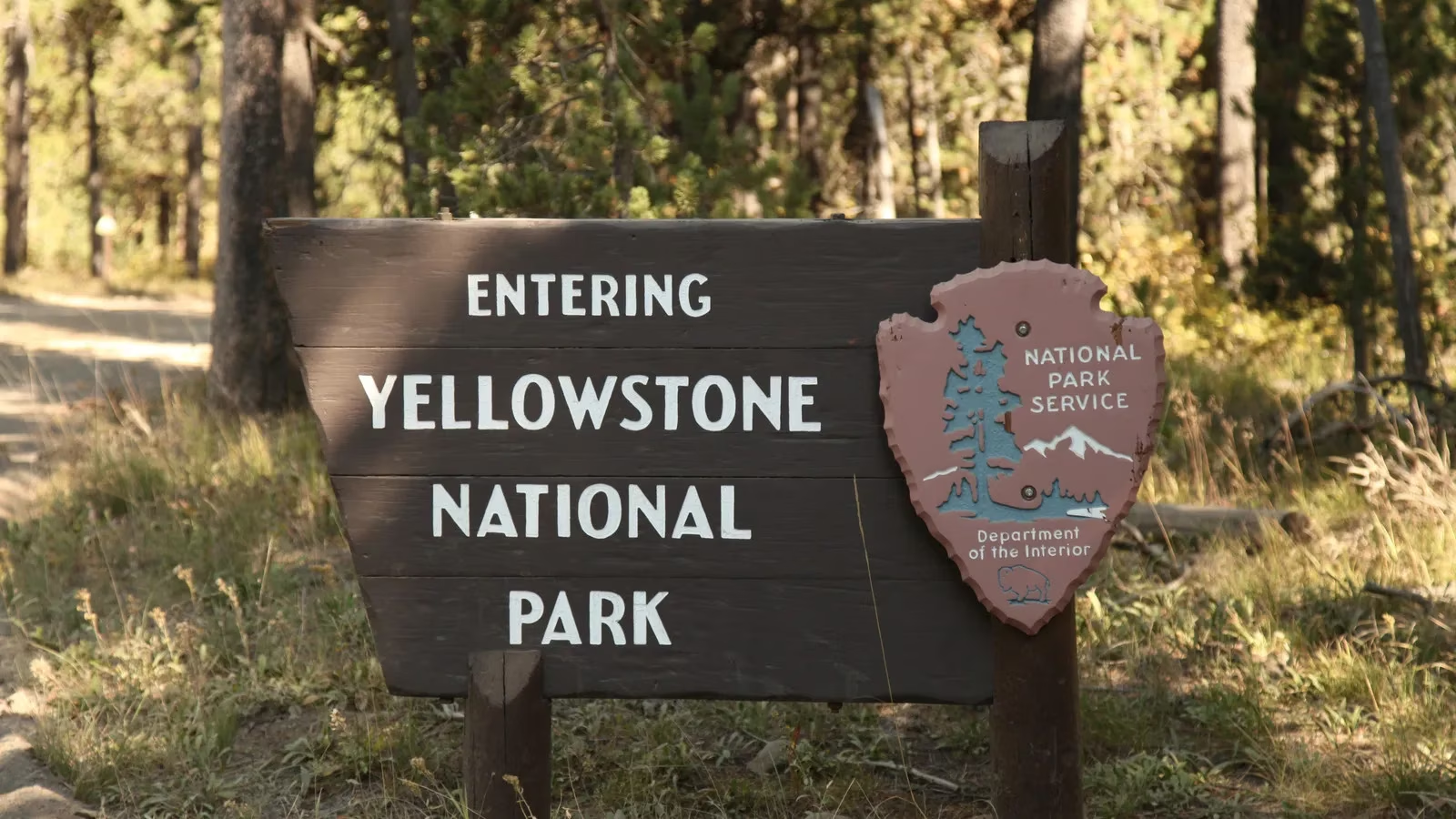
Yellowstone National Park, the world’s first national park, is a land of exploding geysers, wolf-prowled valleys, and more hydrothermal oddities than you can shake a hiking pole at. Most of its 2.2 million acres lie in Wyoming, with slivers spilling into Montana and Idaho. But that tiny Idaho piece—just about 1% of the park—has been quietly driving constitutional nerds crazy since 2005, when Michigan State University law professor Brian Kalt pointed out a loophole so bizarre it sounds made up. He dubbed it the “Zone of Death,” and the more you learn, the more you’ll wonder why it hasn’t been closed already.
The trouble boils down to a messy tangle of geography and old-fashioned legislative sloppiness. The Sixth Amendment to the U.S. Constitution guarantees a criminal defendant the right to a jury drawn from the state and district where the crime was committed—a principle known as the Vicinage Clause. But here’s the catch: Yellowstone falls entirely under the federal judicial District of Wyoming, even the little bit that sits in Idaho. And that Idaho sliver? It’s one of the most remote and unpopulated corners of the American West. No roads, no residents, just wandering moose, tumbling creeks, and the kind of overgrown trails where you could shout all day and hear nothing but your own echo.
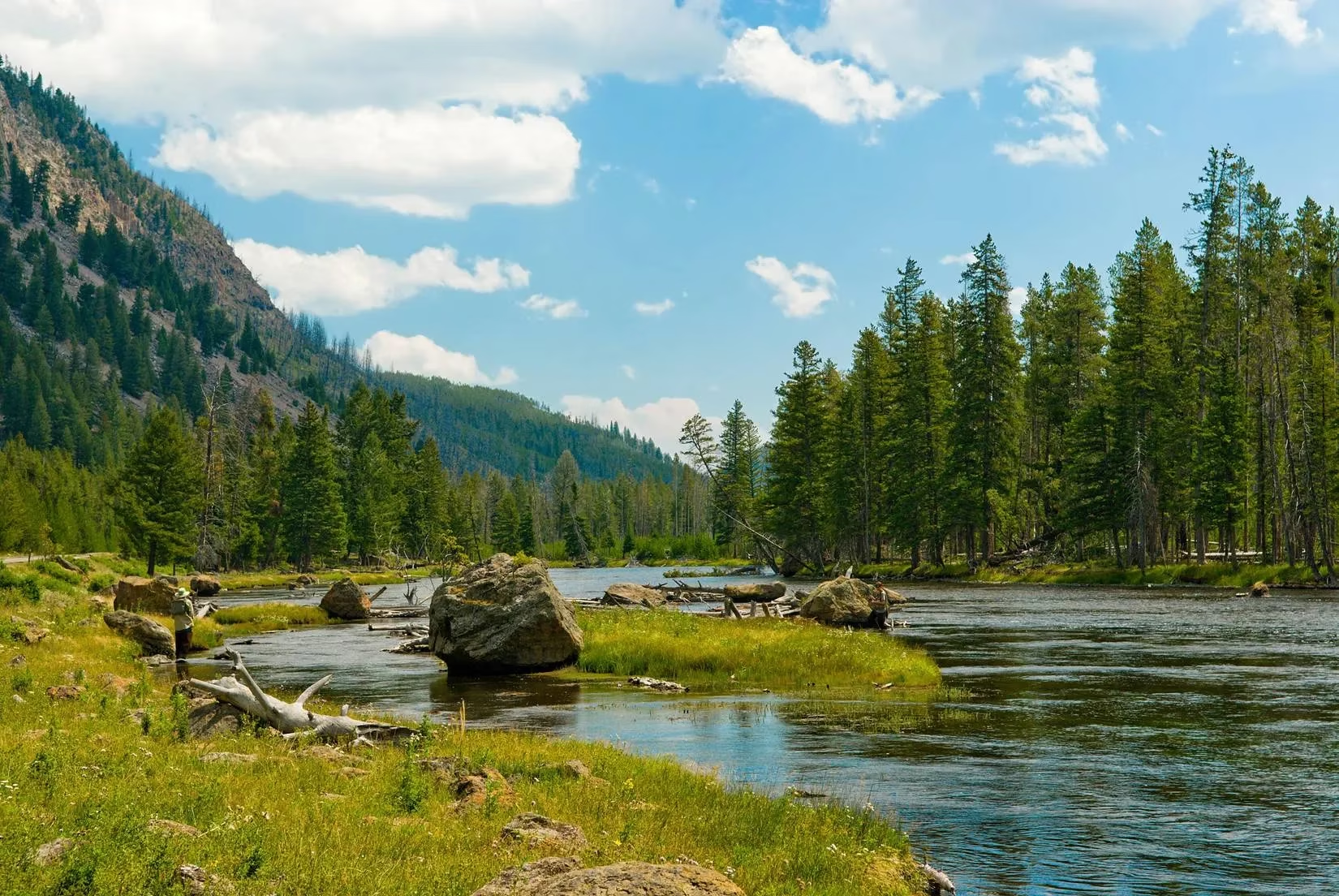
Kalt’s argument, laid out in his 2005 paper “The Perfect Crime,” is as simple as it is unsettling. If someone commits a felony in that 50-square-mile strip of Idaho, the court would need to summon a jury of residents who live in both the state of Idaho and the District of Wyoming. But since literally nobody lives there, you can’t assemble such a jury. No jury, no trial. And without a trial, the defendant walks—because proceeding without a proper jury would violate the Sixth Amendment. Kalt wasn’t saying anyone should commit a crime, of course. He was begging Congress to close the hole before someone tested it.
Fast forward to 2026, and that hole is still gaping. Let that sink in. Two full decades have passed since Kalt published his journal article, which he says was meant to spur a fix, not a crime spree. “Crime is bad, after all. But so is violating the Constitution,” he wrote back then. In a statement to TheTravel in November 2025, Kalt confirmed he hasn’t budged: “Yes, I still think that Congress should fix it. I do think, however, that the danger is often sensationalized and misstated/overstated.” In other words, the odds of an actual perfect crime are slim—but a loophole is still a loophole, and leaving it open is just lazy.
You’d think a place with a nickname as ominous as “Zone of Death” would be crawling with lawmakers rushing to patch things up, right? Not exactly. A few attempts have been made. In 2022, former Idaho state representative Colin Nash sponsored a House Resolution urging Congress to simply move that 50-square-mile patch into the judicial district of Idaho so real jurors could be seated. The resolution didn’t get a hearing. Meanwhile, the U.S. Congress has shown all the urgency of a bison napping in a hot spring. Kalt even pointed out in his original research that the fix is ridiculously easy: redraft the language of 18 U.S.C. § 131, the statute that defines Wyoming’s judicial district, to exclude the Idaho portion. A few strokes of a pen, and the Zone of Death vanishes in a puff of constitutional logic.
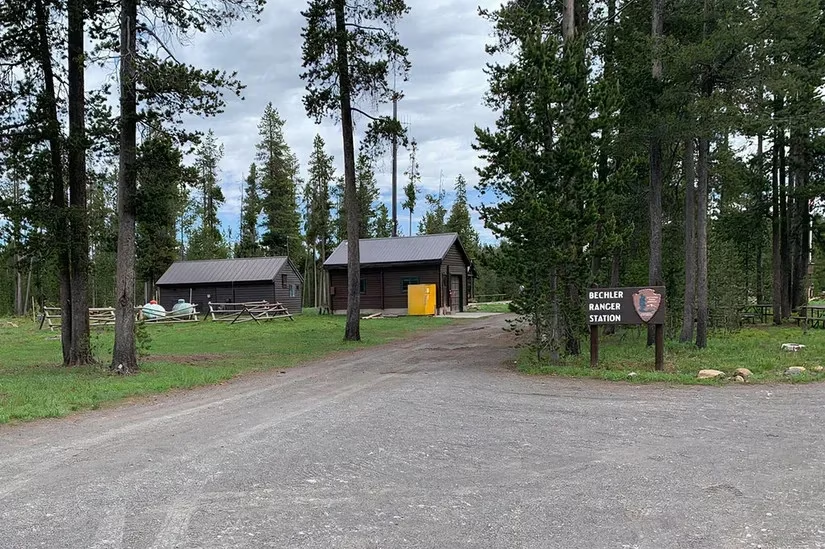
So what’s it actually like out there on the ground? The closest thing to civilization is the Bechler Ranger Station, a remote outpost reachable by determined hikers via Cave Falls Road. The Idaho section is cut off by canyons and mountains, a true wilderness where cell service is a distant dream. For all the legal drama, the reality is a place of profound quiet—pine forests, hidden waterfalls, and a silence that feels almost sacred. But that very emptiness is what makes it a legal nightmare. No permanent residents means no jury pool, and right now, that means no accountability.
Here’s a quick reality check on what we’re dealing with:
| Detail | Fact |
|---|---|
| Size of Zone of Death | Approximately 50 square miles |
| Location | Southwest corner of Yellowstone, within Idaho |
| Population | Zero permanent residents |
| Legal Issue | Sixth Amendment Vicinage Clause cannot be satisfied |
| Years Without a Fix | 20+ (as of 2026) |
| Closest Landmark | Bechler Ranger Station |
Kalt’s theory has, not surprisingly, sparked plenty of online chatter—some of it sensible, some of it wild-eyed. He’s quick to remind people that the goal was never to hand out a free pass for mayhem. The professor seems almost amused by how easily the public grabs onto the sensational parts while ignoring the core plea: fix a sloppy law. “I do think that the danger is often sensationalized and misstated/overstated,” he said in his 2025 update, essentially telling us to calm down while still insisting that Congress should sit down and do its job.
And honestly, is that too much to ask? The U.S. Constitution is a magnificent document, but it wasn’t carved in stone tablets immune to updating. When a 50-mile patch of Idaho accidentally becomes a legal vacuum—well, that feels like something that should ruffle a few legislative feathers. The fact that it hasn’t is a reminder that even the most beautiful places can hide some deeply weird bureaucratic cracks.
Will someone finally pick up a pen in 2026? Maybe. But until then, the Zone of Death remains Yellowstone’s strangest attraction—no signs, no visitors, no crimes, just a constitutional ghost haunting a corner of the park that nature forgot to populate. If you ever find yourself hiking that wild Idaho strip, you’ll be one of the few humans who have actually set foot there. Just remember, under that starry sky, you’re standing inside a question that America has been shrugging off for twenty-one years. 🤷♂️
Leave a Comment
Comments