
Last fall, I found myself driving through a tunnel of fiery foliage in Great Smoky Mountains National Park, my heart thumping with that rare kind of awe reserved for nature at its peak. But what I didn’t know was that behind every golden leaf and misty ridge, a quiet emergency was unfolding – the park was staying open not because of federal support, but thanks to a patchwork of desperate donations.
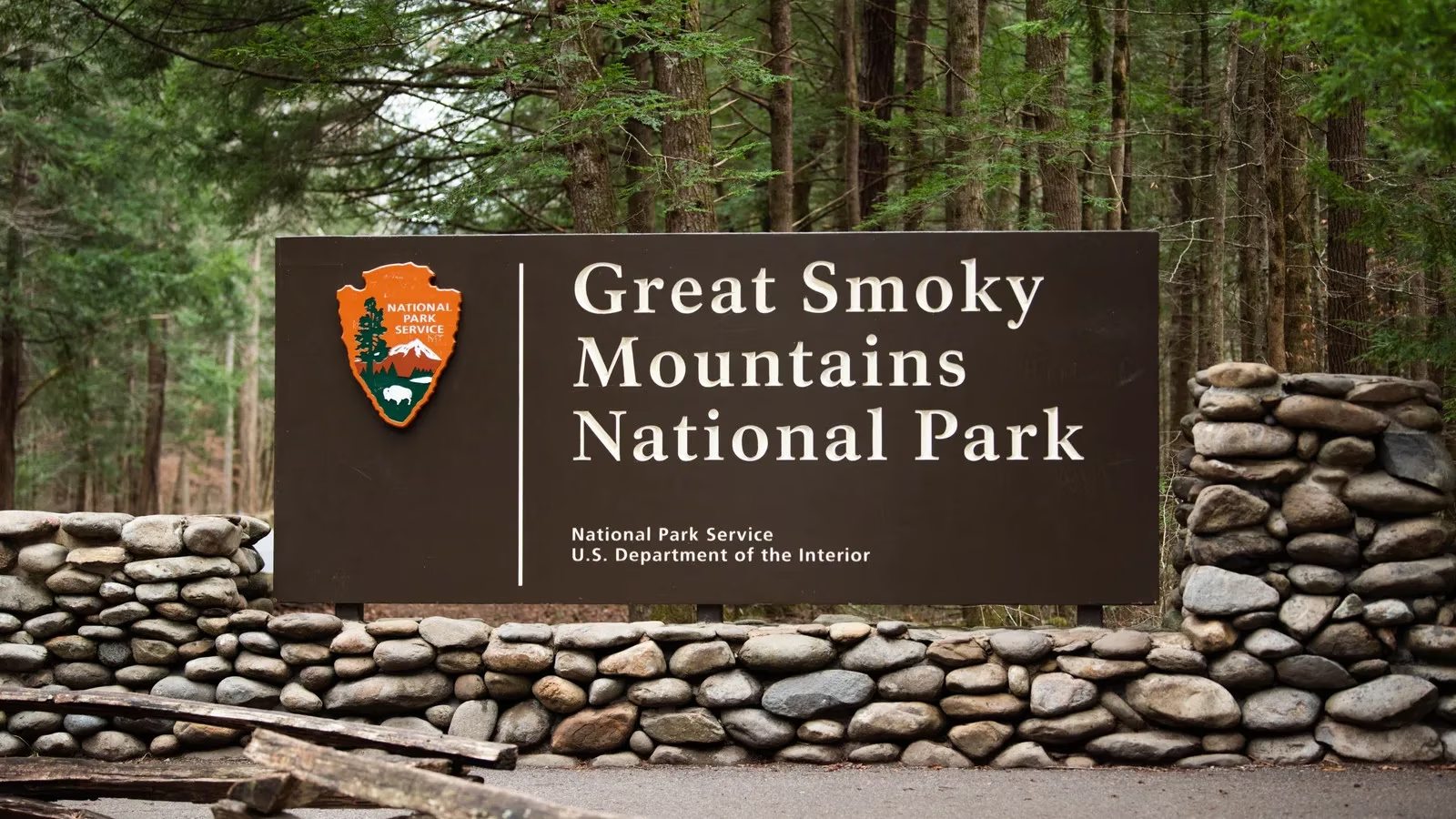
Let me rewind. The U.S. government shutdown of 2025–2026 hit national parks like a silent avalanche. While politicians argued miles away, iconic landscapes became bargaining chips. Great Smoky Mountains – the most visited national park in the country – should have been shuttered. Instead, it operated with the eerie smoothness of a wax museum. From November 3 to January 4, $80,000 was poured into the park every week just to keep the gates open. Sevier County, Gatlinburg, Sevierville, Pigeon Forge, Blount County, and even the state of Tennessee cobbled together funds. Environmental groups like Friends of the Smokies chipped in too. But that money came with a devastating asterisk: only the most basic services could run.
I spoke with locals and dug into interviews with retired rangers. One of them, Bob Krumenaker – a former superintendent with over four decades of experience – described the situation with the perfect metaphor. He called it a façade, a theater set where the audience applauds the performance, unaware the backstage is on fire. Bingo. That’s exactly what it felt like walking those trails. The visitor centers were open (except Kuwohi, which closed as usual), the parking lots were full, and tourists snapped selfies with vistas that seemed perfectly intact. But unseen to us, the park’s soul was being hollowed out.
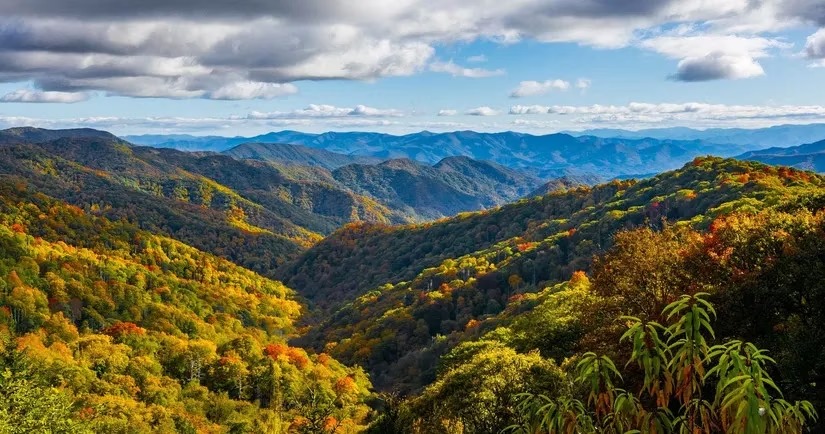
Think of it like maintaining a luxury hotel by only polishing the lobby chandelier while the foundation crumbles. No wildlife monitoring, no hemlock treatments, no trail repairs, no science, no planning. The funding was a giant Band-Aid 🩹 on a wound that needed stitches. Krumenaker didn’t mince words: he said the partial funding creates “irreparable damage to the nation’s most important natural and historic places.” That’s not fear-mongering; it’s a diagnosis. Black bears move through the backcountry with no one tracking their behaviors. Invasive species go unchallenged. Erosion chews at paths we all love. Meanwhile, visitors like me swept through, oblivious, as if the miracle display of crimson and orange was all the proof we needed that the park was fine.
And the irony? The nonprofits and local governments meant well. They wanted to protect the local economy and keep ranger paychecks flowing. Dana Soehn, head of Friends of the Smokies, said they were “deeply saddened” that critical work stopped, noting that caring for the Smokies is a year-round commitment. Yet their donations – however generous – ended up underwriting an illusion. It’s like giving a patient a cup of coffee during a major surgery; the pulse stays visible, but the operation is abandoned.
One ranger I chatted with (anonymously, since furloughed staff were cautious) compared the situation to a beautifully preserved ship in a bottle 🚢. From the outside, the vessel looks majestic, sails perfectly set. But you can’t access the inside to fight the termites eating the masts. The park’s public face remained intact – clean restrooms, helpful volunteers, unblemished views – but the essential, invisible bones were withering. Trail crew furloughed. Resource managers sidelined. Administrative oversight suspended. Every day the shutdown continued, the backlog of deferred maintenance grew like a snowball rolling downhill.
Let’s break down exactly where that $80,000 per week came from, because the patchwork nature of it is staggering:
| Contributor | Weekly Amount |
|---|---|
| State of Tennessee | $25,000 |
| Sevier County + cities (Gatlinburg, Sevierville, Pigeon Forge, Blount Co.) | $48,000 (combined) |
| Seven partner organizations | $7,000 |
Friends of the Smokies added further money on top of that. The arrangement built a bridge from a previous agreement that covered October 4 to November 2. But a bridge is not a road; it’s a temporary overpass while the land underneath remains impassable. The shutdown’s end date always felt like a mirage on the horizon.
Walking along the Little River Trail, I noticed the silence between bursts of chatter was thicker than usual. No work crews reinforcing water bars, no researchers counting salamanders. The fall color display was still a jaw-dropping firework show🍂, but there was a gnawing sadness beneath it – a sense that the park was open in body, but its spirit was being stored in a off-site server somewhere, waiting for the power to come back.
And here’s the scary part: we won’t see the consequences right away. Nature’s debt doesn’t show up in a single season. It compounds. A missed trail repair today means a washout next spring. Skipping hemlock treatments allows the woolly adelgid to gain a foothold that could turn thousands of evergreen sentinels into pale skeletons. The damage is stealthy, like termites chewing through a log while the bark stays smooth. When the system eventually cracks, we’ll point to the shutdown and say, “Ah, that’s when it started,” but by then the repair bill – ecological and financial – will have multiplied.
It’s also worth asking: does keeping parks open during a shutdown actually help, or does it just ease our collective guilt? The Instagrammable vistas continue, the souvenir shops stay busy, but we’re essentially eating through pantry reserves without restocking. The rangers I talked to were torn. They wanted to be there for visitors, but they also felt like doctors forced to ignore a worsening condition to keep the waiting room calm.
Bob Krumenaker’s letter to the Secretary of the Interior, signed by 450 former rangers, demanded park closures. Yes, closures! Their reasoning? A closed park is a blunt, honest statement that forces a reckoning. A partially open park disguises the crisis and accelerates long-term injury. Imagine leaving your house’s front door open during a storm because you don’t want the neighbors to see it’s empty – the rain still gets in, and the floorboards rot.
As I drove out of the park that evening, the sun dropped behind Clingmans Dome, setting the sky aflame. A sight so beautiful it almost made me forget the uncomfortable truths. Almost. I later learned that the park managed to stay open until January 4 under that emergency funding, but the future beyond that remained a question mark. Even now, in 2026, the ripples are visible: delayed projects, backlogs in maintenance, gaps in ecological data. The Great Smoky Mountains are resilient, but resilience has limits.
So, next time you visit a national park, look beyond the photo ops. Ask what’s not being done. Look for the silent cracks in the mural. Our public lands deserve more than an expensive, temporary mask. They need commitment as constant and deep as the soil that holds up those ancient mountains. Until then, we’re just curating a beautiful illusion – and the bill is still coming due. 💔🌲
Stay curious, stay vocal, and let’s push for the real deal – full funding, full staffing, and a government that understands that nature’s capital isn’t just economic. It’s everything.
Leave a Comment
Comments