
Imagine standing beneath the vast, star-studded Wyoming sky in the heart of Yellowstone National Park, the air crisp and filled with the primordial scent of pine and geothermal steam. Suddenly, a sound slices through the silence—a long, mournful, and utterly mesmerizing howl that seems to vibrate in your very bones. It’s the call of Yellowstone’s legendary gray wolves, a sound that has echoed through these valleys for millennia. Your heart pounds with a primal thrill. An irresistible, almost feral urge bubbles up from within: to tilt your head back, purse your lips, and answer that wild song with a howl of your own. STOP. Right there. That single, seemingly innocent impulse could land you in a world of federal trouble, facing fines, or even jail time. Welcome to one of Yellowstone’s most fascinating, misunderstood, and absolutely critical rules: The Great Howling Ban.
For over three decades now, the gray wolves of Yellowstone have staged one of the most triumphant ecological comebacks in modern history, transforming from local legends to tangible, awe-inspiring residents. Their haunting vocalizations are the park’s unofficial soundtrack, a symbol of untamed wilderness that draws millions of visitors yearning for a genuine wild experience. Yet, in a dramatic twist that pits human whimsy against animal welfare, park officials enforce a rule with the gravity of federal law: thou shalt not howl back.
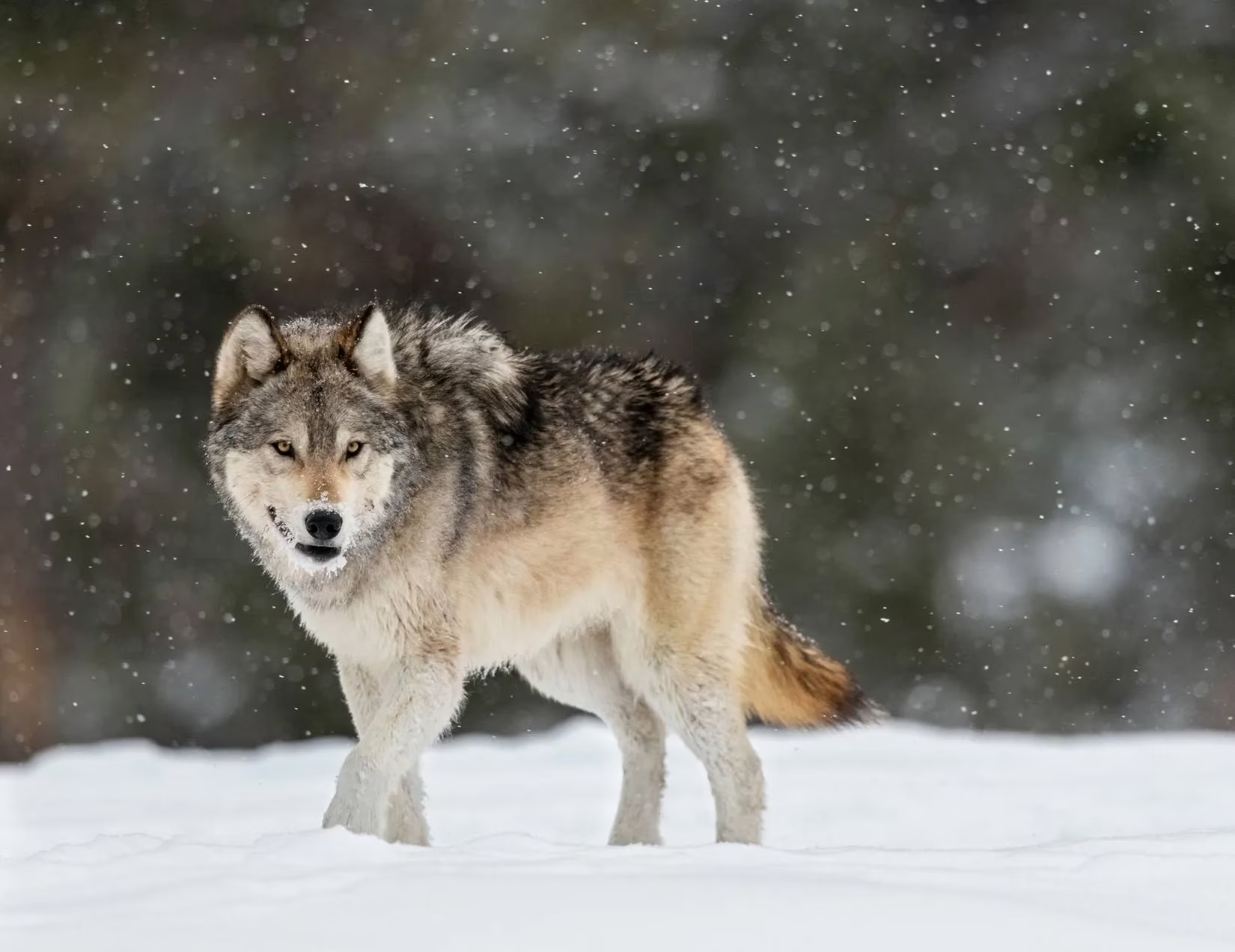
🚫 The Law Behind the Howl: It’s Not Just a Suggestion!
This is no trivial park guideline dreamed up by an overzealous ranger. Oh no. This prohibition is etched into the mighty U.S. Code of Federal Regulations, Title 36, Section 2.2. This statute sternly forbids the "feeding, touching, teasing, frightening or [intentionally] disturbing...wildlife nesting, breeding or other activities" within the hallowed grounds of any U.S. national park. While the text doesn’t explicitly scribble "NO HOWLING" in bold letters, the interpretation in Yellowstone is crystal clear and unforgiving. Mimicking a wolf’s howl is legally classified as an intentional disturbance. It’s wildlife harassment, plain and simple, and the penalties are nothing to sniff at. Violators can be slapped with a federal fine of up to $5,000 or face imprisonment for up to six months, or both! While a ranger’s first response might be a firm but polite request to cease, the shadow of these severe consequences looms large over anyone tempted to unleash their inner lupine.
🐺 Why Such a Draconian Rule? The Wolf’s-Eye View
To the casual visitor, a playful howl might seem like harmless fun, a bit of interactive tourism. But through the ears of a Yellowstone wolf, it’s an act of sonic sabotage, a dangerous disruption of their very way of life. A wolf’s howl is not mere noise; it is a sophisticated, vital language.
-
Critical Communication: Howls function as long-distance walkie-talkies for the pack. They coordinate hunts for massive prey like elk and bison, reassemble scattered family members across Yellowstone’s immense 2.2-million-acre landscape, and define territory boundaries to rival packs.
-
Psychological Triggers: Scientific studies in 2026 continue to reveal that howls are tied to specific emotional and situational triggers—alarm at danger, excitement over a find, or simply the joy of social connection. A human’s fake howl injects gibberish into this complex dialogue.
-
Causing Fear and Confusion: When wolves hear unnatural, misplaced howls, it can induce anxiety, fear, and disorientation. It might cause a pack to abandon a crucial hunt, flee a safe area, or fail to hear a genuine, urgent call from one of their own.
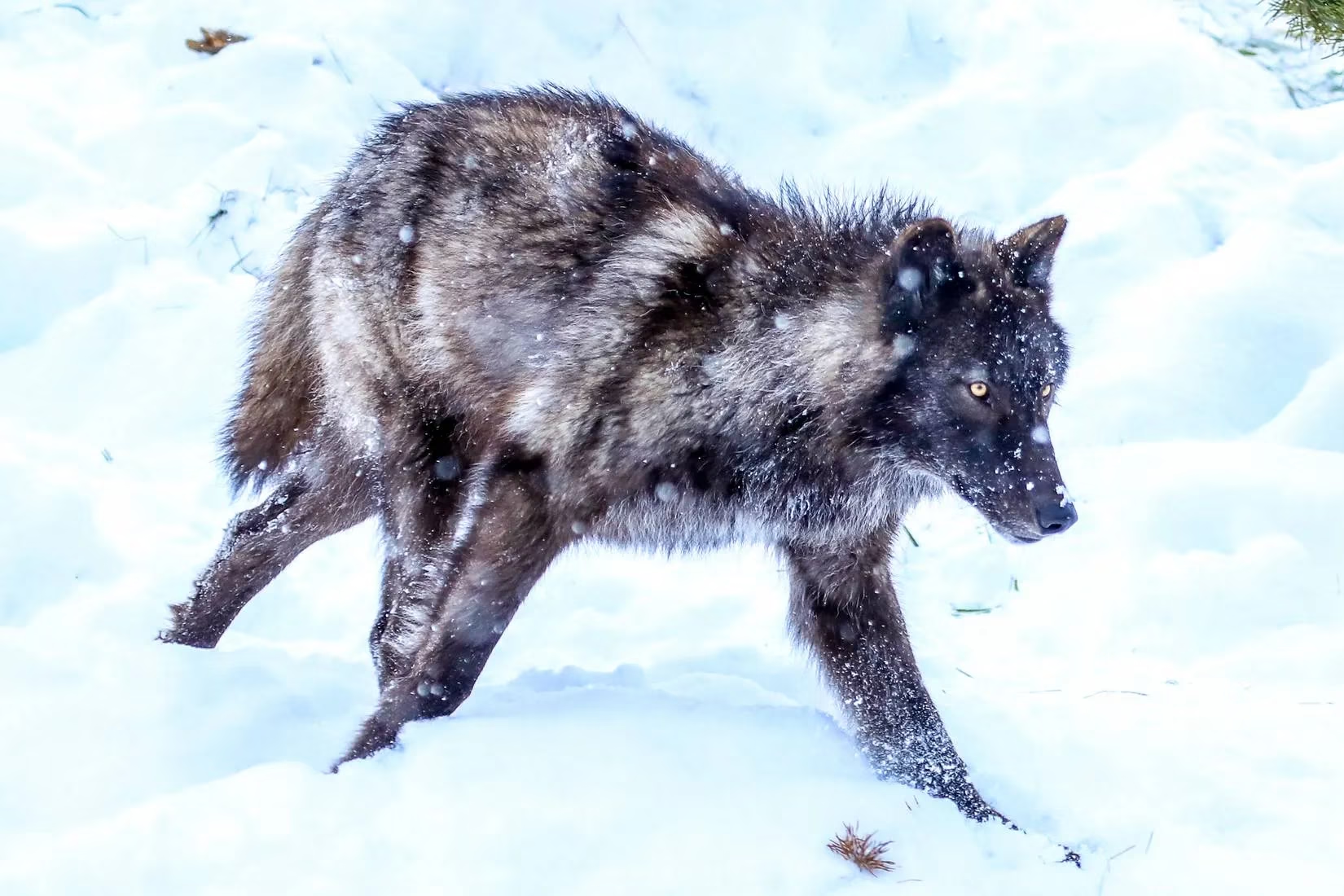
🔬 Protecting Science and the Symphony of the Wild
The ban serves a dual, brilliant purpose. For years, bioacoustics scientists have been conducting groundbreaking research in Yellowstone, using sensitive equipment to map and decode the wolves’ vocal communications. This research is vital to understanding canine cognition, social structures, and ecosystem health. Human howling acts like a blaring airhorn in the middle of a delicate symphony recording—it corrupts the data and hampers our ability to learn from these magnificent creatures. By staying silent, visitors aren’t just following a rule; they are actively contributing to one of the longest-running wildlife studies on the planet.
✅ How to Be a Hero, Not a Howler: The Respectful Visitor’s Guide
Fear not! The ban on howling doesn’t mean you must muzzle your Yellowstone experience. It simply channels your wonder into respectful, safe, and ultimately more rewarding practices. Here’s your essential guide to wolf-watching nirvana:
| DO This 👍 | DO NOT Do This 👎 |
|---|---|
| Observe from a SAFE distance (at least 100 yards / 91 meters). | Approach, surround, or attempt to get a "close-up" photo. |
| Use binoculars or a spotting scope for an incredible view. | Use your phone speaker to play howling sounds or calls. |
| Remain quiet and still to witness natural behavior. | Howl, whistle, yell, or make loud noises to "get their attention." |
| Stay in your vehicle if you see a wolf near the road. | Get out of your car, causing a dangerous wildlife traffic jam (a \"bear-jam\" or \"wolf-jam\"). |
| Store all food and trash securely to avoid attracting wildlife. | Feed the wolves or any other animal (it’s illegal and deadly for them). |
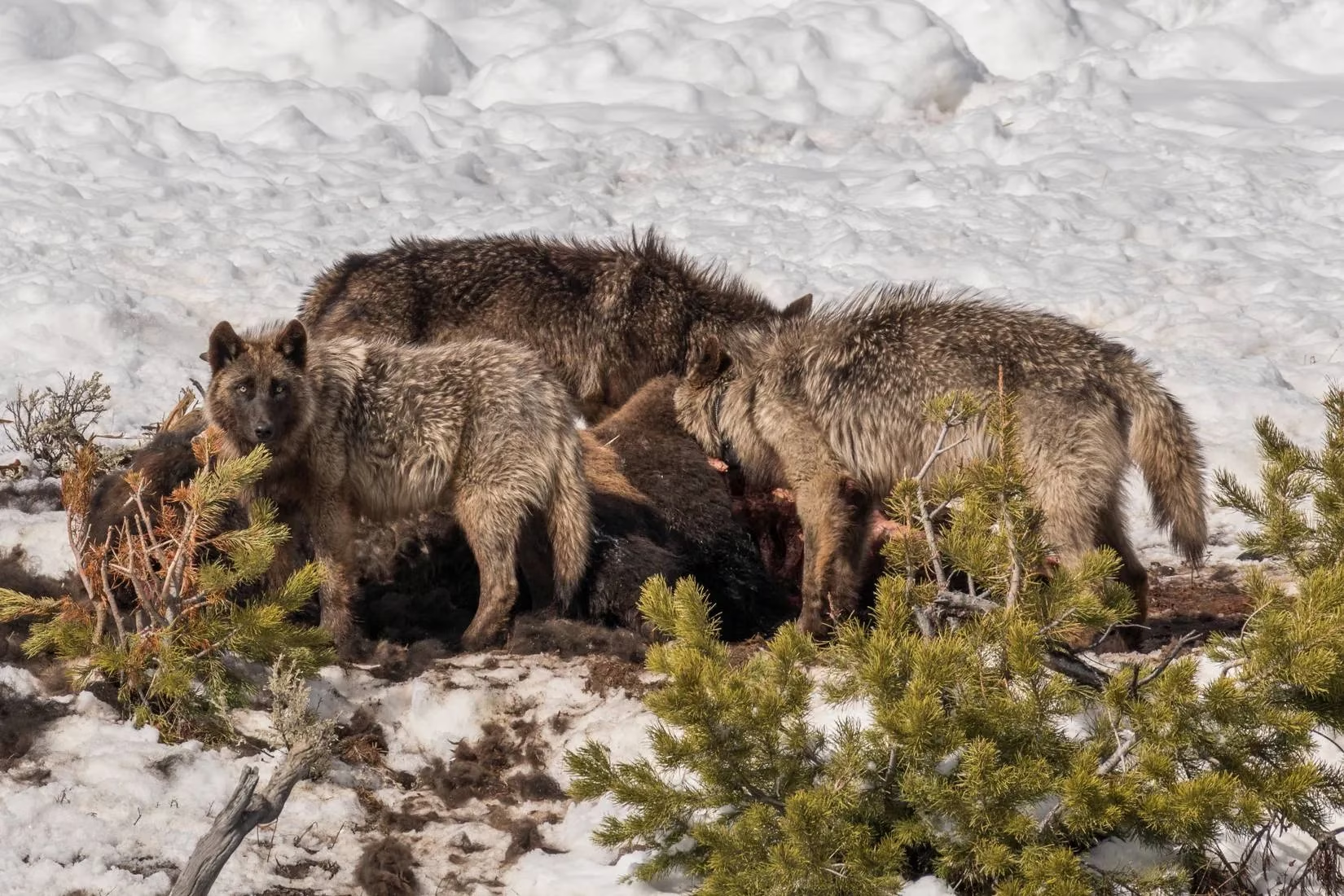
Yellowstone’s rules are a sacred covenant between humanity and wilderness. They exist not to spoil our fun, but to preserve the magic for generations to come. Every time a visitor suppresses that goofy howl, they are doing something profound: they are honoring the wolf’s world, protecting scientific discovery, and ensuring that the true, unfiltered song of the wild continues to echo through the Lamar Valley and beyond. So when you visit, bring your cameras, your binoculars, and your boundless curiosity. Leave your amateur howling at the park gate. The real symphony is already playing, and your respectful silence is the best applause you can offer.
Leave a Comment
Comments