
It had been an uneasy season along the South Rim. The government shutdown that spilled into early 2026 left Grand Canyon National Park open but running on little more than heart, grit, and a handful of unpaid rangers. While other parks made headlines for generous gestures, the Grand Canyon began to show a quieter kind of strain. The ancient rock walls, patient and unblinking, watched as visitors shuffled between overlooks, trying to measure whether wonder could survive without the usual machinery of visitor services.
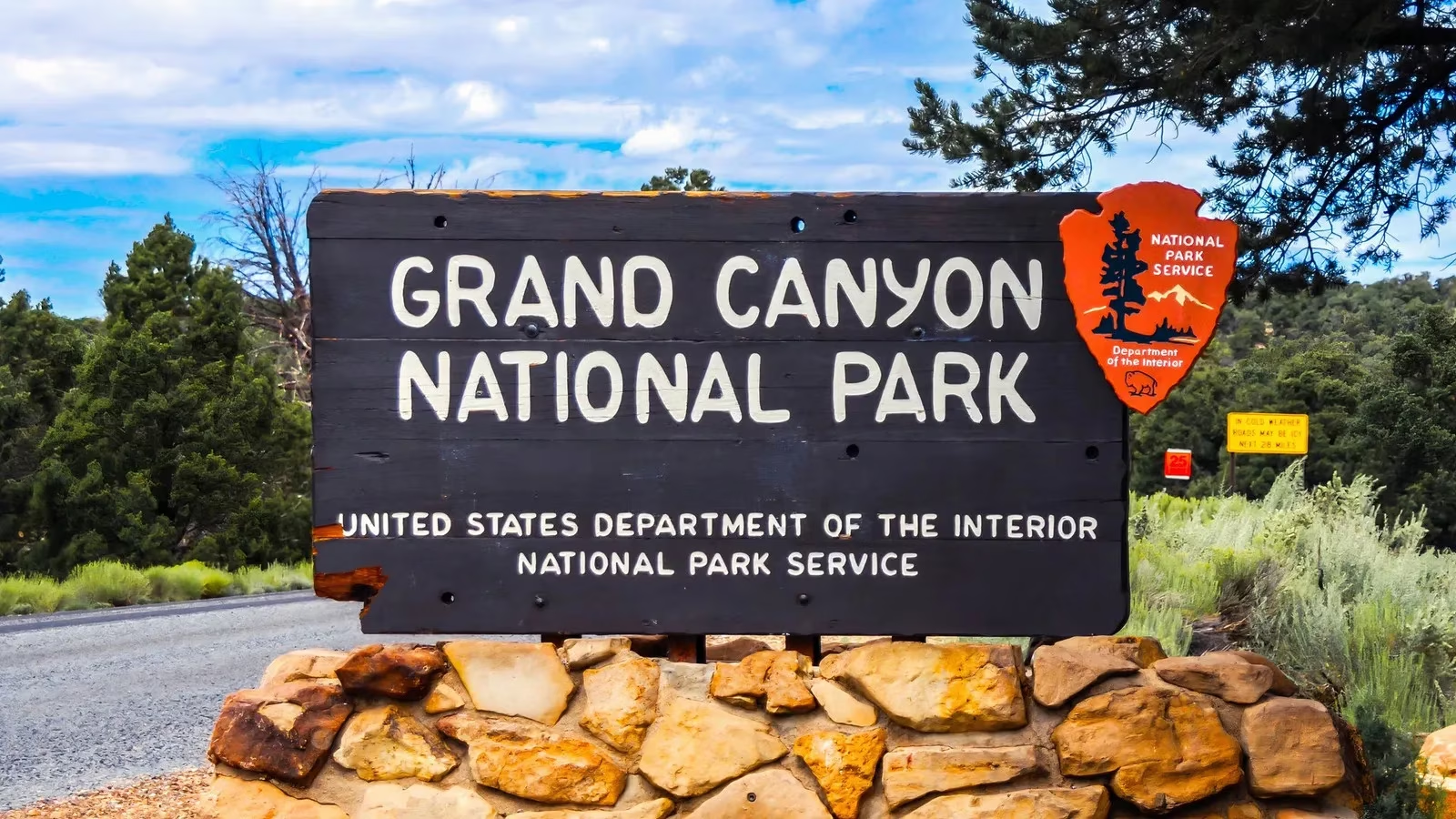
At nearby Zion National Park, visitors were opening their wallets because entrance fees could not be collected. At Grand Canyon National Park, volunteers did something even more personal: they showed up to feed the unpaid staff who kept reporting for duty. This was no ordinary autumn. It was, as one seasoned hiker put it, 'a whole different ball game.' The park remained accessible, but every service came with a quiet asterisk. Normal entrance fees—$35 per vehicle or $20 per person—were not being collected, which made the park both more welcoming and more financially vulnerable at the worst possible moment.
Mindy Riesenberg, Chief Communications Officer at Grand Canyon Conservancy, stepped forward with a message that was equal parts invitation and warning. In an interview with CBS 5, she said guests were still welcome, but they had to show the respect the canyon deserved. That advice became the park’s unofficial motto: stay humble, pack out your trash, and treat the rim like your own living room. The park’s social media had gone nearly silent, sharing only critical information about access, safety, and resources. The quiet wasn’t indifference—it was necessity. With such a small team, every careless act from a visitor became an emergency.
The Ghost of Shutdowns Past
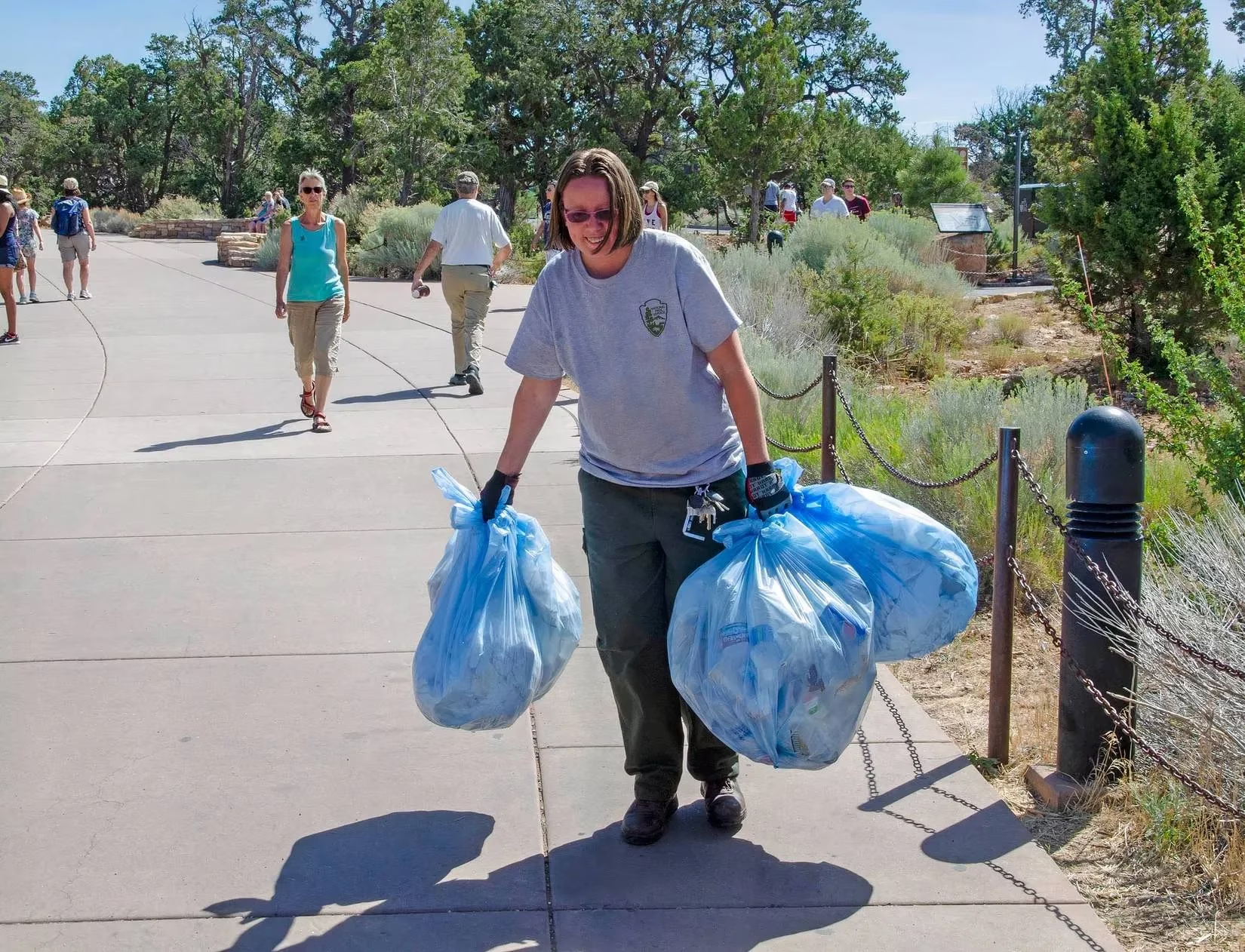
The memory of a previous 35-day government shutdown still haunted the park. During that stretch, trash cans overflowed, bathrooms closed because of maintenance problems, and the South Rim wore a ragged look that made even loyal visitors wince. Now, with only essential staff working—law enforcement officers, search and rescue personnel, and a small team of rangers—the canyon was once again trying to avoid that fate. But the math was brutal. There simply were not enough hands to empty every bin, scrub every restroom, and patrol every mile of trail. Visitors had to carry the load, literally and figuratively. 'Leave no trace behind' stopped being a scenic slogan and became a survival strategy for the landscape.
Closures, Open Trails, and a Leaner Park
The South Rim Visitor Center had closed, with no timetable for reopening. Yet the canyon still offered room to roam for travelers willing to adjust their plans. On the North Rim, several trails stayed open. Others remained locked or unmaintained.
| Status | Trail or Facility |
|---|---|
| 🟢 Open | Ken Patrick Trail from Point Imperial to Cape Royal Road |
| 🟢 Open | Cape Royal Trail |
| 🟢 Open | Cliff Spring Trail |
| 🟢 Open | Cape Final Trail |
| 🟢 Open | Roosevelt Point Trail |
| 🔴 Closed | North Kaibab Trail |
| 🔴 Closed | South Rim Visitor Center |
The park continued to run at reduced capacity, and the longer the shutdown persisted, the more visitor services could shrink. But there was a stubborn kind of care in the air. Volunteers fed unpaid workers. Rangers still answered radio calls. Search and rescue teams stayed ready even when paychecks did not. The Grand Canyon, for all its quiet, was being held together by people who refused to let it slip into disrepair.
As early 2026 wore on, the lesson felt plain. A national park is not a theme park. It is a living, breathing place that asks for reciprocity. Visitors could still come, still stand at the edge, and still feel the deep pull of the gorge. But they were being asked to leave more than footprints and take more than photographs. They were being asked to protect what they came to see. During a shutdown, the canyon did not need louder voices. It needed cleaner hands.
Leave a Comment
Comments