
In the closing months of 2026, the landscape of visiting America's most treasured natural wonders changed quietly but significantly. A new policy, announced by the U.S. Department of the Interior, instituted an additional $100 fee for all international visitors seeking access to eleven of the nation's premier national parks. The goal? To raise over $90 million annually, funds ostensibly dedicated to bolstering the entire National Park Service. Yet, as the dust settles, a clear and perhaps predictable pattern emerges: not all parks will benefit equally from this financial windfall. While most are projected to see modest revenue increases, a select few iconic destinations stand to gain millions. This move has sparked a complex debate, pitting the urgent needs of aging park infrastructure against the ideals of universal access and hospitality. Is this a necessary step to preserve America's natural heritage, or does it risk turning a patriotic symbol into an exclusive luxury?
The Titans of Tourism: Where the Revenue Flows
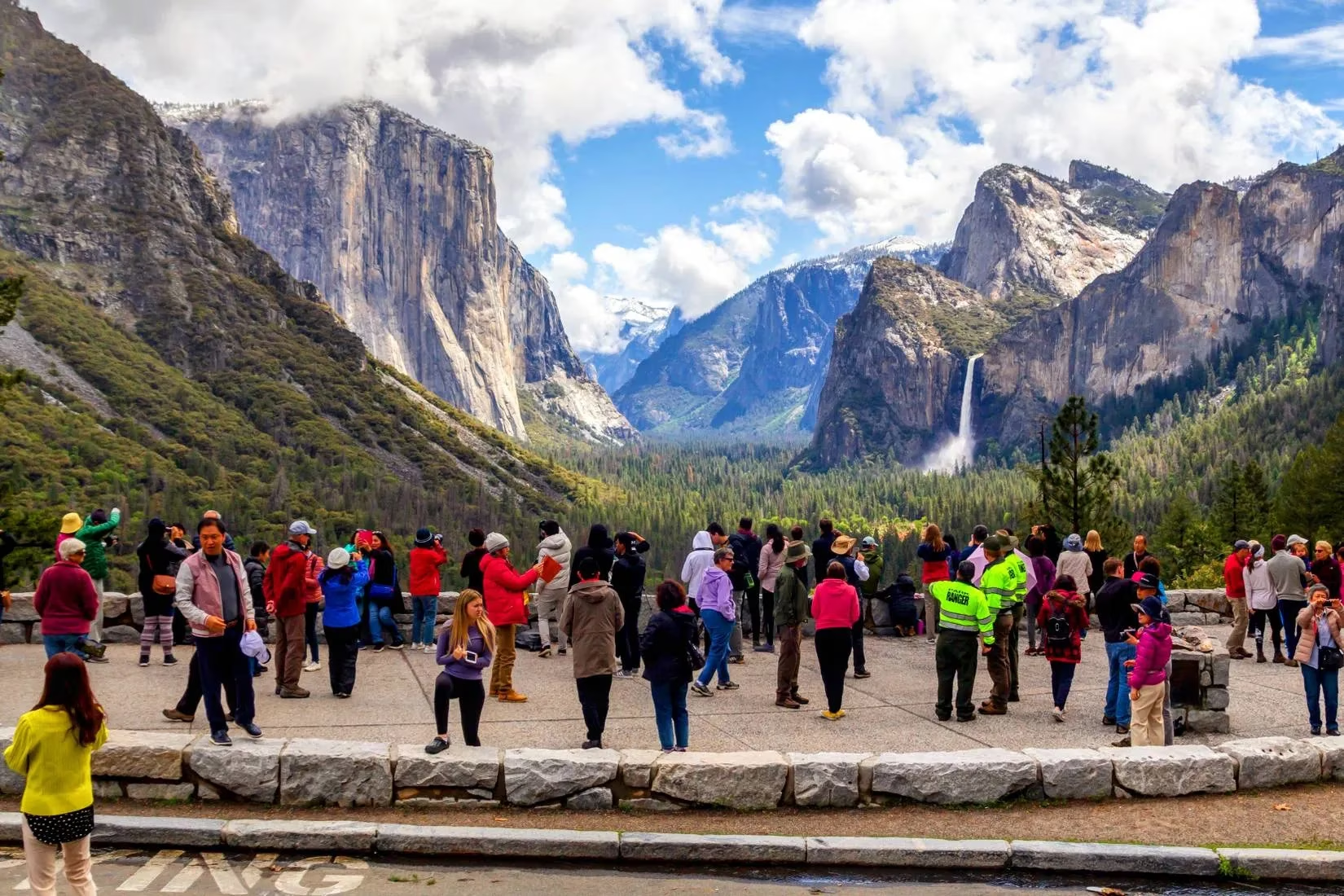
According to the latest NPS visitor data and analysis, three parks are positioned to capture the lion's share of the new surcharge revenue: Yellowstone, Grand Canyon, and Yosemite National Parks. The reason is straightforward: they are the crown jewels, attracting the highest annual visitation numbers among fee-charging parks. A detailed report from the Property and Environment Research Center (PERC) put the potential impact into stark relief. Their study focused on Yellowstone, estimating that a $100-per-person surcharge could generate a staggering $55.2 million annually for the park alone. To put that in perspective, this figure is nearly five times the park's current fee revenue. The report did anticipate a slight decline in visitor numbers—around 1.3%—but argued this would be negligible. Why would a $100 fee not deter more visitors? The logic is that international travelers, having already invested thousands in flights and accommodations, are the least sensitive to such incremental cost changes.
Tate Watkins, a PERC research fellow and co-author of the report, framed the surcharge as a critical investment. "This is about investing in Yellowstone’s future," he stated. "Our analysis shows that Yellowstone can significantly increase its revenue to maintain and improve the park, while keeping it accessible and protecting it for future generations." The report underscored a pressing reality: with over four million visitors annually, Yellowstone's aging infrastructure and delicate ecosystems are under unprecedented strain. The revenue isn't just a bonus; it's portrayed as a necessity for survival.
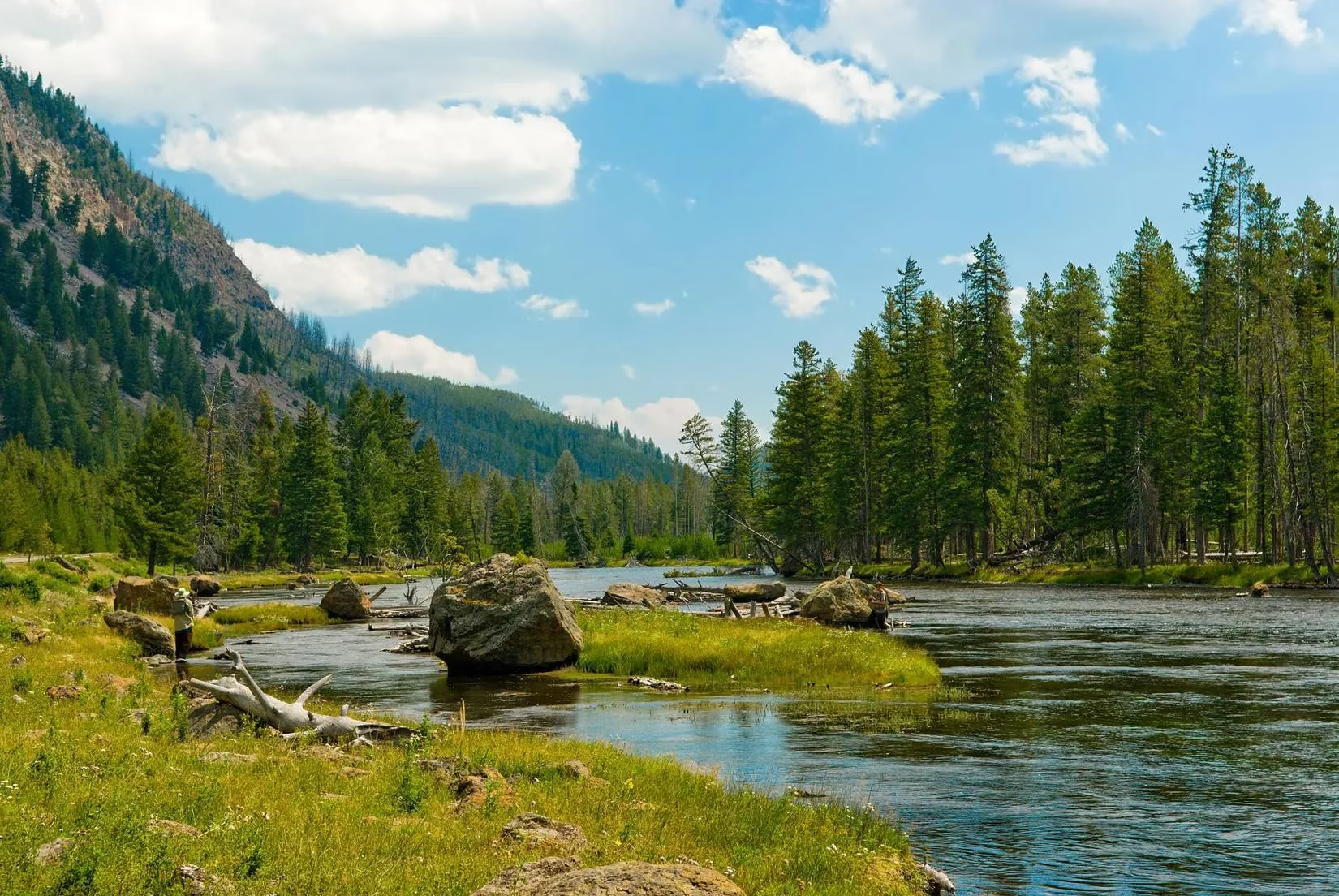
Yosemite and the Grand Canyon are not far behind. While precise, up-to-date statistics on international visitor percentages are scarce, historical data and park superintendent insights paint a compelling picture. In 2009, about 25% of Yosemite's visitors hailed from outside the U.S. With 2024 visitation exceeding 4.2 million, the new fee could easily translate to millions in additional annual revenue. For the Grand Canyon, the story is even more pronounced. Superintendent Ed Keable has indicated that a remarkable 30–40% of its visitors are international. Given that nearly 5 million people experienced the canyon's grandeur last year, the financial potential here likely surpasses even Yosemite's. Could these parks, long symbols of American grandeur, become the primary financial engines for the entire park system?
The Middle Ground: Modest Gains for Majestic Parks
Not every park on the list is a global tourism magnet. For the mid-tier destinations—parks like Zion, Grand Teton, and Glacier—the financial boost from the surcharge is expected to be more measured, landing in the low to mid-single-digit millions annually. The impact, while significant for their budgets, is less transformative.
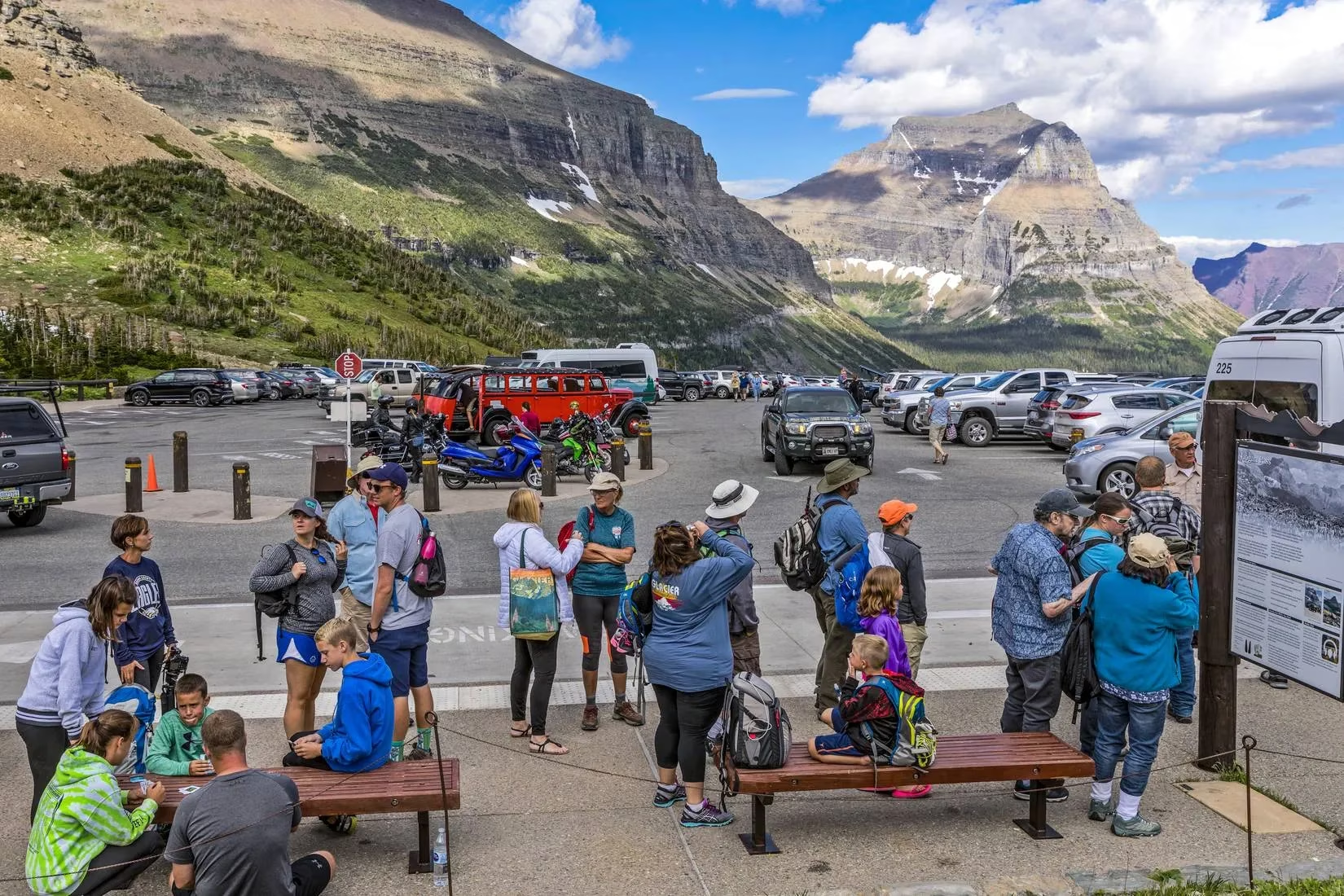
Take Glacier National Park as an example. Exact international visitor counts remain elusive, but local business owners provide clues. Mark Howser, owner of the Whistling Swan Motel near the park, estimates that about 15% of his guests are from abroad. With Glacier welcoming over three million visitors in 2024, the surcharge will undoubtedly provide a welcome revenue stream. But will it be enough to address their own maintenance backlogs and staffing challenges? The answer is less clear than for the "Big Three."
A Nation Divided: The Great Fee Debate
The policy has cleaved public opinion into two distinct camps. Supporters of the surcharge make two primary arguments:
-
Fairness: They contend that American taxpayers already shoulder a disproportionate burden by funding the NPS through federal taxes, while international visitors have previously enjoyed relatively low entry costs.
-
Global Precedent: They point out that the U.S. is not alone; several other nations impose similar fees on foreign tourists visiting public sites, making this a common, if controversial, practice in global tourism.
However, a chorus of opposition, led by conservation advocates, raises profound concerns. Emily Thompson, executive director of the Coalition to Protect America’s National Parks, voiced a powerful critique. "In a year where national park staff have already been cut by nearly 25%, we worry this will be yet another burden for already overworked employees," she said. "And to what end?"
Thompson and others argue that the administration should prioritize full federal funding and adequate staffing for the parks instead of implementing fee hikes. They fear the surcharge could backfire, dampening an important economic driver for the parks and the surrounding gateway communities that depend on tourism. Her concluding warning resonates with the foundational ethos of the park system: "National parks should be available and accessible to all, or America’s best idea will become America’s greatest shakedown."
The Unwritten Future
As 2026 progresses, the ultimate consequences of this policy remain unwritten. Will the surcharge prove to be the financial lifeline that preserves Yellowstone's geysers, protects Yosemite's valleys, and maintains the Grand Canyon's trails for decades to come? Or will it create an invisible barrier, subtly shifting the demographic of who can afford to experience these natural monuments? The data suggests a significant revenue windfall for the most famous parks, but at what cost to their international goodwill and symbolic status as places for all? Only time will tell if this $100 fee is remembered as a necessary stewardship tool or a misstep in the long story of America's public lands. For now, the debate itself reflects the deep and enduring value the nation places on these iconic landscapes.
Leave a Comment
Comments