
Welcome to America's national parks in 2026, where the scenic vistas are still breathtaking, but the information ecosystem has gotten... well, let's just say it's more complicated than a marmot's burrow system. It seems the only thing changing faster than the climate is the official stance on talking about it. Over the past year, a quiet but significant war has been waged not over land, but over words, signs, and website footnotes. From the rocky peaks of Acadia to the majestic valleys of Glacier, park visitors have been treated to a masterclass in bureaucratic whiplash, where one day you're learning about carbon footprints and the next, you're scanning a QR code to potentially report a ranger for being a downer about American history. Talk about a plot twist nobody saw coming!
The Great Sign Purge of Acadia: When Climate Advice Went MIA
Let's set the scene. Picture this: You're hiking up Cadillac Mountain in Acadia National Park, ready for that epic sunrise view. You stop to catch your breath and read an interpretive sign. But wait—where did it go? That sign, the one gently suggesting visitors might want to, oh, you know, help save the planet by taking the shuttle to reduce their carbon footprint, has vanished into thin air. Poof! Gone faster than a tourist's sunscreen on a windy cliff.
This wasn't just some random act of vandalism by a disgruntled squirrel. This was a direct result of an executive order titled "Restoring Truth and Sanity to American History." Sounds like a Marvel movie subtitle, doesn't it? Section 4 of this order tasked the Secretary of the Interior with a fascinating mission: to hunt down any public monument, marker, or sign that might be guilty of "improper partisan ideology" or presenting a "false reconstruction of American history" since 2020. Apparently, a sign about weather damage and carbon footprints made the naughty list.
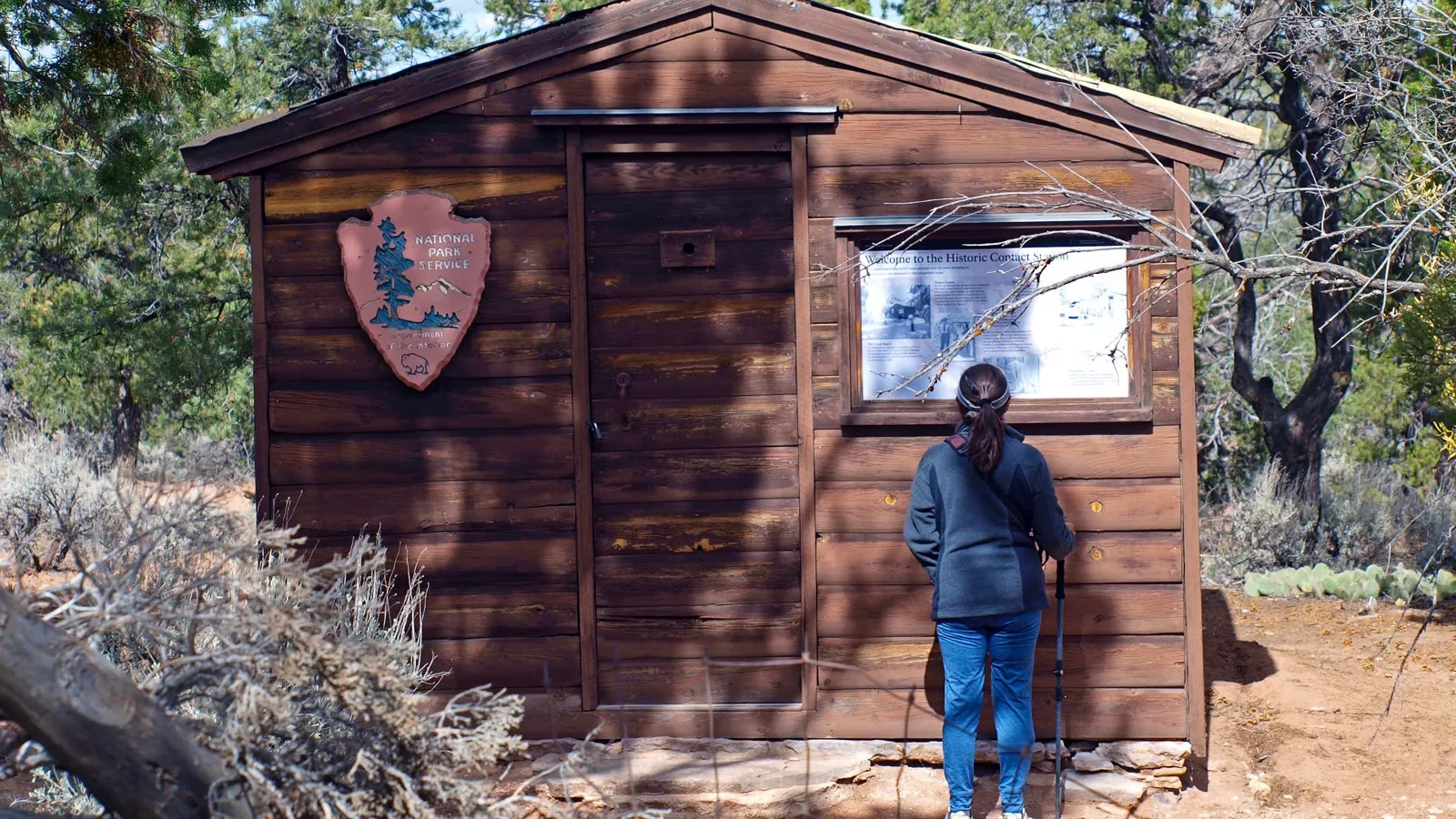
Congresswoman Chellie Pingree (D-Maine) did not mince words when talking to The Washington Post about this sign's disappearance. She called it an "outrageous assault on our free speech" and declared the whole situation "bonkers." Her point? Removing a simple, factual sign about climate impacts is essentially trying to "dumb everyone down and pretend real weather events don't happen." Ouch. That's a burn hotter than a July day in Death Valley.
The Website Wipeout: Digital Disappearances
But the sign purge was just the tip of the melting iceberg, folks. The National Park Service (NPS) website has been undergoing its own digital spring cleaning, and let's just say they're throwing out more than just old HTML. Entire sections of text related to climate change and global warming have been quietly edited or erased.
Here’s a quick rundown of what got the digital axe:
-
The Big Statement: The simple, scientifically-backed sentence, "Human activities are changing the Earth’s climate," was reportedly removed from multiple park pages. Talk about a mic drop... into the recycling bin.
-
Impact Explanations: Descriptions of how global warming specifically affects individual parks—like glacier melt, sea-level rise, or changing wildfire seasons—have been revised or vanished.
-
Connecting the Dots: Information that linked visitor actions to broader environmental consequences was scrubbed.
This has caused a real stir, not just among tree-hugging visitors, but among the park rangers themselves. Imagine being an expert on ecosystems, trained to educate the public, and then being told you can't mention one of the single biggest forces shaping those very ecosystems. It's like being a chef forbidden from mentioning salt.
The Rocky Mountain QR Code Quandary: Snitching Made Scenic
Now, for the pièce de résistance of park weirdness. Over at Rocky Mountain National Park, a new kind of sign popped up. No, not one about elk mating habits or geological formations. This one featured a QR code. Scan it, and you'd be directed to a portal where you could report... wait for it... "disparaging or false information about America" that you might have heard in the park.
Let that sink in. You're on a family vacation, listening to a ranger talk about the complex history of land use, and your kid whips out his phone. "Mom, the ranger said something that made America sound not-perfect. Should I scan the code?" It's a dystopian tech twist that nobody asked for. This policy has left rangers walking a tightrope, having to carefully vet every historical fact and ecological lesson to avoid triggering a partisan complaint. It's enough to make a person nostalgic for the simple days of just worrying about bear spray.
Glacier National Park: The Rebel With a Cause
Amidst all this informational chaos, one park has stubbornly refused to play along. Glacier National Park has become the rebel, the holdout, the "Green Knight" of the NPS system. While other parks were deleting, Glacier was doubling down.
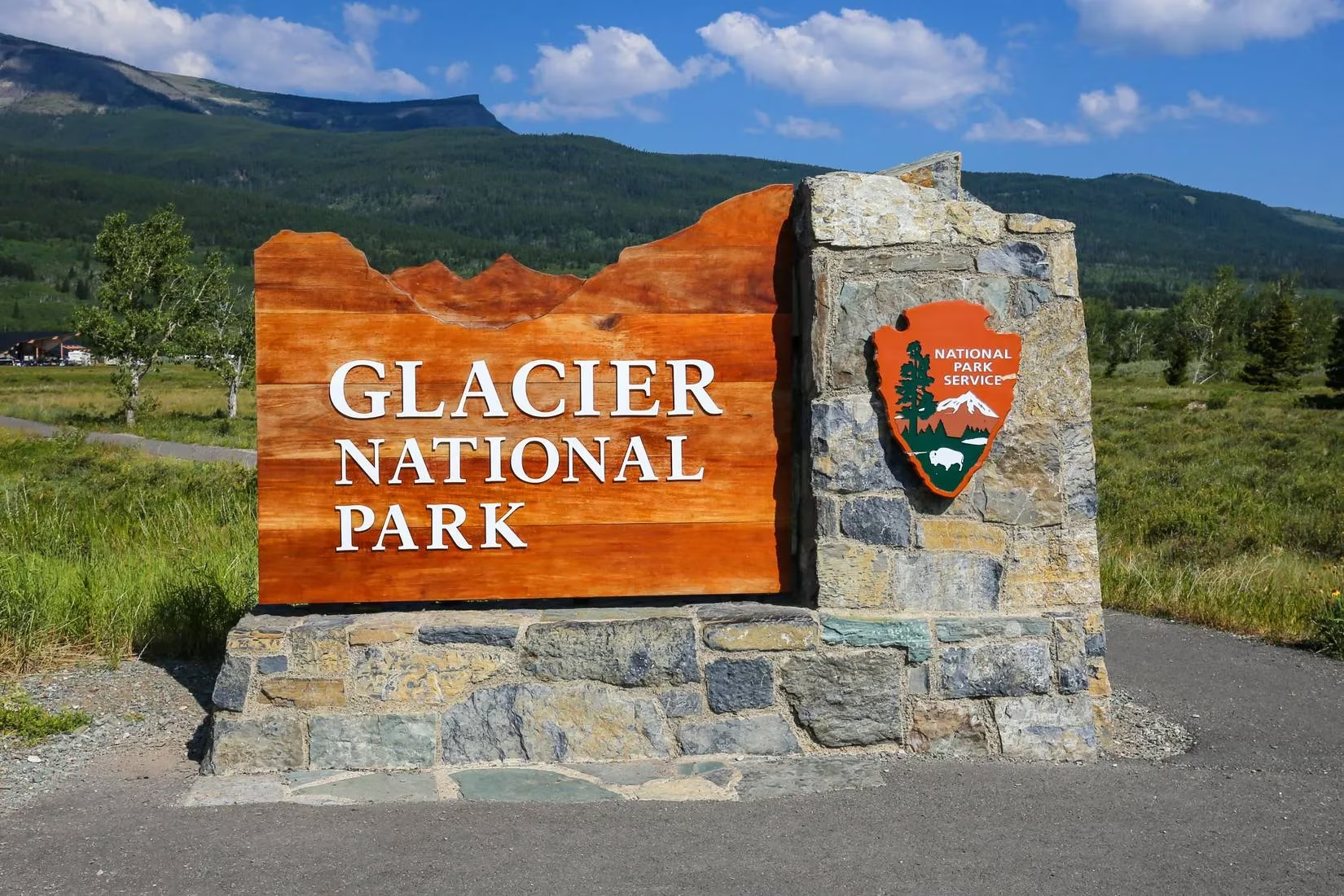
Their website proudly hosts a page titled "Green your visit to Glacier," which is basically everything the Acadia sign wanted to be when it grew up. The page is a treasure trove of eco-friendly advice that's still, as of 2026, live and kicking. It includes:
-
The Forbidden Advice: Explicit encouragement to take free park shuttles to reduce your carbon footprint—the exact same message that got the Acadia sign removed. How daring!
-
Actionable Tips: Suggestions to bike, hike, and use alternative transportation, with specific parking info for the Apgar and St. Mary Visitor Centers.
-
Home-Based Guidance: Information on how visitors can reduce their footprint even after they leave the park.
-
Climate Change Front and Center: Dedicated sections discussing sustainability and the specific, observable impacts of climate change on Glacier's own disappearing glaciers and ecosystems.
Glacier's stance is a fascinating anomaly. It's as if the park superintendent decided, "You know what? The glaciers are literally melting. We're gonna talk about it." Their website serves as a living archive of the information that has gone missing elsewhere, a digital act of defiance that has visitors and conservationists giving a silent (or not-so-silent) cheer.
The Bottom Line: A Park Experience, Redefined
So, what's a nature lover to do in 2026? The experience of visiting a national park has become a strange meta-commentary on the state of public discourse. You're not just observing nature; you're observing which parts of nature's story are currently deemed acceptable to tell.
| Park | The 2026 Vibe | Key Controversy |
|---|---|---|
| Acadia NP | 🤫 The Quiet Treatment | Removal of climate change signage & shuttle encouragement. |
| Rocky Mountain NP | 👁️ Big Brother is Watching | QR code signs for reporting "un-American" information. |
| NPS Websites (General) | 🧹 The Great Digital Erasure | Widespread removal of climate change language and data. |
| Glacier NP | 🏔️ The Last Green Stand | Defiantly maintaining full climate change and sustainability info. |
It's a confusing time. On one hand, you have policies aimed at curating a specific, arguably sanitized, narrative. On the other, you have the undeniable, physical reality of the parks themselves—ecosystems that are changing in real-time due to human activity. And in the middle, you have park rangers, the ultimate OGs of outdoor education, caught in a crossfire of politics and science.
The whole situation is a head-scratcher of epic proportions. It raises questions that are tougher than a week-old bagel: What is the purpose of a national park? Is it purely a showcase of scenic beauty, or is it also a classroom without walls? Can you truly appreciate a place without understanding the forces that threaten it? As one frustrated observer might say, trying to ignore climate change in a national park is like trying to ignore an elephant in the room... if the elephant was actively melting the room's ice sculptures.
For now, visitors are left to navigate this new landscape. Maybe they'll download the NPS app, only to find missing pages. Maybe they'll scan a QR code, wondering what it truly leads to. And maybe, just maybe, they'll make it to Glacier, where the air is crisp, the views are monumental, and the information about why those views are changing is still refreshingly, stubbornly, available. What a time to be alive and hiking.
Leave a Comment
Comments