
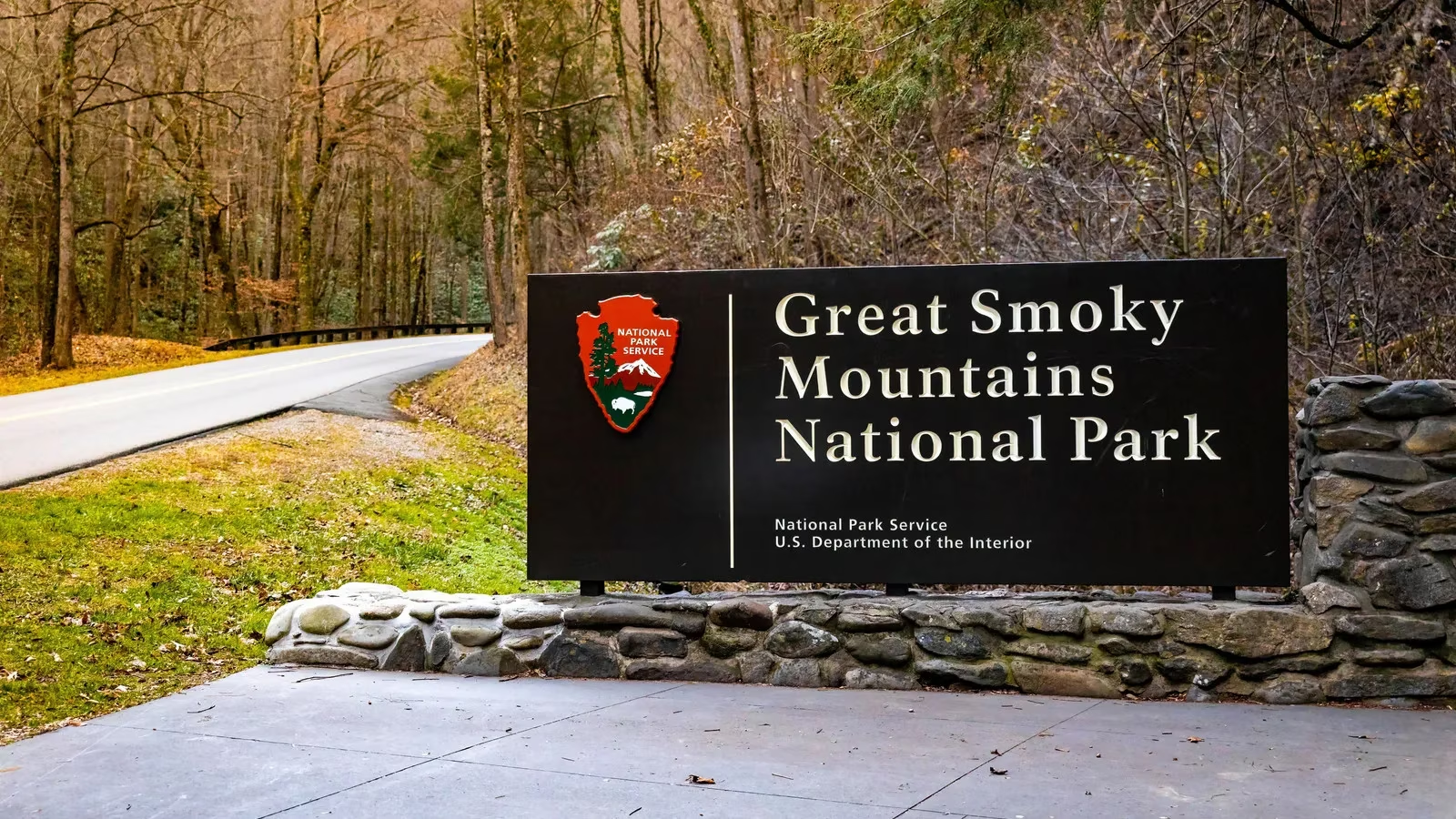
I've always been a lover of national parks. The Great Smoky Mountains National Park is my absolute favorite, and it's easy to see why. Spanning Tennessee and North Carolina, it's the most-visited national park in the United States. In 2024 alone, over 12 million people explored its scenic drives, unique hikes, and wildlife vistas. But with so many visitors, bad behavior is inevitable. We've all seen the "tourons"—tourists who ignore rules and common sense. Remember the campers in Banff who left food out and attracted a wolf? Or the Yellowstone visitors who tried to pet bison or posed near boiling hot springs for Instagram? 😬
Have you ever stacked a rock just for fun? Maybe you thought it was harmless, even artistic. That's what many influencers do to add visual interest to their shots. But rock stacking has a dark side that most people never consider. In Great Smoky Mountains National Park, this seemingly innocent activity recently claimed a life—the life of an endangered Eastern Hellbender salamander.
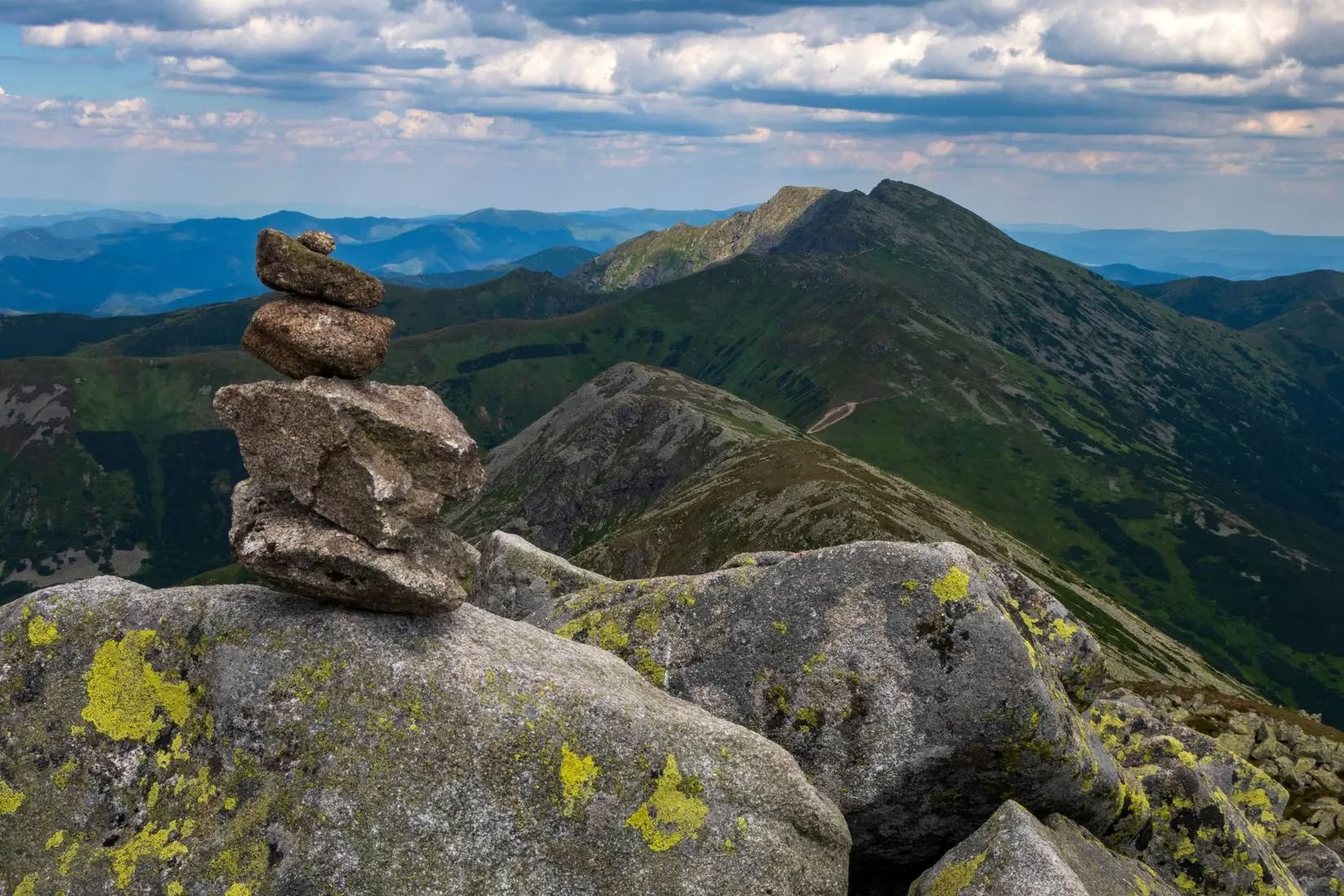
Rock stacking, or building cairns, was traditionally used to mark primitive trails in places with few landmarks. Today, however, it's a social media trend. Tourists stack rocks to leave their mark, but they're actually destroying fragile ecosystems. Under those rocks live microscopic food webs and small creatures that depend on the cool, damp environment. When you add rocks, you increase pressure and block sunlight, crushing everything beneath.
That's exactly what happened to an Eastern Hellbender in 2025. This poor salamander was found crushed to death under a rock stack made by tourists. Eastern hellbenders are the largest salamander species in the U.S., growing up to two feet long. They love the cool, swift waters of the Appalachian mountains. They spend most of their days nestled under large rocks near the river, hiding from predators and keeping cool. That safe home was destroyed when visitors piled more rocks on top. The increased pressure eventually crushed the little one, leaving a tragic scene for park rangers.
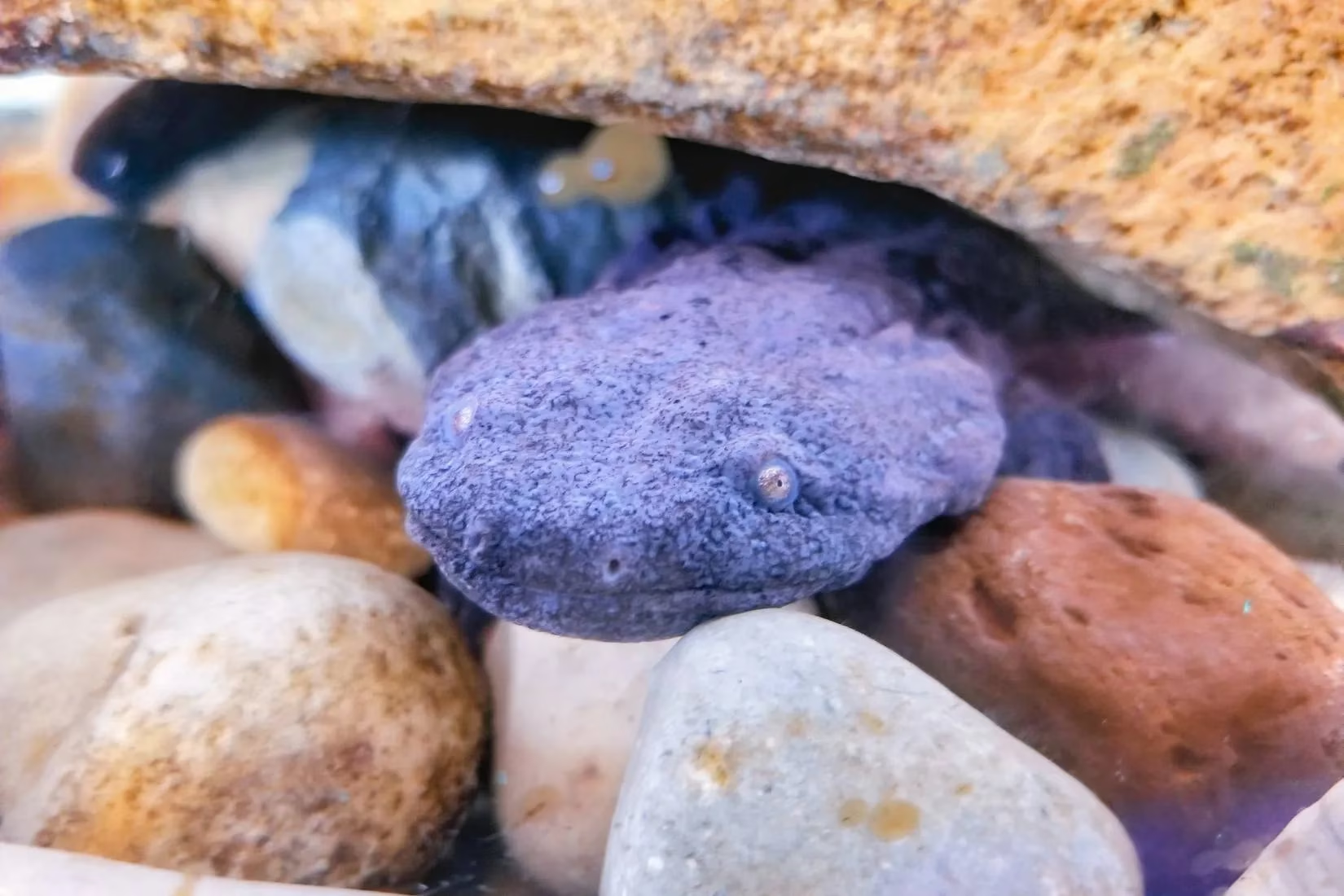
Isn't it heartbreaking? A defenseless, wrinkly creature that plays a vital role in the ecosystem—gone because of a photo op. Eastern hellbenders are indicators of water health. They are highly susceptible to pollution, so their presence means clean water. They also serve as food for fish and waterfowl. But because they aren't "pretty" or "majestic" like bears or eagles, hikers may not even realize they've killed one.
Rock stacking is not just a bad habit; it's illegal. The National Park Service prohibits vandalism under 36 C.F.R. § 2.31. Violators can be ejected from the park, fined up to $500, and even face jail time. Here's a quick breakdown:
| Violation | Potential Penalty |
|---|---|
| Rock stacking | Ejection, fine up to $500, jail time |
| Feeding wildlife | Fine up to $5,000, jail time |
| Off-trail hiking in protected areas | Fine, ejection |
But identifying culprits is hard. Some trails see hundreds of visitors a day, and many break the rules without being caught. The consequences, however, are real. Apex predators like bears, mountain lions, and wolves have been euthanized after becoming too habituated to humans. Smaller creatures like hellbenders suffer even more frequently.
In Utah's national parks, strict rules keep hikers on trails to protect biological soil crust—a living carpet of cyanobacteria and lichen that is vital to the desert food chain. Similarly, in the Smokies, the Eastern hellbender is a keystone species. When we stack rocks, we disrupt the entire micro-ecosystem. We crush insects, salamanders, and even small fish. We compact soil and alter water flow.
So, what can we do? The answer is simple: Leave No Trace. This principle means leaving a natural area exactly as you found it. No orange peels, no disposable wipes, no rock stacks. Rangers in Great Smoky Mountains National Park are begging visitors to remember: rock stacking bad, wrinkly little endangered salamanders good. 🦎
Next time you're tempted to build a cairn for a photo, ask yourself: Is a few likes worth killing an endangered species? Is your social media feed more important than a living creature's home? I don't think so. Let's protect the hellbenders and all the underrated wildlife that make our national parks magical. Leave no trace, or risk breaking the law and harming the less-famous natives.
Leave a Comment
Comments