
As a professional gamer, I spend my days dissecting difficulty curves, crunching damage numbers, and figuring out exactly how far I can push an AI’s aggro radius before it turns me into a fine paste. So when I caught wind of what went down at Yellowstone National Park last October, I couldn't help but see it as the ultimate real-world encounter — a player who seemingly skipped every single tutorial and walked straight into a boss fight with no gear, no party, and no common sense.
In early October 2025, witnesses at Yellowstone watched in disbelief as a man sporting a white scarf strolled across an open field and made a beeline toward a pack of black wolves. Onlookers pulled out their phones and began recording as the wolves, perhaps more confused than aggressive, started closing in. At first the man appeared to move away, but then — as if deliberately trying to trigger a hostile event — he stepped toward the pack, shrinking the distance to just a few feet. The group then vanished into a ravine, leaving the crowd to brace for a kill notification that mercifully never came. When the man resurfaced later, he was acting so erratically that bystanders strongly suspected he was under the influence of something far more mind-altering than sheer stupidity.
Now, let me frame this in terms my fellow gamers will understand. Yellowstone is essentially a persistent-world survival MMO with permadeath enabled. The wildlife are dynamic, unpredictable mobs with their own behavioral algorithms, and the National Park Service guidelines serve as the painfully clear in-game tooltips that pop up before you even load into the zone. Want to admire a top-tier predator? Stay back at least 100 to 150 feet — that’s your no-aggro safe zone. For a deer or a smaller creature, 75 feet will do. Wandering closer is like creeping into a raid boss's detection radius while still wearing your level-one cloth armor and hoping for the best. What this visitor did was the equivalent of sprinting straight through a Souls-like boss fog without resting at a single bonfire, then trying to parry the first enemy with an empty flask.
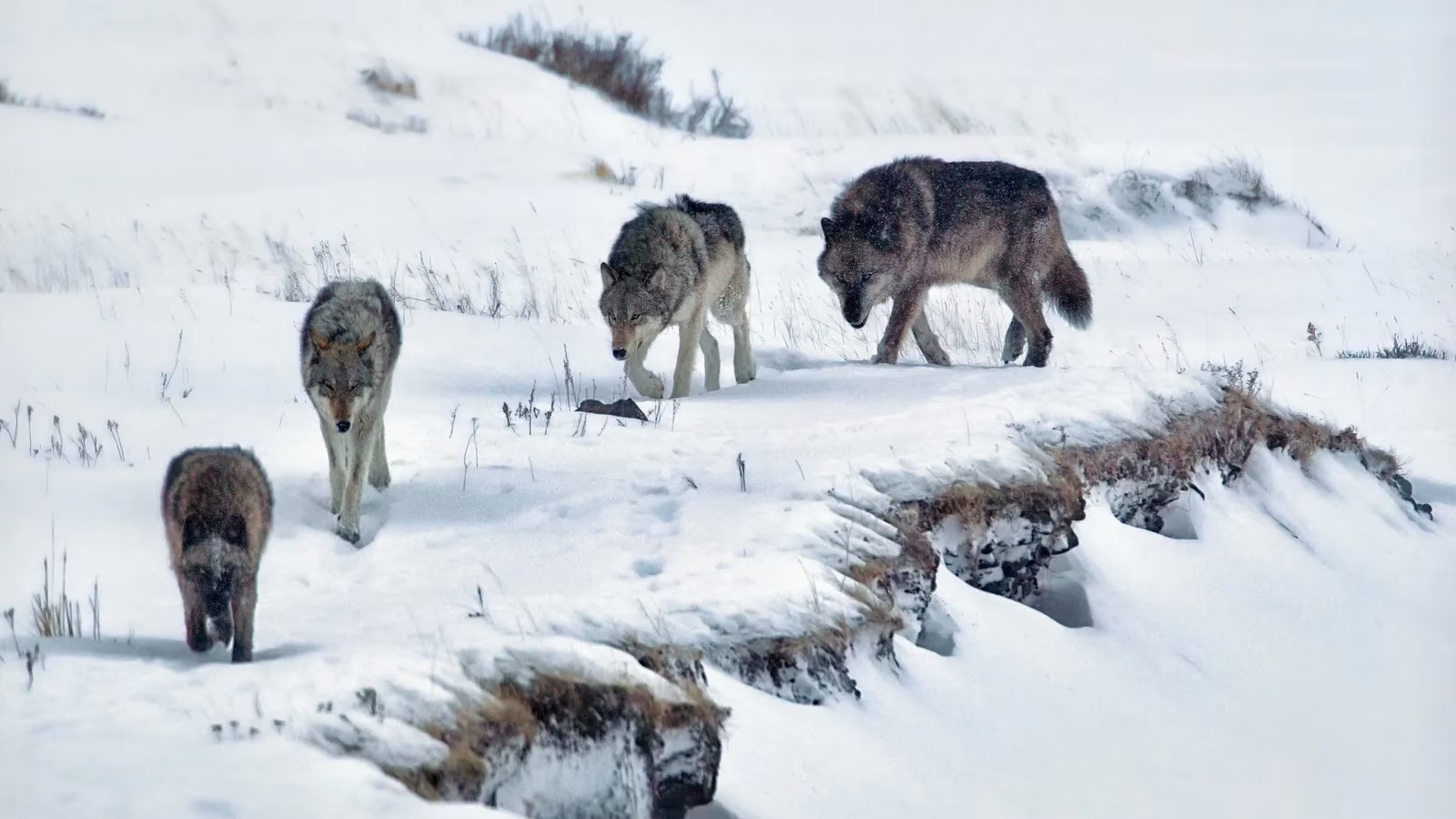
What fascinates me — and probably every game designer on the planet — is the sheer randomness of the outcome. The wolves didn't attack. They didn't even posture all that aggressively. It’s as if the AI simply couldn’t process a target so far outside its expected parameters, its behavioral tree glitching into something resembling curiosity rather than predation. In gaming terms, the man survived off an aura of plot armor so thick that it broke the encounter logic entirely. Some commenters in online forums joked that “dude survived off aura alone cuz it certainly wasn't intelligence keeping him alive,” and I have to agree. It’s like watching a no-hit run where the player is completely unaware they're even in a fight.
The National Park Service, however, is not a glitchy AI. It’s the developer that keeps patching the world with increasingly desperate safety bulletins. Wolves rarely threaten humans — Yellowstone has never recorded a wolf attack on a visitor — but habituation is a real and escalating threat. When wolves learn to associate campgrounds, picnic sites, or even a lone, wobbling tourist with easy food, their behavior can shift from avoidance to aggression. It’s nature’s version of an enemy scaling mechanism: treat them as friendly NPCs, and they might eventually turn hostile for the next player who walks the same path.
So what does the official “game guide” say? Never feed wildlife — that’s rule number one, because handouts reprogram an animal’s loot table. If you spot a wolf, don’t approach it; respect the aggro range. Never leave small children unattended, keep dogs leashed, and if a wolf does get uncomfortably close, do not run. Running is the universal “I’m prey” animation trigger. Instead, stand your ground, make yourself appear larger by waving your arms or opening your jacket — a manual intimidation buff that can momentarily boost your threat level. If the wolf persists, throw objects, shout, or use bear spray, which functions exactly like a high-tier consumable that inflicts a debilitating status effect and forces most four-legged predators to retreat.
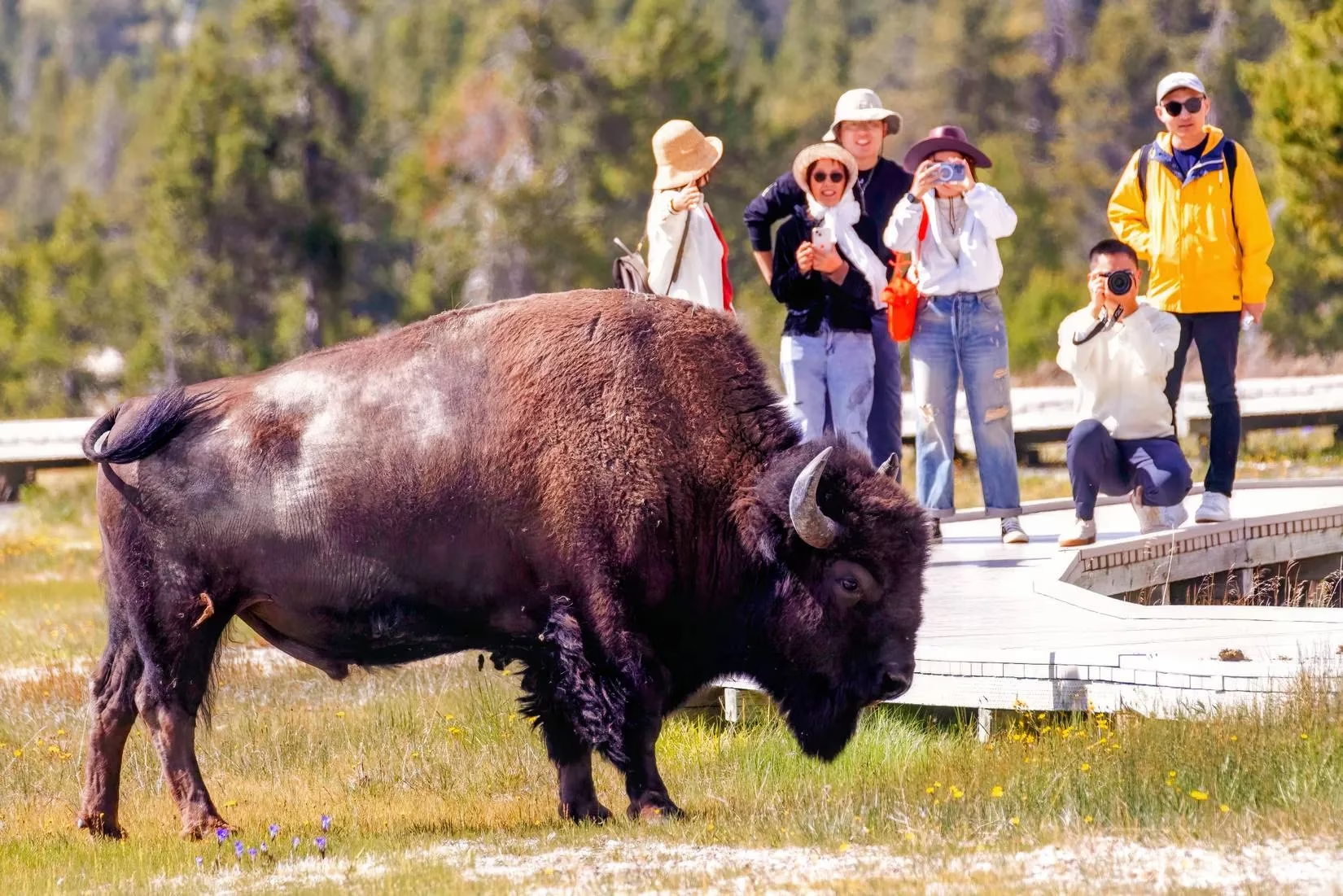
Yet despite all these mechanics being clearly spelled out, 2025 saw a significant rise in visitors making lethal misjudgments. We’re talking about people exiting the designated path and walking straight into the open-world wilderness as if there’s a checkpoint waiting around the next geyser. Some incidents are merely cringeworthy; others, like the wolf-walker, cross into a realm where the line between “harmless tourist” and “future cautionary tale” dissolves like health bar at the end of a boss frenzy.
I’ve spent thousands of hours analyzing the most punishing games ever made — from Escape from Tarkov to DayZ — and the single most critical lesson they teach is situational awareness. Every rustle in the bushes, every subtle change in ambient sound, every shadow moving on the periphery demands attention. The same applies in a national park, except the penalty for failure isn’t just a respawn screen; it’s a real-world body count. That man in the white scarf should have been the unluckiest player on the server. The fact that he walked away is nothing short of a cosmic server rollback.
For anyone planning a visit to any national park in 2026, treat it like you’re loading into the most beautifully rendered open-world RPG you’ve ever seen — but one where the difficulty is permanently locked to “hardcore.” Read the patch notes (the NPS website), memorize the safety distances, and remember that the wildlife are not props. They’re living, breathing entities with their own behavior scripts, and those scripts don’t include a mercy mechanic. You might survive one impossible encounter by sheer, baffling luck — but the game only needs to win once.
Leave a Comment
Comments