
Yellowstone National Park often makes headlines for the wrong reasons, like tourists getting too close to bison or bears. But in 2026, a far more profound story is unfolding beneath the park's famous geysers and hot springs. NASA is funding groundbreaking research here, hoping to answer one of humanity's oldest questions: how did life begin on Earth? The answers scientists find in these steaming pools could be the key to unlocking the mystery of whether life exists beyond our world. Professor Eric Boyd, a microbiologist from Montana State University, leads this charge, explaining that by understanding life's origins on our planet, we can sharpen the search for it on others.
So, why is Yellowstone the perfect laboratory for such a cosmic question? The park is utterly unique, home to more geysers than the rest of the world combined. Its hydrothermal features are like living windows into Earth's distant past, preserving environments similar to those where the first life forms emerged billions of years ago. Despite scalding temperatures and harsh chemical soups, life not only persists here—it thrives. These resilient organisms are called extremophiles, and they are the stars of NASA's investigation.
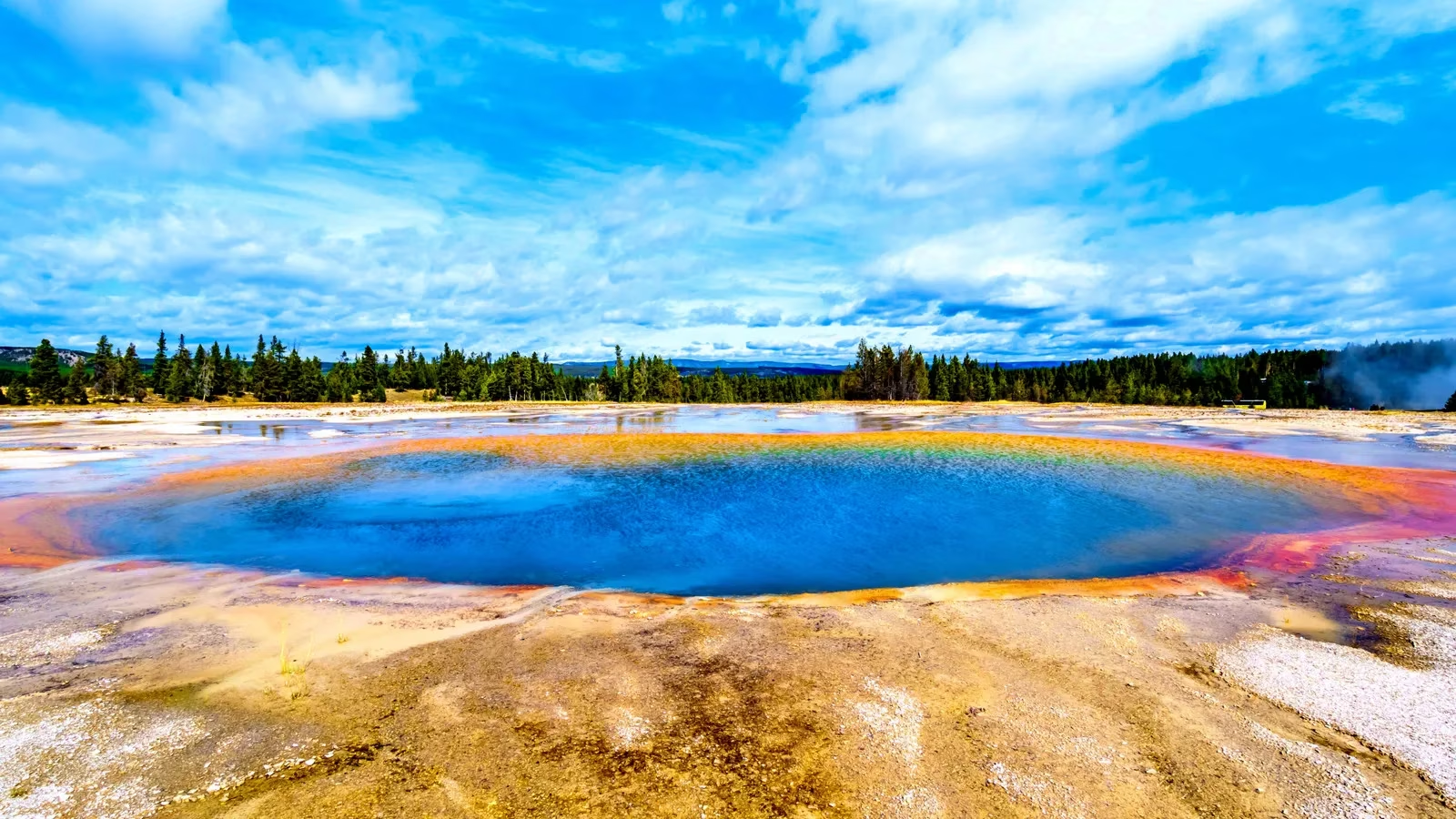
Professor Boyd puts it succinctly: "NASA’s very interested in studying extremophiles because, if you understood the environment that led to the emergence of life on Earth, then you could say, 'Well, if everything else is the same on another planet, I should expect to find life there too.'" It's a simple yet powerful logic. By decoding the recipe for life in Yellowstone's extreme conditions, scientists create a blueprint for what to search for on alien worlds. The research focuses on three main types of these tough microbes found in the park.
The Key Extremophiles of Yellowstone:
-
Thermophiles: These heat-lovers flourish in waters above 45°C (113°F), defying what we once thought were the limits of biology.
-
Acidophiles: They thrive in environments of extreme acidity, places that would dissolve most other living things.
-
Chemolithotrophs: Perhaps the most important for space exploration, these microbes get their energy not from sunlight or organic food, but from inorganic chemicals like sulfur or iron.
This last group, the chemolithotrophs, is particularly thrilling for astrobiologists. For most of Earth's history—the first billion years—life ran on chemical energy, not solar power. The first organisms were likely chemosynthetic, munching on rocks and minerals. This changes everything when we look at other planets. Places like Mars or the icy moons of Jupiter (Europa, Ganymede, Callisto) have surface conditions that rule out sunlight-dependent life. But beneath their barren surfaces or icy shells, there could be chemical energy sources and groundwater systems—perfect potential habitats for chemosynthetic microbes just like Yellowstone's.
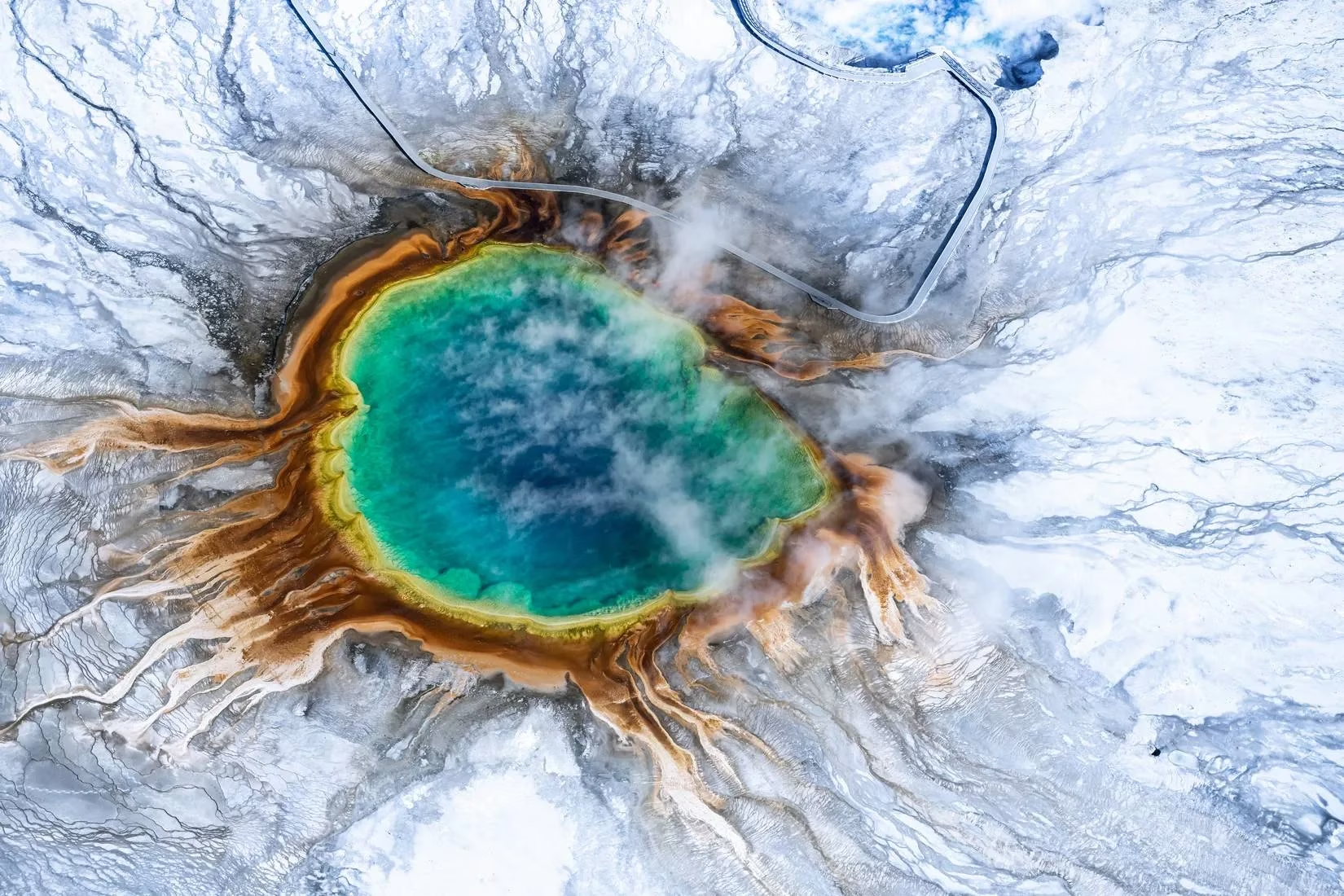
The search isn't just about finding living microbes on other planets today; it's also about finding traces of past life. And here's where Yellowstone offers another crucial clue. Extremophiles leave behind biological "signatures"—fossilized shapes and chemical patterns in the rocks around them. Scientists are meticulously cataloging these signatures in Yellowstone's ancient hydrothermal deposits. 🧐 This catalog becomes a field guide for planetary geologists. When a rover on Mars or a future probe drills into a rock, they will know exactly what microscopic fossil patterns might indicate ancient Martian microbes.
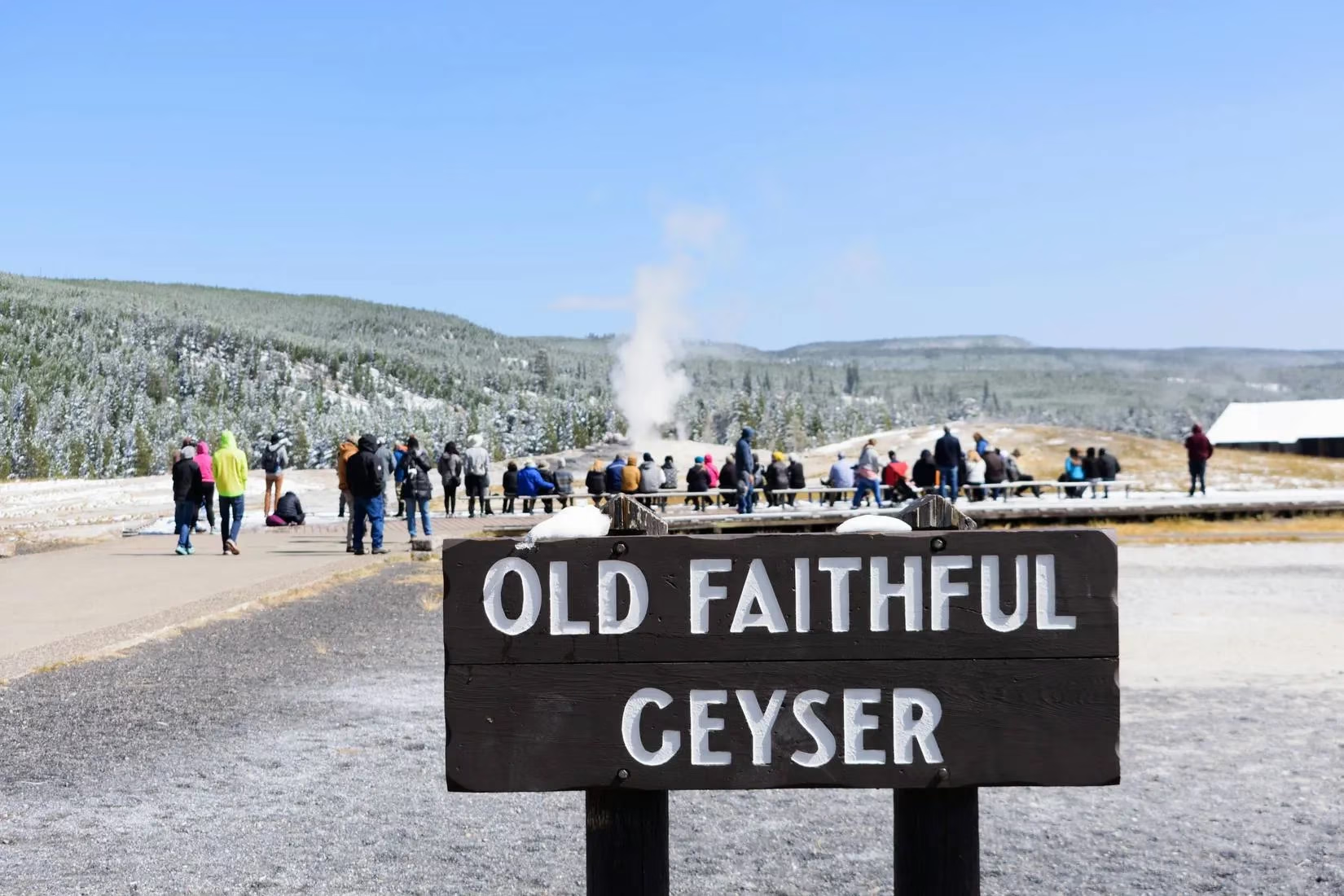
It's a fascinating chain of discovery: from a boiling pool in Wyoming to the frozen plains of another world. The research bridges deep time and deep space. While visitors still crowd around Old Faithful to see its scheduled eruption, just a short distance away, scientists are peering into other pools, asking questions that resonate across the solar system. They are not just studying ecology; they are forensic detectives at the scene of life's original emergence, gathering evidence to use in other planetary investigations.
In 2026, this work is more relevant than ever. With missions persistently analyzing Martian soil and plans developing to explore the subsurface oceans of icy moons, the data from Yellowstone provides the essential context. It tells us where to look and what to look for. The park, often seen as a monument to pristine natural beauty, is also a living archive of life's first, tentative steps. The hope is profound. By understanding our own beginnings in these extreme Earthly cradles, we may finally get an answer to whether we are alone in the universe. The search for alien life, it turns out, begins in our own backyard.
Leave a Comment
Comments