
I’ve always had a soft spot for Yellowstone in the shoulder season—fewer crowds, crisp air, and those moody skies that make the geysers look even more dramatic. So, in late October 2026, I packed my bags and headed to Wyoming, hoping to catch that perfect in-between moment before winter took over. But boy, did winter have other plans...
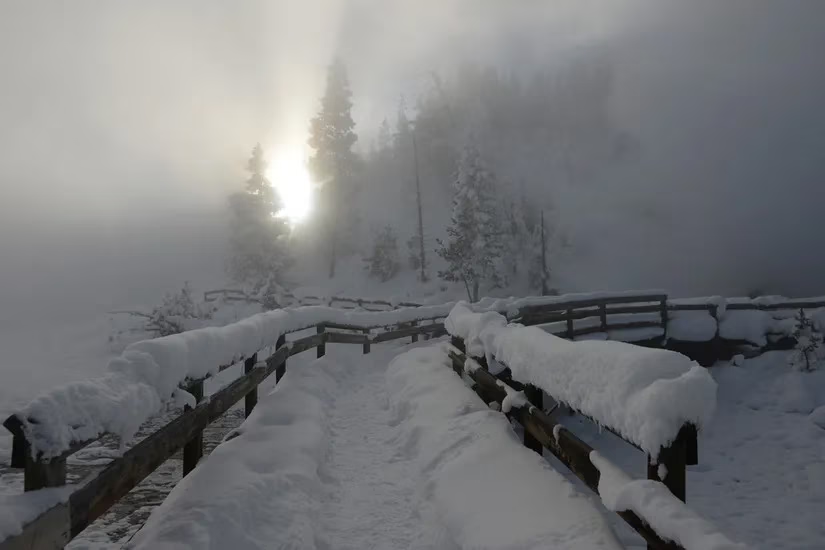
Right when I arrived, the park felt strangely quiet—almost like it was holding its breath. I learned that the government shutdown that had rattled the parks back in fall 2025 had finally been resolved, but you could still feel a sort of lingering hush. Ranger presence was minimal, and the usual bustle at the visitor centers was replaced by a calm that was, honestly, a little eerie. Yet, the lodges were open, and the staff, bless their hearts, were doing their best to keep things welcoming. I stayed at one of the in-park hotels, and the folks there were handing out updates like candy—turns out, a snowstorm was barreling straight for us.
The forecast was no joke. Mammoth was calling for a light dusting of 1 to 3 inches, but the rest of the park? They were looking at anywhere from 6 to 12 inches of snow, with wind gusts up to 60 mph in some areas. The Southern Entrance, which connects to the John D. Rockefeller, Jr. Memorial Parkway, had a terrifying 15 inches predicted, plus blizzard conditions from 45 mph winds. I mean, you don’t need to be a meteorologist to know that’s trouble—especially when you’re driving a rental sedan with all-season tires.
Saturday evening came, and the park’s roads started shutting down like clockwork—or maybe more like a zipper closing. At 7 p.m., the routes from Tower Fall to Canyon, Fishing Bridge to the East Entrance, and West Thumb to Old Faithful were officially closed. I barely made it back from the Old Faithful area in time, the first snowflakes already dancing in my headlights. It felt like the park was gently but firmly telling everyone, “Alright, show’s over, you need to be somewhere safe.”
The next morning, November 1, I woke up to a winter wonderland and a whole new list of closures. The NPS had posted that Madison to Old Faithful and Canyon Village to Tower Fall were now also off-limits. The famous Beartooth Highway (US-212) and Chief Joseph Scenic Byway (WY-296) were still up in the air—literally, their status was “to be determined” depending on how much snow kept piling up. The only stretch that stayed reliably open was the road from the North Entrance to the Northeast Entrance, which serves as a year-round lifeline. If you wanted to see anything else, you were out of luck, unless you had a snowmobile or a sense of humor.
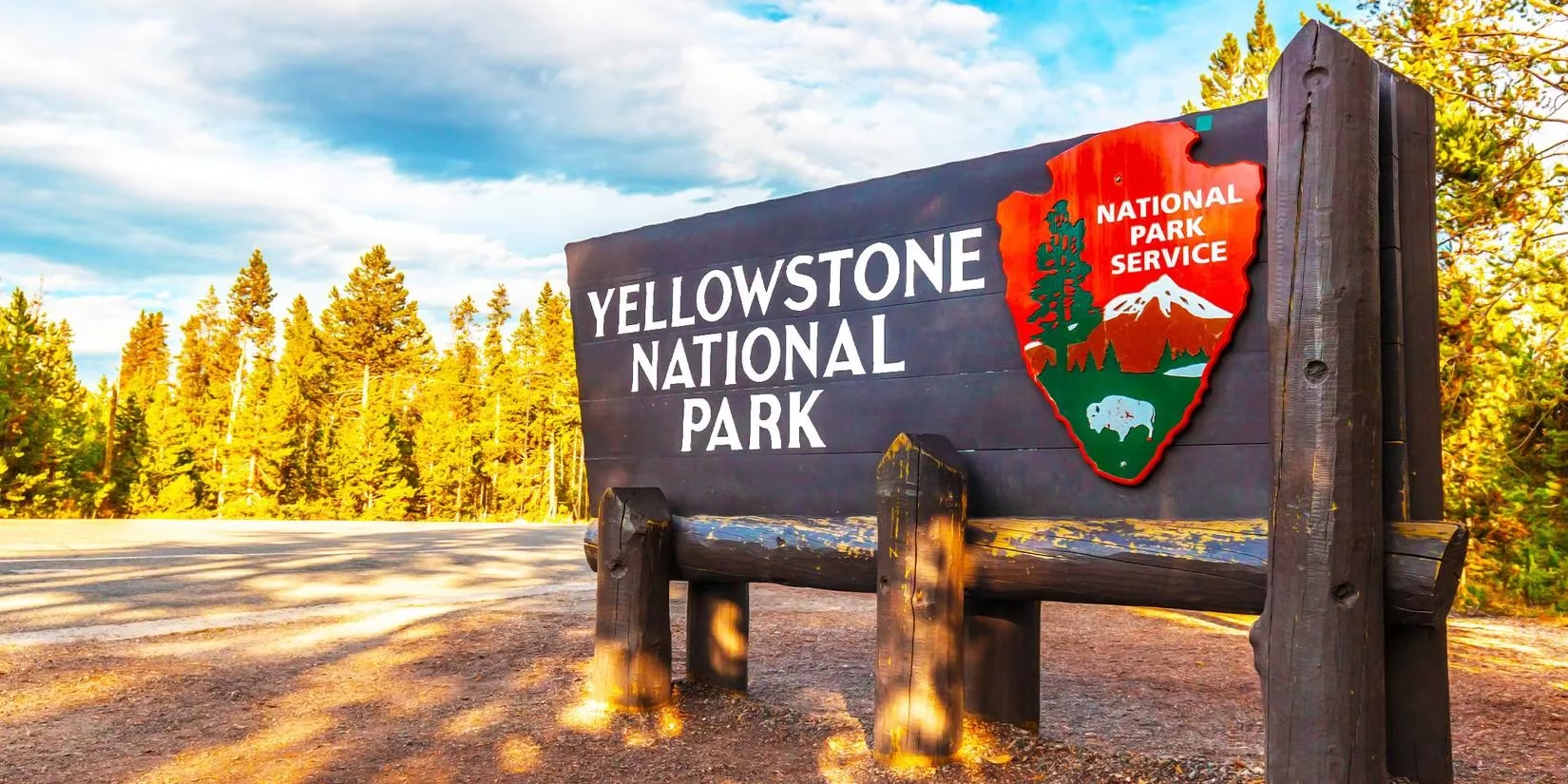
What really struck me was how the park itself seemed to go silent—not just physically, but digitally too. Since the shutdown’s aftermath, Yellowstone’s official channels had barely whispered. No social media posts about closures, no reassuring tweets. The only real lifeline came from the Yellowstone National Park Lodges, which put out a statement that was refreshingly candid: “Winter weather may affect travel in Yellowstone.” No kidding! But they also confirmed that entrances and roads were still accessible, and that their lodges, restaurants, and shops were open, ready to host visitors from around the world. That little bit of normalcy was a relief, like finding a warm campfire in a snowbank.
Now, here’s the kicker: I had planned to explore those iconic middle sections—Canyon Village, Norris Geyser Basin, you name it. But the road closures meant I had to slow down, sip some hot chocolate at the lodge, and rethink my entire itinerary. I ended up driving the northern route a few times, spotting bison huddled against the wind, their frosty breath puffing out in little clouds. It was still gorgeous, just... different. The park, in its snow-coated mood, felt more intimate, more raw. You know that feeling when a place stops performing and just lets you see its real bones? That was Yellowstone in early November 2026.
For the truly adventurous (and those who brought the right gear), the oversnow vehicle season was just around the corner. Starting December 15, 2025, routes like Mammoth Hot Springs to Norris, Norris to Madison, and Norris to Canyon Village would open for snowmobiles and snowcoaches. That schedule repeats each winter, so by the time you read this in 2026, the same snowy corridors are probably humming with engines. They even groomed roads from Canyon to Fishing Bridge and all the main entrances—picture a winter highway system that only the heartiest souls get to use. I made a mental note to come back with a snow-treading beast of a vehicle next time.
Looking back, I wouldn’t trade those few days for anything. Sure, the closures threw a wrench in my plans, but they also handed me a quiet, snow-blanketed Yellowstone that felt almost personal. If you’re thinking about visiting in late fall or early winter, check the weather religiously, pack extra layers, and for goodness’ sake, don’t trust your sedan beyond the North Entrance. The park will decide what you see and when, and honestly, that unpredictability is part of its magic. Just be ready to listen when it whispers—or shouts—through the snow.
Leave a Comment
Comments