
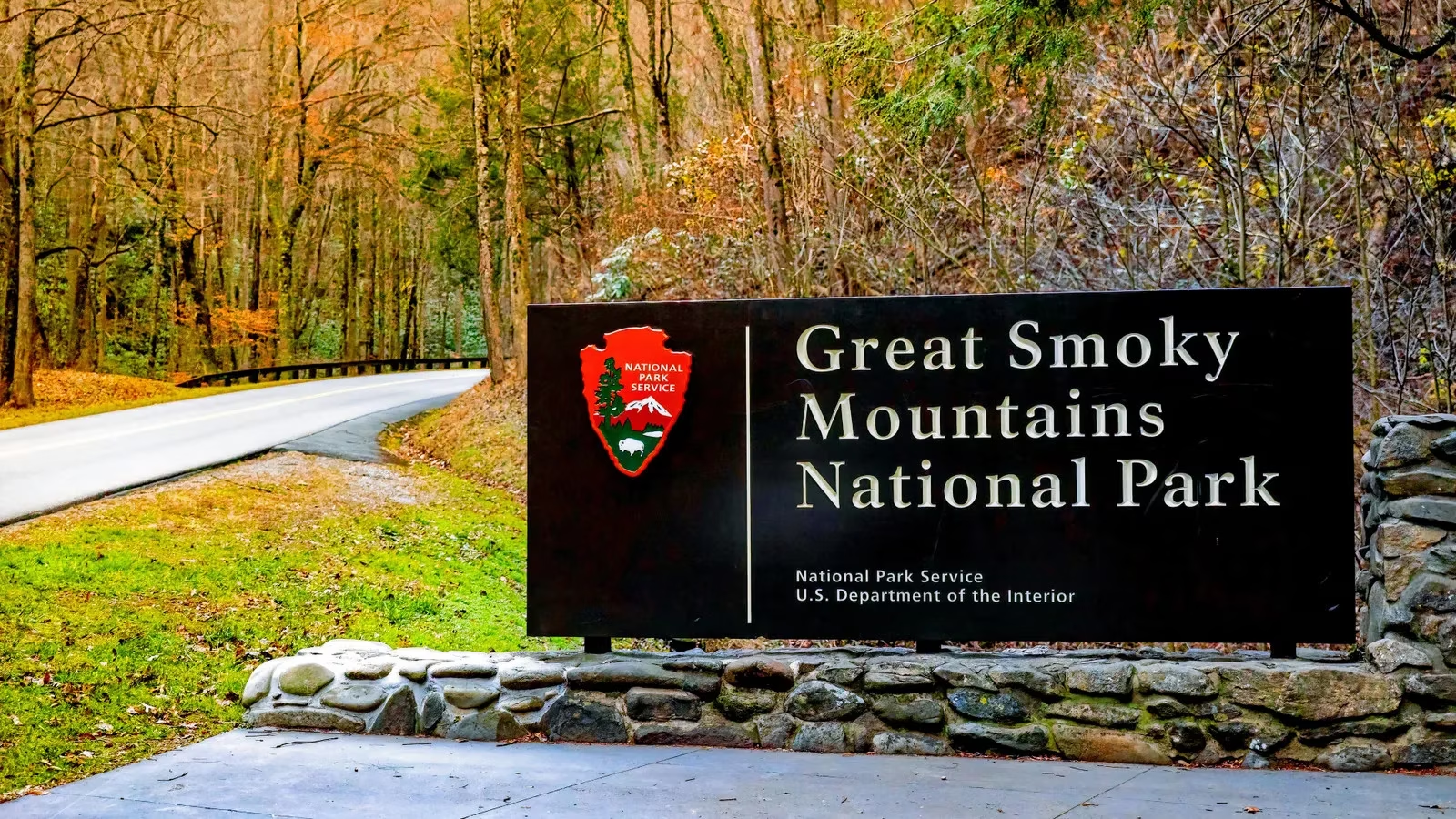
When a traveler rolls up to Great Smoky Mountains National Park during a federal government shutdown, they might expect locked gates, closed visitor centers, and empty overlooks. Instead, they’ll find something almost unheard-of right now: fully reopened roads, restrooms, staffed visitor areas, and rangers on duty. The park has effectively decided not to sit out the shutdown, and a collection of local heroes is footing the bill.
While plenty of national parks are technically “open” under the National Park Service Contingency Plan, most are operating with reduced services, limited access, or no staff at all. Great Smoky Mountains National Park is quite literally the big exception. Over a weekend, every road and facility reopened even as thousands of National Park Service employees remained furloughed across the country.
It sounds like a magic trick, but really it’s a budget experiment. A mix of Tennessee counties, gateway cities, nonprofits, and the State of Tennessee pooled their resources to keep America’s most visited national park humming. The State of Tennessee agreed to contribute $80,000. Local partners chipped in $45,000 each, bringing the temporary pot of money to around $440,000.
Who Answered the Call
The list of contributors reads like a roll call of communities that live and breathe Smokies tourism:
| Contributor | Role |
|---|---|
| State of Tennessee | Major state-level funding partner |
| Blount, Cocke, and Sevier Counties | Local government support |
| Gatlinburg, Pigeon Forge, Sevierville, and Pittman Center | Gateway town funding |
| Eastern Band of Cherokee Indians | Regional partner |
| Friends of the Smokies | Nonprofit coordinator and supporter |
Dana Soehn, President and CEO of Friends of the Smokies, summed up why the money matters beyond keeping parking lots open:
“Importantly, this funding ensures that staff are on duty for servicing restrooms, responding to visitors in need, and providing essential services to protect wildlife during this peak visitor season.”
In other words, the goal isn’t just to let people snap a photo and leave. It’s about keeping the park safe, clean, and protected while the federal government gets its act together.
The Math Is Impressive—and a Little Sobering
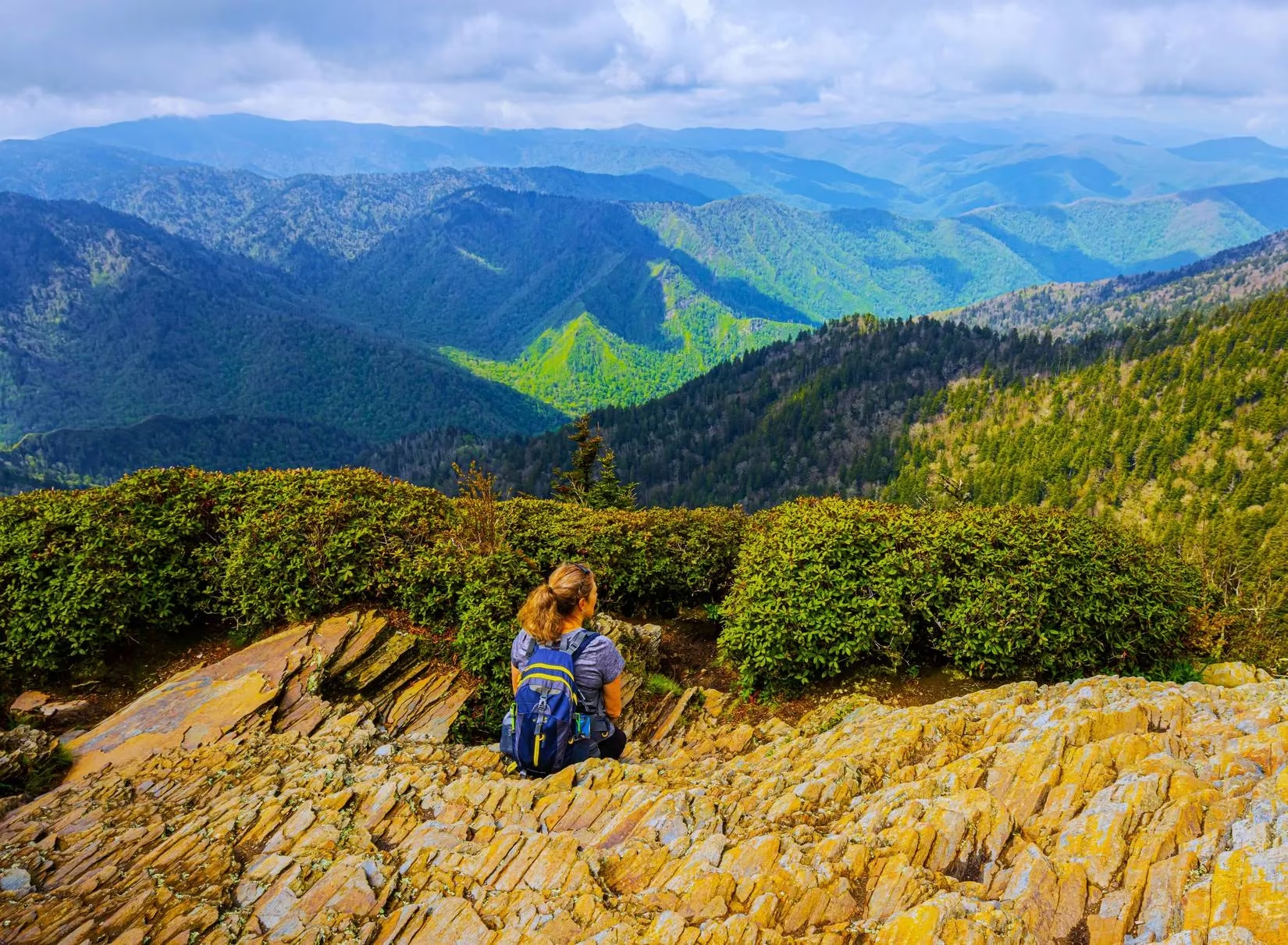
As generous as the quick fundraising sounds, national parks are expensive to run. That kind of money doesn’t grow on trees, especially for small mountain counties that often have to pinch pennies. The collected funds were expected to keep Great Smoky Mountains National Park fully operational only through October 10. After that, officials hoped federal funding would be restored so the park wouldn’t have to face a second round of closures.
One could ask why local groups would pay to keep a national park open for just a week or two. The answer comes down to two big reasons.
💵 Gateway Towns Can’t Afford a Closure
Great Smoky Mountains National Park is always free to visit, so the park doesn’t lose entrance fees during a shutdown. But the surrounding communities absolutely feel the pain when visitor numbers drop. Previous shutdowns have cost states an estimated $1 million per day in primary and secondary revenue. Gateway cities like Gatlinburg depend on the steady flow of hikers, families, day-trippers, and road trippers. Even a short closure can rattle hotels, restaurants, outfitters, and shops. These communities aren’t just being generous—they’re investing in their biggest economic engine.
🛡️ An Open Park Needs Real Staff
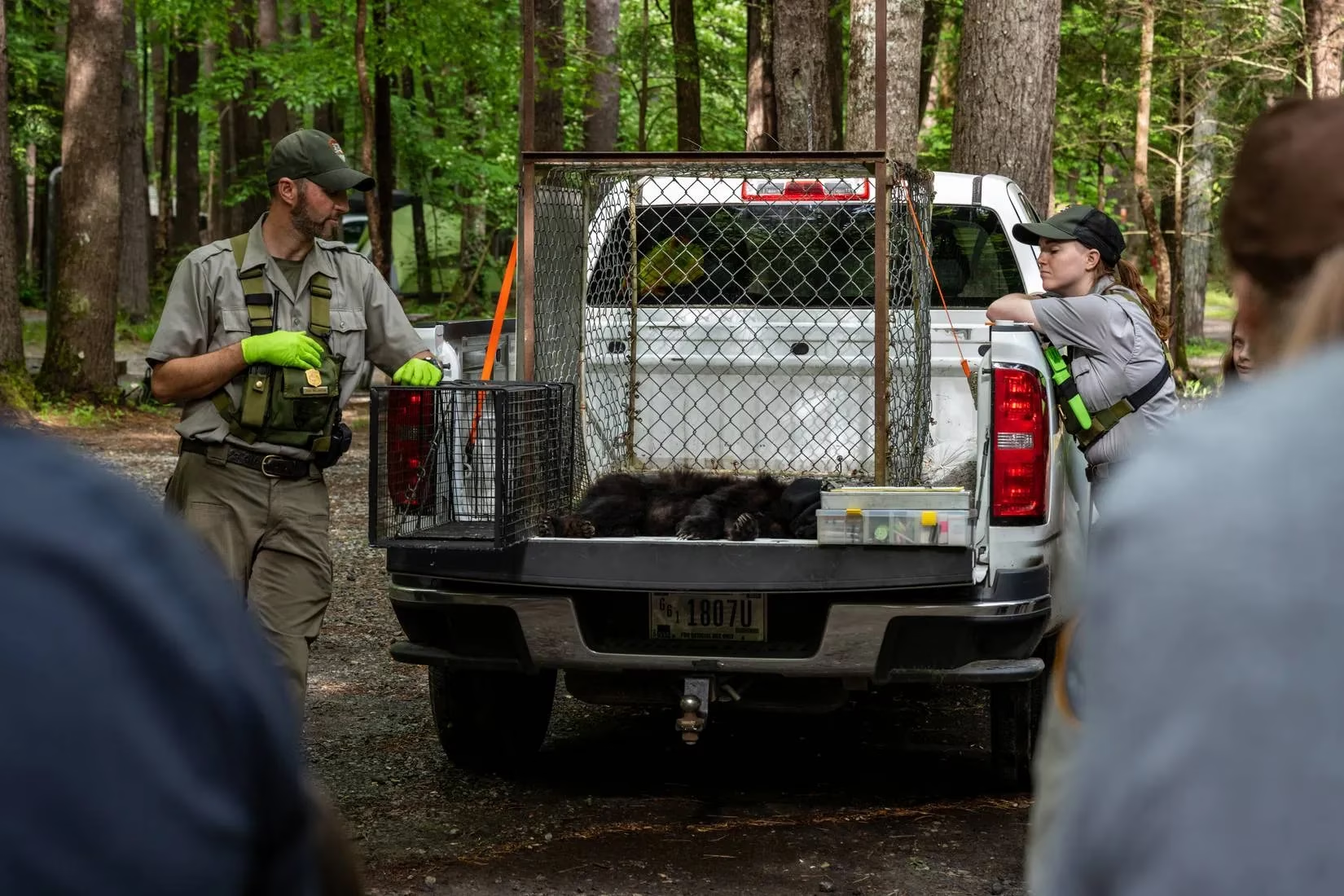
There’s also a preservation angle. When a park is open but unstaffed, well-meaning visitors sometimes cause accidental damage. Rangers worry that guest “help” during a shutdown can actually hurt the trails and wildlife. Any visitation puts wear and tear on roads, restrooms, and backcountry routes. If the Smokies are going to welcome millions of people, local leaders would rather pay to have real staff on site than leave the park to fend for itself.
The Smokies Aren’t Alone
The Smokies may be the most dramatic example, but other national parks are also getting boosts from state and local partners.
-
Indiana Dunes National Park kept its visitor center open thanks to a joint operation with the state tourism board. Visitors may still notice fewer rangers on site, but the park avoided full closures from the start.
-
Utah pledged $5 million to keep its five national parks running, with special attention on Zion and Bryce Canyon, the state’s busiest parks. That money helped keep Zion’s shuttles rolling and at least one visitor center open in both parks.
Visitors Should Still Adjust Expectations
Even with all that local support, a shutdown is still a shutdown. Visitors at these parks should expect reduced staffing. Entrance fees can’t be collected everywhere, and with more than 9,000 employees on furlough across the National Park Service, no amount of state or local funding can fully replace normal federal operations.
Maintenance isn’t happening at full capacity in most locations. Travelers are asked to pack out all trash, treat open restrooms with extra care, and follow Leave No Trace principles. Whenever possible, rangers and conservationists encourage people to reschedule visits for after the government reopens.
America’s national parks have long been symbols of shared land and shared responsibility. During the shutdown, that sense of unity is on full display as cities, counties, tribes, and nonprofits dig into their own pockets to keep Great Smoky Mountains National Park open. It’s not a perfect solution, but for now, the mountains are open—and the people who love them are proving they won’t let politics close the trailhead without a fight.
Leave a Comment
Comments