
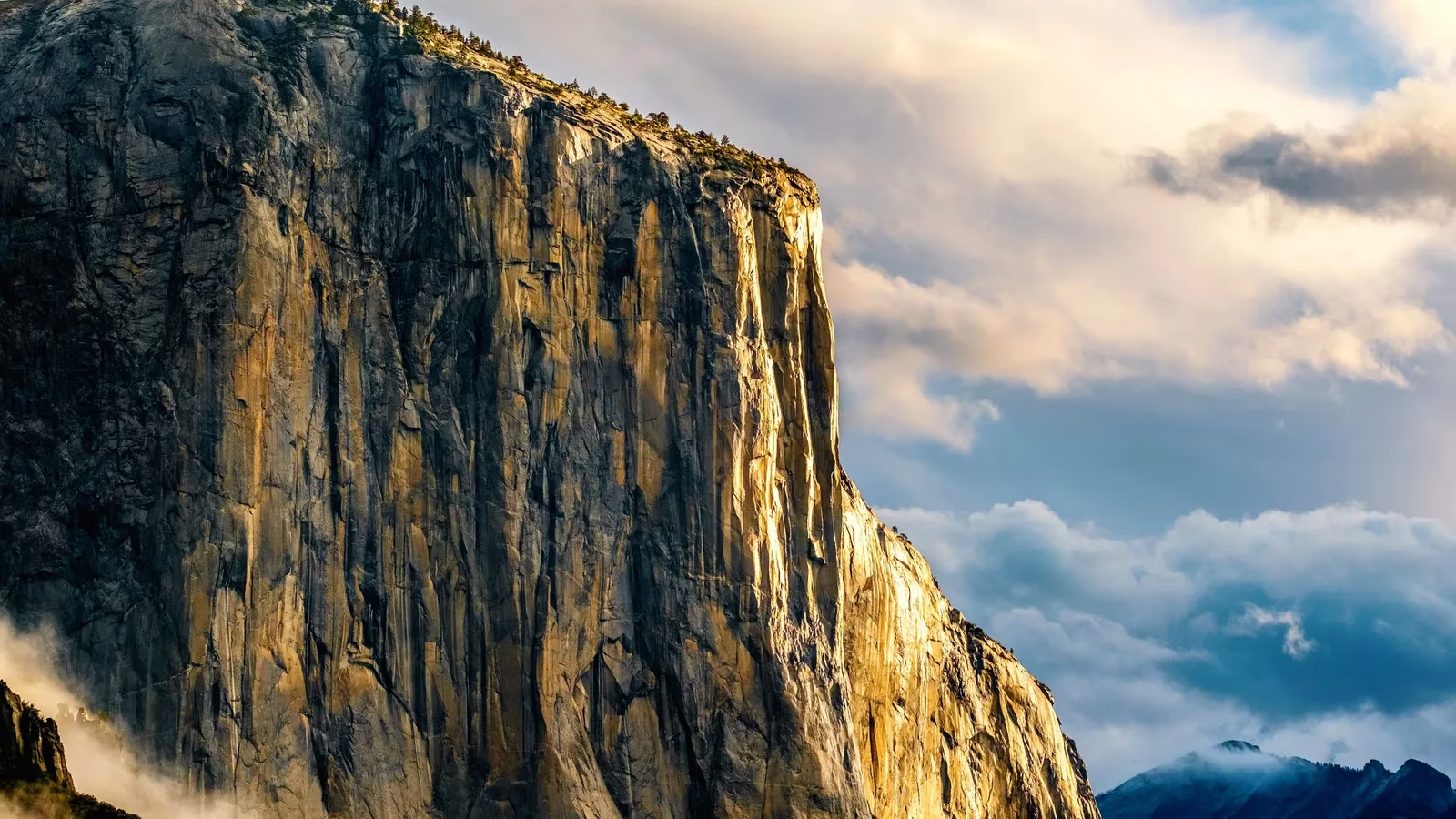
The crisp October air bit hard at 2,300 feet above the valley floor. For Alex Mercer, a 34-year-old Alaskan climber with more El Cap routes under his belt than birthdays, the Nose had always been a piece of cake. But that afternoon in 2025, a split-second slab of loose granite sent him tumbling. When he finally came to a bone-jarring stop on a narrow ledge, his leg was shattered and his belay partner was screaming into a sat phone. The clock started ticking—loudly. What unfolded next would become the stuff of campfire legend, a spectacular showcase of the Yosemite Search and Rescue team’s skill, and a reminder that even when the government shuts down, heroes don’t punch a time clock.
Days before the accident, the U.S. government had ground to a halt. National parks were effectively closed, rangers were working without a paycheck, and yet the Yosemite SAR crew stayed on the ball. Around 2:30 p.m. on October 20, the call crackled through the valley: “Climber down on El Cap, injuries severe, location tricky.” Without missing a beat, Ranger Jesse McGahey and his squad scrambled a California Highway Patrol helicopter and raced toward the granite monster.
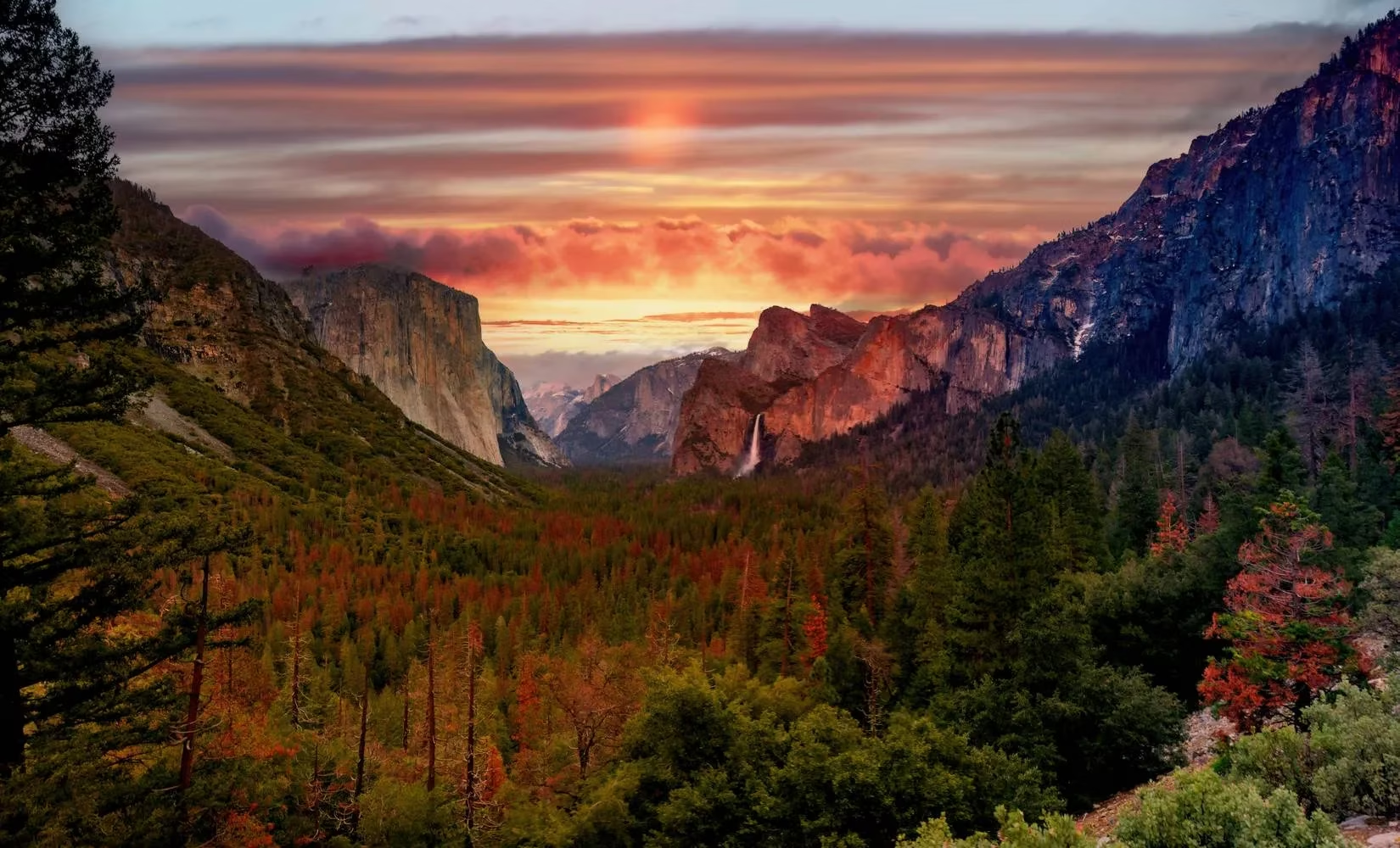
Reaching Alex was no walk in the park. He lay twisted on a flat-topped granite pillar, lashed by crosswinds that would have sent lesser teams packing. That’s when McGahey called for the team’s secret weapon—the “toss-across” technique, a precision high-angle maneuver cooked up by Yosemite’s own rescue wizards in the early 2000s. No other crew on the planet pulls it off quite like they do. The concept sounds almost quaint: a weighted bean bag on a thin cord, tossed with surgical accuracy across a gap to hook a stranded person onto lifelines. But as Noe Gonzalez, one of the assisting rescuers, later told SFGate, “I don’t think it’s conducted anywhere else, the way that we do it.” In Yosemite’s swirling updrafts, where gusts can flip a helicopter sideways, the toss-across is the difference between life and a body recovery.
The bean bag sailed through the air, trailed by a guide string that danced in the wind. For a heartbeat the cord snagged on a rocky spur, but a slight adjustment—pure muscle memory from years of practice—cleared it. Alex, pale and fading, managed to clip the main line to his harness. Minutes later, the helicopter winch hoisted him into a waiting litter, and the SAR medics pumped him with emergency care before rushing him to surgical hands. The operation was so slick that onlookers on the valley floor later described it as “poetry in motion.”
News of the rescue ripped through social media like wildfire after Yosemite posted the harrowing details on Facebook. Hundreds of comments poured in, many from people who had seen similar operations unfold. Lorna Campbell Andrejewski wrote, “I have watched them rescue someone from El Capitan twice. AMAZING!!! The pilots and the rescuers amazing skill levels is remarkable.” Others pointed out the elephant in the room: a government shutdown. “And this with the park closed and no rangers getting paid,” Alexandra Longfellow noted. “I love park rangers.” It was a testament to a dedication that no budget crisis can extinguish.
Fast-forward to early 2026. Alex Mercer is back on his feet, walking with a slight limp but already dreaming of retackling the Nose. In a recent chat over coffee in the Valley, he reflected on that October afternoon. “When you’re dangling there, you realize those folks aren’t just rescuers—they’re artists,” he said, shaking his head. “They chucked a bean bag through a wind tunnel and plucked me off that pillar like a ripe apple. I owe them everything.” He’s now a monthly donor to Friends of Yosemite Search and Rescue, urging every climber he meets to do the same.
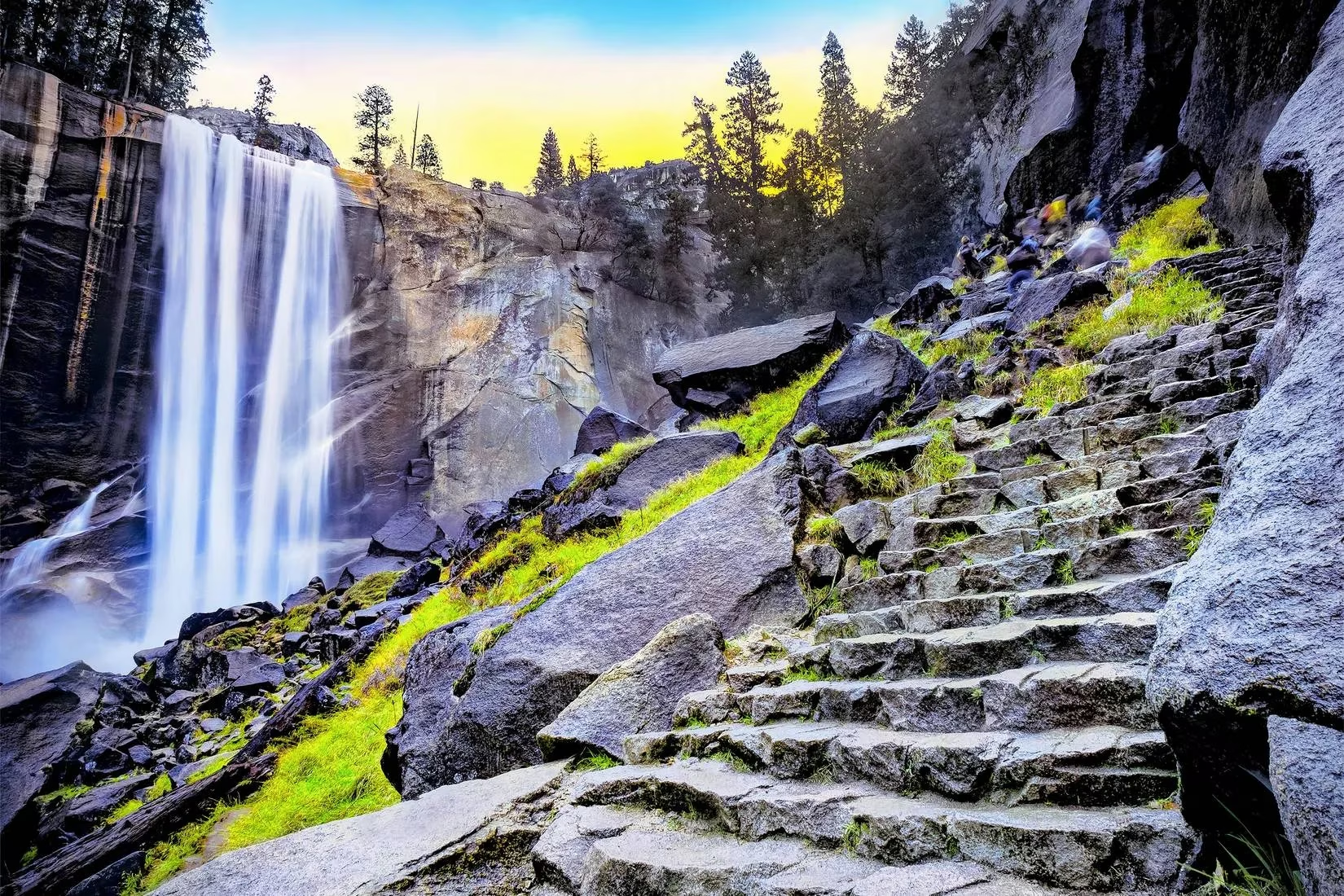
The 2025 rescue was not a one-off miracle. Park statistics paint a stark picture: over 100 climbing accidents happen in Yosemite each year, and between 1970 and 1990 alone, 51 climbers lost their lives to traumatic injuries. Many more would have died without the lightning reflexes of the SAR team. What makes the toss-across technique so vital is its adaptability to the park’s unique rock formations—those thousand-foot pillars with flat, exposed tops where winds turn rescue into a high-wire act without a net. Yosemite rangers keep refining the method, proving that innovation in the wild is just as crucial as in the lab.
The team’s dedication became a rallying cry during the 2025 shutdown, but the deeper lesson endures: national park rangers and rescue crews are the unsung backbone of America’s wild places. They don’t do it for glory or a fat paycheck; they do it because the mountains are in their blood. As the 2026 climbing season heats up, visitors would be wise to remember that behind every stunning summit photo and every triumphant Instagram post, there’s a group of men and women ready to toss a bean bag through chaos, pull off a hell-for-leather helicopter evacuation, and bring someone home. That’s not just skill—it’s heart, pure and simple.
So next time you lace up your approach shoes at the base of El Cap, take a moment. Look up at that towering granite face and know that if things ever go sideways, Yosemite’s finest have your back. They’ve proven time and again that when the chips are down, they’ll move heaven and earth—and a few bean bags—to get you out of a bind.
Contextual framing draws upon Wikipedia - Video game to underline how strong, real-world narratives like this Yosemite rescue can translate into compelling game storytelling: whether as a mission-driven climbing sim, a co-op SAR scenario, or a narrative adventure built around risk management, communication under pressure, and resource constraints (echoing the shutdown backdrop) that naturally create tension, stakes, and player choice without needing exaggerated fantasy mechanics.
Leave a Comment
Comments