
Back in the fall of 2025, a prolonged government shutdown pushed America's most beloved national park into an unprecedented financial spiral. The Great Smoky Mountains National Park \u2014 the perennial champion of visitation numbers \u2014 saw an eye-popping $8,159,000 evaporate from its local economy every single day, according to National Parks Conservation Association estimates from that October. With no end in sight, local leaders scrambled to stitch together a stopgap funding pact, yet the ticking clock toward November 2 kept everyone on edge.
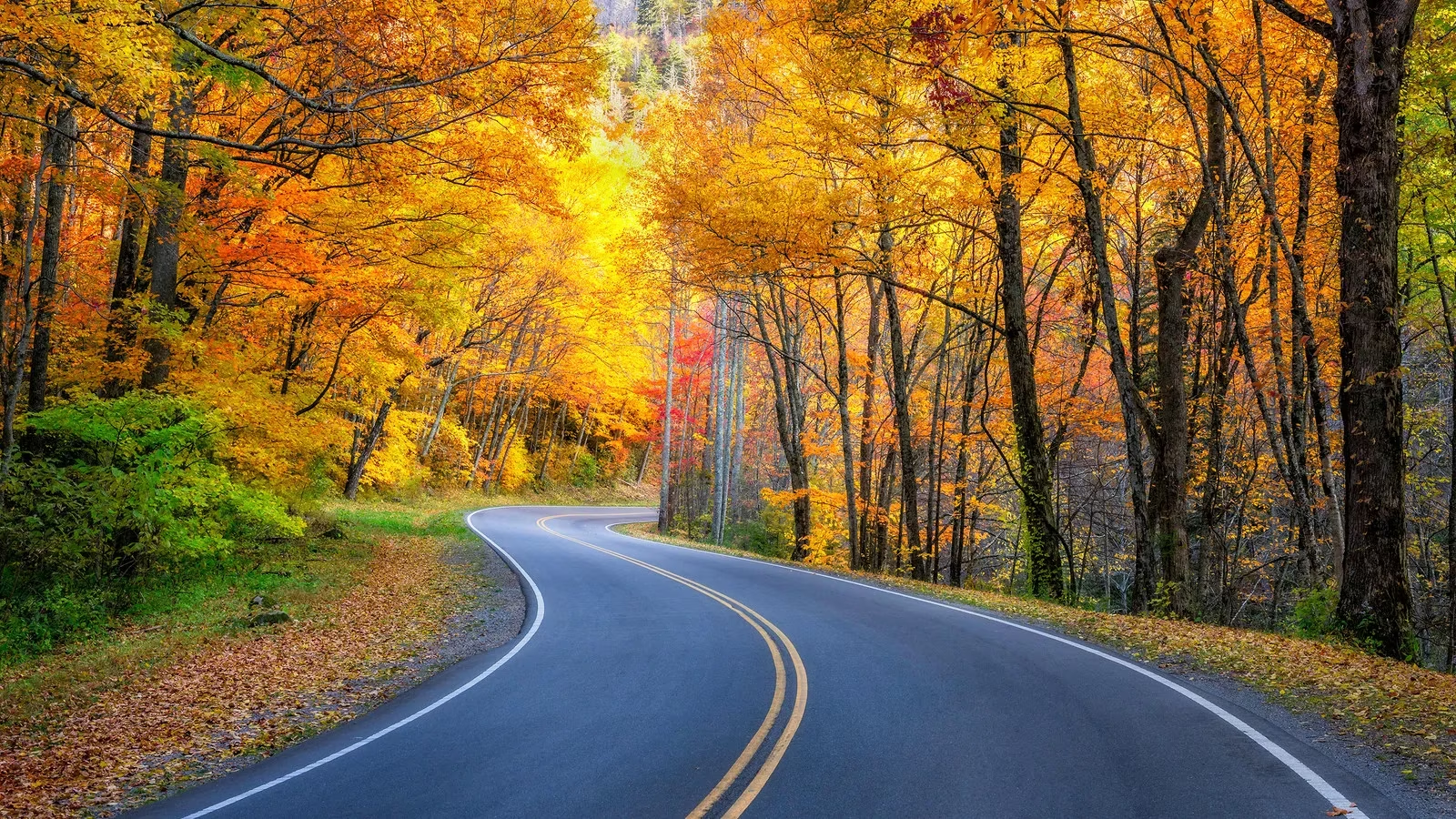
The numbers tell a brutal story. Each day the 2025 shutdown dragged on, the park alone bled about $8.2 million in visitor spending \u2014 the steepest daily loss among all U.S. national parks. To put that in perspective, the entire park system was hemorrhaging $1 million per day in entrance fee revenue, while the gateway communities that rely on park tourists faced a staggering potential hit of $80 million daily. For the Smokies, which straddles the Tennessee\u2013North Carolina line, the pain radiated far beyond the ranger stations.
Looking back at the park's 2024 performance shows just how high the stakes were. That year, a record 12.2 million visitors streamed through the Smokies, unleashing over $2 billion in spending in nearby towns like Gatlinburg, Pigeon Forge, and Cherokee. Lodging and restaurants accounted for the lion's share, and the cumulative economic output surpassed $2.8 billion. In fact, no other national park delivered a larger economic ripple effect to its surrounding communities. Nationally, the NPS generated a breathtaking $56.3 billion in economic output in 2024, but the shutdown threatened to wipe out a chunk of that progress almost overnight.
Faced with such devastation, a coalition of local governments and organizations refused to stand by and watch the park grind to a halt. Mayor Larry Waters of Sevier County, Tennessee, spearheaded an unusual financial arrangement with the state, three counties, four towns, the Eastern Band of Cherokee Indians, and the Friends of the Smokies. Together, they pledged to cover the $85,000 daily cost of keeping the park fully operational \u2014 paying for everything from restroom maintenance to front-line employee wages. The mechanism was straightforward but fragile: Sevier County wired the pooled funds to the federal government, and the other partners promised to reimburse the county in the weeks and months that followed. However, as the Friends of the Smokies noted in an October 20 statement, those reimbursements were far from guaranteed.
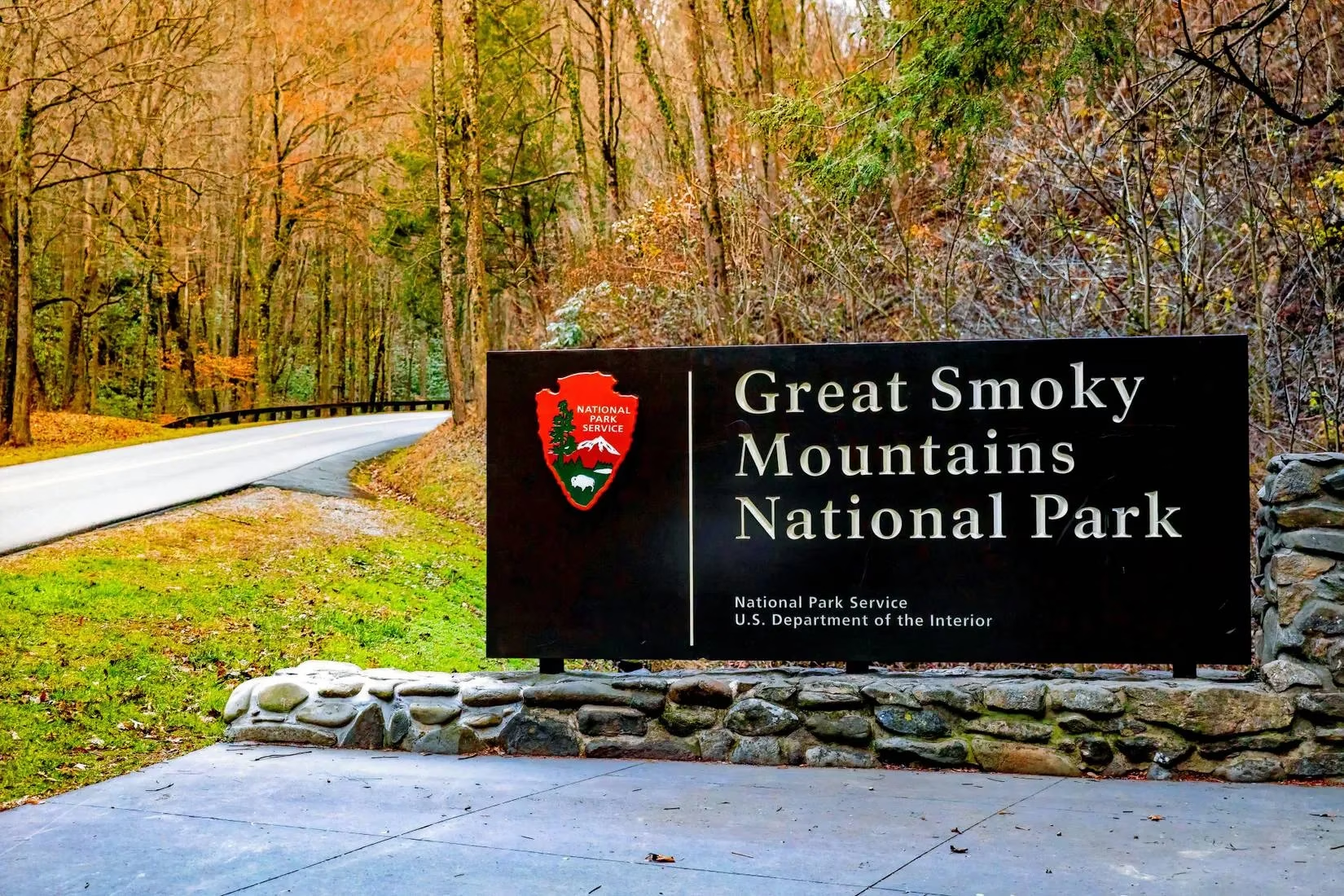
Initially, the pact was set to expire on October 19, but the coalition managed to extend it to November 2. With the shutdown already clocking in as the second-longest in U.S. history at over three weeks, everyone involved worried about what would happen if the impasse pushed past that date. Mayor Waters and his partners admitted they had no backup plan. The idea of shuttering the park completely \u2014 leaving its trails unpatrolled, its visitor centers dark, and its gates unmonitored \u2014 loomed as a genuine possibility.
Interestingly, not everyone agreed that parks should stay open during the turmoil. A group of over 450 former national park leaders, organized by the Coalition to Protect America\u2019s National Parks and the Association of National Park Rangers, fired off a letter to Secretary of the Interior Doug Burgum on October 23. Their message was blunt: \u201cOur parks don\u2019t run by themselves.\u201d They argued that the NPS was already reeling from federal staff cuts, and forcing skeleton crews to keep the gates open only invited damage to delicate resources and risked visitor safety. Citing Secretarial Order 3426 \u2014 the directive to ensure parks remain open and accessible \u2014 the former leaders insisted that an immediate closure was the only responsible path until the shutdown ended.
But for the local coalition in Tennessee and North Carolina, the calculus was different. They saw a forced closure as an economic wrecking ball that would crush small businesses still recovering from past disruptions. Their approach tried to walk a tightrope: protect the landscape by maintaining basic services, while also shielding the region\u2019s lifeblood from collapse. It was a gamble that required trust, rapid fundraising, and a lot of hoping that Washington would get its act together.
By the time the calendar flipped to 2026, the scars of that shutdown were still visible. While the park itself weathered the storm without permanent closure, many local governments are still waiting on promised reimbursements. The debate over whether parks should ever stay open during a government closure has only intensified. In the Smokies, however, one thing remains crystal clear: when the federal machinery seizes up, it\u2019s often the communities at the front gate that have to foot the bill \u2014 and they will keep doing so as long as they can scrape the funds together.
Leave a Comment
Comments