
The memory of the Dragon Bravo Fire still smoldered like a half‑buried ember in the collective psyche of Grand Canyon National Park. In July 2025, that wildfire carved a scar across thousands of acres, forcing closures that stretched for months and leaving the North Rim feeling as unreachable as a castle trapped behind a dragon’s breath. Hikers who dreamed of descending the North Kaibab Trail found their plans reduced to ash, and the silence of the closed campgrounds became the loudest reminder of nature’s fury.
By early 2026, however, the park began to exhale. Like a pianist slowly relaxing fingers that had been frozen in a tense chord, the authorities peeled back the strictest rules that had choked visitor access since the blaze. The latest updates, circulated through enthusiast forums and independent travel platforms, heralded a long‑awaited shift: both fire and water restrictions were downgraded, signalling that the canyon’s pulse was returning to something close to normal.
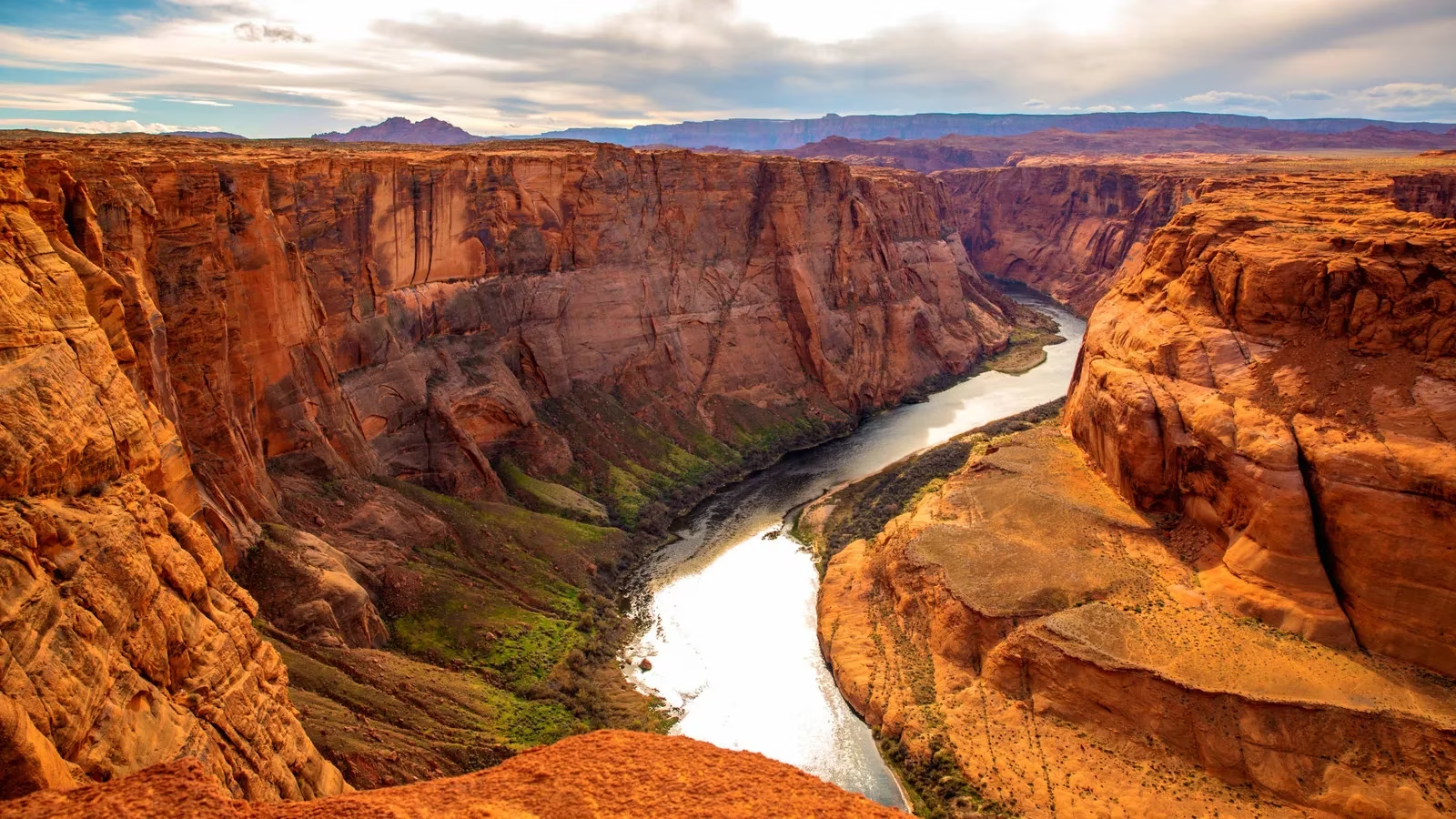
💧 Water Restrictions: From a Stranglehold to a Steady Grip
The water conservation regime, which had been cinched as tightly as a virtuoso's violin strings, moved from Stage 3 to Stage 2. While visitors must still treat every drop with reverence, the relaxation came after crews successfully repaired the crucial water delivery system at Havasupai Gardens and refilled storage tanks that had shrunk to worrying levels during the shutdown. Under Stage 2, the rules are less draconian but still demand conscious effort:
-
All hikers should carry at least one gallon of water per person, per day.
-
Alcohol‑based hand sanitizers are encouraged over excessive handwashing when tap water is unavailable.
-
Concessionaires are asked to serve meals on disposable plates to reduce dishwashing, and lodging facilities should change bed linens only upon guest request.
These measures felt less like punishment and more like a shared pact between the canyon and its admirers. The park was no longer gasping for moisture, but it remained thirsty enough to remind everyone that the Colorado River is a lifeline, not an infinite fountain.
🔥 Fire Restrictions: From a Smothering Blanket to a Tentative Permission
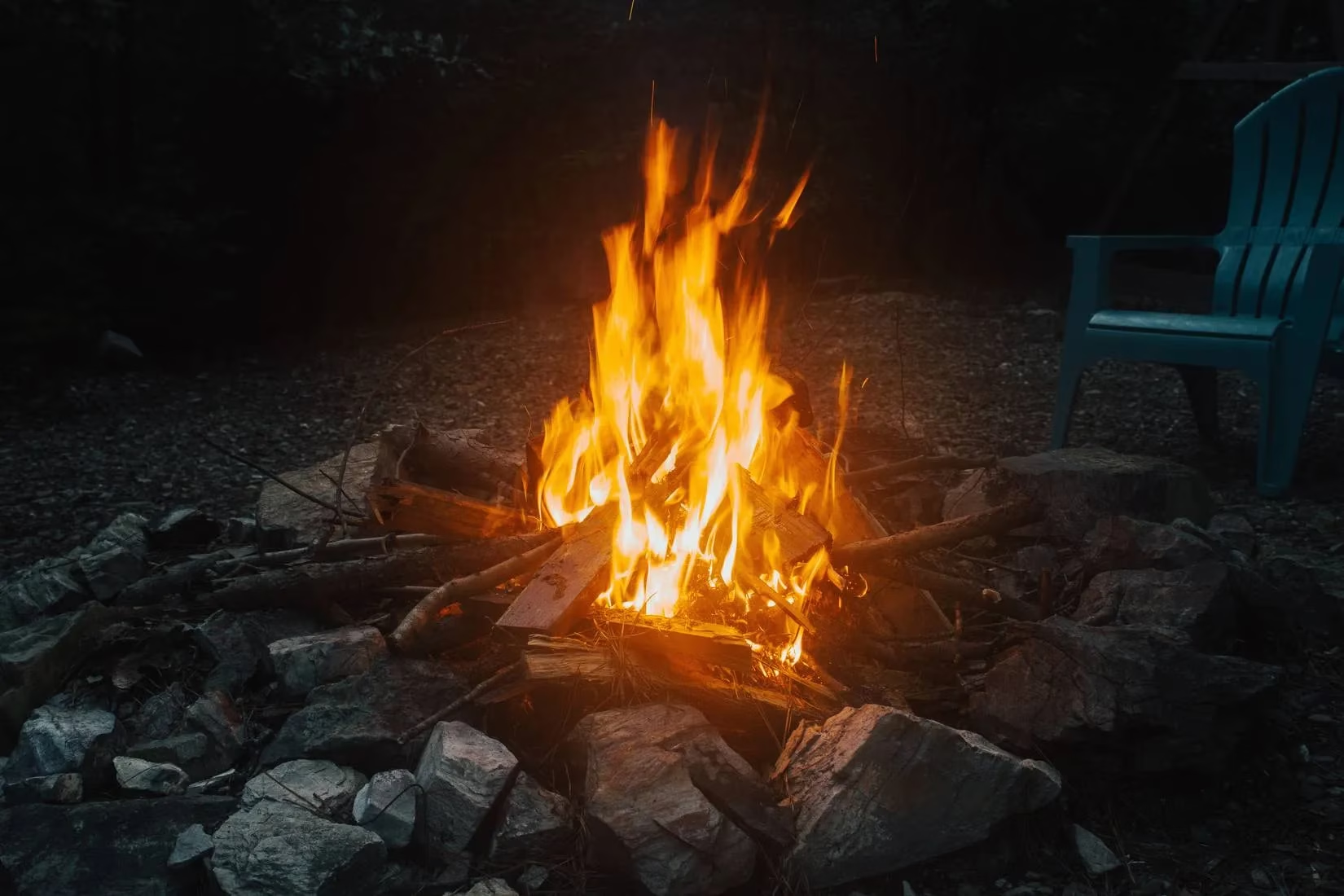
Equally significant was the lowering of fire restrictions from Stage 2 to Stage 1. Throughout the autumn and winter of 2025, the risk level had been classified as \u201cVery High,\u201d banishing flames with the absoluteness of a librarian shushing a rowdy audience. Now, with increased precipitation and milder temperatures soaking the rims, the danger dropped to \u201cModerate.\u201d In the words of the National Park Service, moderate means \u201cfires can start from most accidental causes, but the number of fire starts is usually pretty low.\u201d It\u2019s not a green light for carelessness, but rather a cautious nod that the canyon is no longer a tinderbox waiting for a spark.
The new rules threaded a delicate balance:
-
Campfires are allowed only in designated fire rings within maintained campgrounds.
-
Inner canyon overnight users may use gas cook stoves, a quiet flame contained in metal, but no wood fires.
-
Below the rim, all open fires\u2014including those nostalgic campfire circles\u2014remain strictly forbidden, an unyielding line drawn by the memory of charred pines.
🗺️ Which Trails Are Open and Which Still Sleep?
The most concrete sign of rebirth arrived with the October 2025 announcement that certain North Rim areas would welcome visitors again. By 2026, the path along Highway 67 to Cape Royal Road was fully accessible up to approximately mile marker 10, granting entry to Point Imperial, Cape Royal, Fire Point, and Swamp Ridge. These overlooks, once sealed behind hazard‑tree‑clogged asphalt, now stretched out like pages of a freshly printed guidebook, inviting eyes to feast on the vermilion strata once more.
Yet not every corner of the North Rim has shaken off the dust. The North Kaibab Trail, that beloved artery plunging into the inner gorge, remains closed along with all other North Rim backcountry areas. Rangers have marked these closures from sunrise to sunset, and they will stay effective until November 30 or the first heavy snowfall\u2014whichever arrives first. It\u2019s a limbo that stings, but one that park managers see as necessary to prevent a single misstep from undoing months of recovery.
For those who monitor the canyon\u2019s rhythms like sailors reading tides, the partial reopening felt like a minor miracle. In online communities, voices that had been subdued by disappointment rose again. One visitor, posting on a dedicated Grand Canyon forum, wrote: \u201cSo happy to see this. Glad they\u2019ve cleared the hazard trees from the roads and made it safe enough for people to venture in this year.\u201d That sentiment echoed through campgrounds and permit offices, a small cheer for hard‑working trail crews and patient rangers.
🌄 A Canyon Learning to Breathe Again
The easing of restrictions in 2026 is not a full pardon, but a probation that demands respect. Water still trickles under surveillance, and fire remains a predator that only dozes. The Dragon Bravo Fire taught the park that its beauty is brittle, as fragile as the fossilized ferns pressed into its limestone walls. Still, with each repaired pipeline and each cleared mile of road, the Grand Canyon is stitching its wounds back together. Visitors who come this year will walk through a landscape that has been humbled\u2014and in that humility, they might find an even deeper connection to the chasm that carves its story into the earth.
Leave a Comment
Comments