
The Grand Canyon National Park has witnessed a tumultuous period over the past year, shaped by a cascade of disruptive events that have tested its resilience. The onset of 2025 brought sweeping layoffs, followed by sharp budget reductions that strained park operations. These difficulties were compounded by a prolonged U.S. government shutdown, which left essential services in limbo. In the midst of this turmoil, the Dragon Bravo Fire erupted in July, blazing across thousands of acres of the protected landscape for months and forcing the closure of numerous visitor areas. The inferno left deep scars on the canyon's rugged terrain, and its smoke became a symbol of a season defined by crisis. As the flames gradually subsided, park officials faced a daunting question: when and how should the damaged sections be reopened, and what consequences would follow?
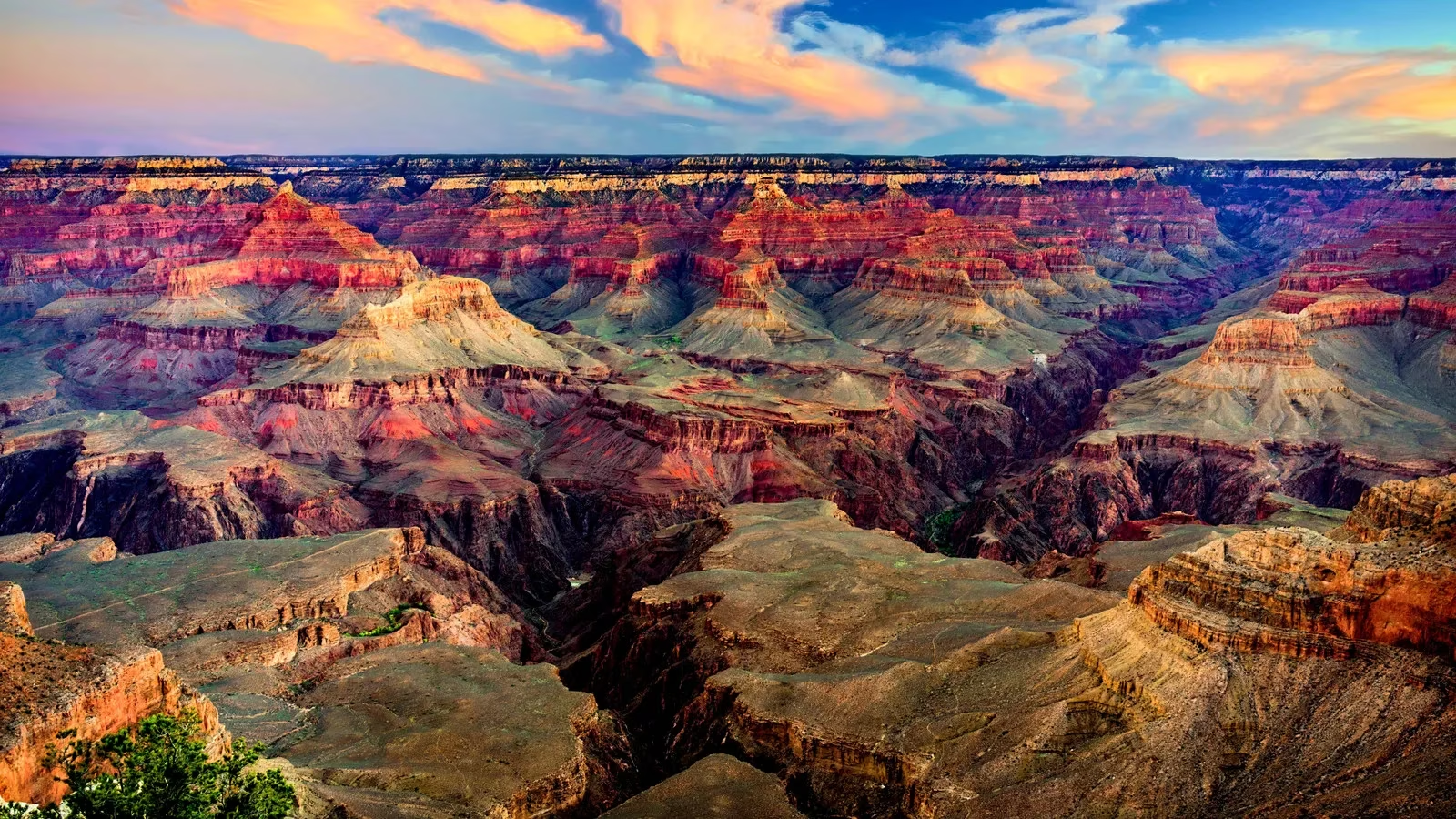
By late September, some portions of the North Rim cautiously reopened, signaling the first steps toward recovery. Then, on November 1, the park announced that two popular backcountry campgrounds — Phantom Ranch and Bright Angel — would once again welcome visitors. At the same time, the South Kaibab Trail below Tipoff was also cleared for public access. Phantom Ranch sits at the very bottom of the Grand Canyon on the north bank of the Colorado River, a secluded oasis reachable only by foot, river raft, or mule. It offers modest cabins equipped with electric outlets but deliberately lacks phones and televisions, preserving a sense of rustic escape. A short distance away, the Phantom Ranch Canteen provides meals and supplies. Bright Angel Campground lies just half a mile upstream from the canteen along the river corridor. Accessible via the North Kaibab, Bright Angel, or South Kaibab trails, the site provides basic amenities: drinking water, flush toilets, bathroom sinks, and picnic tables. These reopenings were greeted with enthusiasm by avid hikers and river runners eager to return to the canyon's depths, yet they arrived at a moment when the park's capacity to handle visitors was severely strained.
During the government shutdown, hundreds of former National Park Service employees signed a letter addressed to U.S. Secretary of the Interior Doug Burgum, urgently requesting the closure of all national parks. Their message was unambiguous: “Our parks don’t run by themselves. The dedicated staff of the National Park Service keep them clean, safe, and functioning.” They emphasized that without these personnel, trails were not being safely maintained or monitored, and the risks to visitors were escalating daily. The letter highlighted the impossible burden placed on the rangers who remained, many of whom were working without pay. Against this backdrop, the decision to open Phantom Ranch and Bright Angel raised profound concerns. Every new permit issued, every additional camper descending into the inner gorge, increased the workload for an understaffed, unpaid workforce already struggling to perform critical safety tasks.
Compounding the labor crisis, the park was simultaneously confronting a severe water shortage. On October 31, officials escalated restrictions to Stage 3 Water Restrictions and Stage 2 Fire Restrictions. The scarcity stemmed from ongoing construction on the Transcanyon Waterline Replacement Project, a massive infrastructure undertaking designed to update the aging pipeline that supplies water across the canyon. Under Stage 3, visitors were strongly urged to minimize water consumption. Between November 4 and 18, the inner canyon corridor experienced intermittent water availability, and Mather Campground's water spigots and camper services were shut down entirely. The activation of two additional campgrounds in the midst of such shortages appeared counterproductive, as each new camper inevitably drew from the limited supplies. The fire restrictions were similarly stringent: all wood and charcoal fires were banned, with limited exceptions made only for gas stoves. In a landscape where a single spark could reignite disaster — especially in the aftermath of the Dragon Bravo Fire — these rules were not merely precautionary; they were essential.
The reopening of Phantom Ranch and Bright Angel undoubtedly brought short-term economic relief to surrounding communities. Local outfitters, guiding services, and gateway towns experienced a modest influx of visitors who spent money on gear, lodging, and meals. Yet, from a broader perspective, the calculus was troubling. Keeping the park's most remote zones accessible meant that emergency response teams — already stretched thin — had to be ready for incidents in locations that require hours of foot or helicopter travel. With fewer rangers on duty and no compensation, morale deteriorated, and the quality of visitor services inevitably declined. Moreover, the water restrictions signaled that the park's infrastructure was not ready to support even normal levels of use, let alone the surge that often accompanies post-closure excitement.
Looking ahead from the vantage point of 2026, the legacy of those decisions continues to ripple through Grand Canyon National Park. The short-term gains of reopening conflict with long-term sustainability. The park's ecosystem and its workforce both require careful stewardship, and rushing to revive tourism without first securing adequate staffing and water supplies only deepens vulnerabilities. The Dragon Bravo Fire may be history, but its lessons remain etched into the canyon walls: resilience cannot be mandated; it must be supported by funding, personnel, and prudent resource management. For those who love the Grand Canyon, the challenge is to advocate for a model of visitation that respects both the magnificence of the place and the limits of its caretakers.
Leave a Comment
Comments