
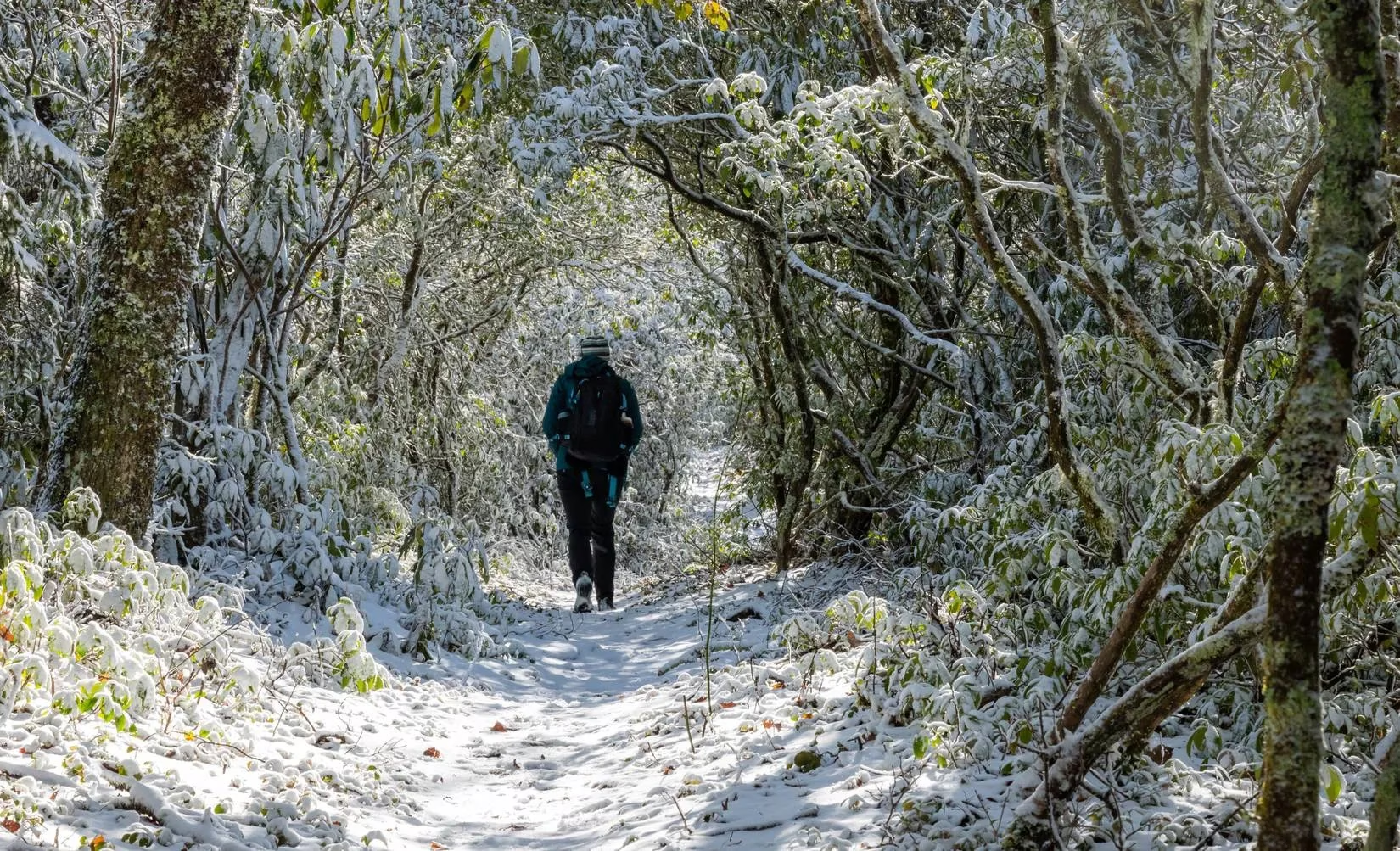
As the crisp air of 2026 settles over the Appalachian highlands, millions of visitors are drawn to the misty peaks and frozen waterfalls of the Great Smoky Mountains National Park. With a record-breaking 12.19 million visitors last year, this natural wonder continues to hold its title as America's most visited national park. Yet, beneath the breathtaking vistas of snow-draped rhododendron tunnels lies a persistent and preventable hazard. While many might worry about restaurant dress codes at Yellowstone or trail closures due to snowfall, the National Park Service (NPS) identifies a more fundamental, and often overlooked, risk factor: improper footwear. Could the simple choice of shoes be the single biggest mistake visitors make in the Smokies?
The Staggering Statistics of Slips and Falls
Motor vehicle accidents remain the leading cause of injury across the National Park System. However, within the rugged terrain of the Great Smokies, falls claim a significant portion of visitor injuries, closely following vehicular incidents. The NPS is unequivocal in its assessment: "Not wearing proper footwear is one of the leading causes of injuries in the park." This statement, backed by years of incident data, highlights a critical disconnect between visitor preparation and the park's demanding environment. The terrain is notoriously variable, presenting a gauntlet of slippery surfaces, downed trees, severe trail erosion, and swollen streams that can appear with little warning. Is it any surprise that unsuitable shoes lead to mishaps?
Beyond Fashion: The Anatomy of Proper Park Footwear
So, what constitutes "proper footwear" in the eyes of the NPS? It's far more than just comfortable sneakers. For the Smokies, especially in winter conditions, the recommendation is clear: sturdy hiking boots with good ankle support. These boots act as a primary defense against twists and sprains on uneven ground. But the requirements don't stop there. The NPS specifically advises visitors to equip themselves for icy conditions, recommending both crampons and other traction devices for added security on frozen trails. This isn't just a suggestion for expert mountaineers; it's considered essential gear for anyone venturing onto trails that can transform into ice rinks overnight due to freeze-thaw cycles.
The Winter Wardrobe: Expert Recommendations from the Trail
Online hiking communities in 2026 are abuzz with gear discussions, particularly regarding winter excursions in the Smokies. Veteran hikers share hard-won wisdom on platforms dedicated to outdoor adventure. One user who completed a thru-hike in January recounted navigating 8-12 inches of snow in trail runners paired with light gaiters. However, this is often presented as a lightweight, experienced-hiker approach. The consensus for most visitors leans toward more robust solutions:
-
Insulated & Waterproof: Many recommend lightweight leather boots treated with waterproofing wax (like Sno-Seal).
-
Layered Protection: The combination of high-top trail runners with tall gaiters is a popular compromise for mobility and dryness.
-
Advanced Traction: Specific products like the Kahtoola MICROspikes or Exospikes are frequently cited as "perfect for the Smokies" for their ability to bite into ice.
-
Trusted Brands: For those seeking top-tier traction and insulation, brands like Oboz, Merrell, Salomon, Keen, and The North Face are consistently praised for blending comfort with critical safety features.
The Ten Essentials: Footwear is Just the First Step
Proper boots are a cornerstone of safety, but they are part of a larger system of preparedness championed by the NPS. The agency maintains a dedicated list of "Ten Essentials" for the Great Smoky Mountains, a checklist designed to keep visitors safe from a multitude of hazards beyond just falls.
| Essential Category | Specific Items |
|---|---|
| 1. Navigation | Map, compass, & GPS |
| 2. Sun Protection | Sunglasses, sunscreen, & hat |
| 3. Insulation | Jacket, hat, gloves, layers, & rain gear |
| 4. Illumination | Flashlight or headlamp (your phone does not count!) |
| 5. First-Aid Supplies | A kit with non-expired supplies |
| 6. Fire | Matches, lighter, & fire starter |
| 7. Repair Kit & Tools | Duct tape, knife, screwdriver, & scissors |
| 8. Food | Nutritious snacks that don't require cooking |
| 9. Hydration | Water & treatment supplies (1 liter per 2 hours of hiking) |
| 10. Emergency Shelter | Tent, tarp, bivy sack, or space blanket |
This list underscores a vital principle: planning is a year-round responsibility. Visitors are strongly encouraged to check trail statuses for hazards, closures, or warnings before they arrive, particularly in winter when popular routes can be shut down or become dangerously slick.
A Call for Conscious Exploration
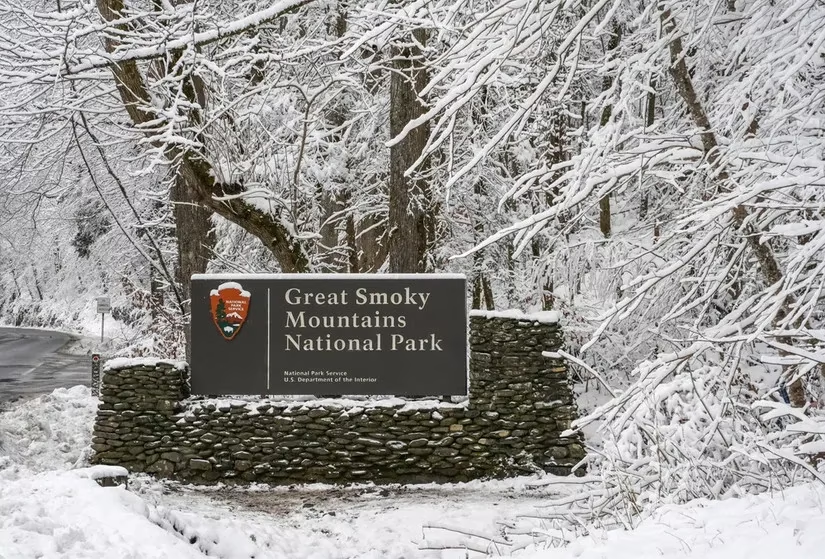
As visitation numbers continue to climb, the message from the National Park Service is one of proactive stewardship—of both the park and one's own safety. The allure of a spontaneous walk in a winter wonderland is powerful, but the Smokies demand respect. Staying on designated trails is not just a rule for preservation; it's a crucial safety practice, especially on unstable, snow-covered terrain where a single misstep off-path can lead to a serious fall.
Ultimately, the narrative isn't about restrictive dress codes but about functional preparedness. The leading cause of falls—improper footwear—is entirely within a visitor's control. By choosing boots with ankle support, considering traction devices for ice, and packing the Ten Essentials, millions can safely enjoy the sublime beauty of America's most visited national park. In 2026, the most important fashion statement in the Great Smoky Mountains isn't about style; it's about the sturdy, reliable boots on your feet. Will you be prepared?
Leave a Comment
Comments