
It is almost 2027, yet some visitors to America’s treasured national parks still act as if basic rules do not apply to them. A disturbing incident at Great Smoky Mountains National Park has once again raised the question: how much longer will wildlife have to pay the price for human selfishness? The latest case involves a drone operator who decided to chase a black bear, pushing a majestic animal to the brink and then out of a tree—all for what, a few seconds of video?
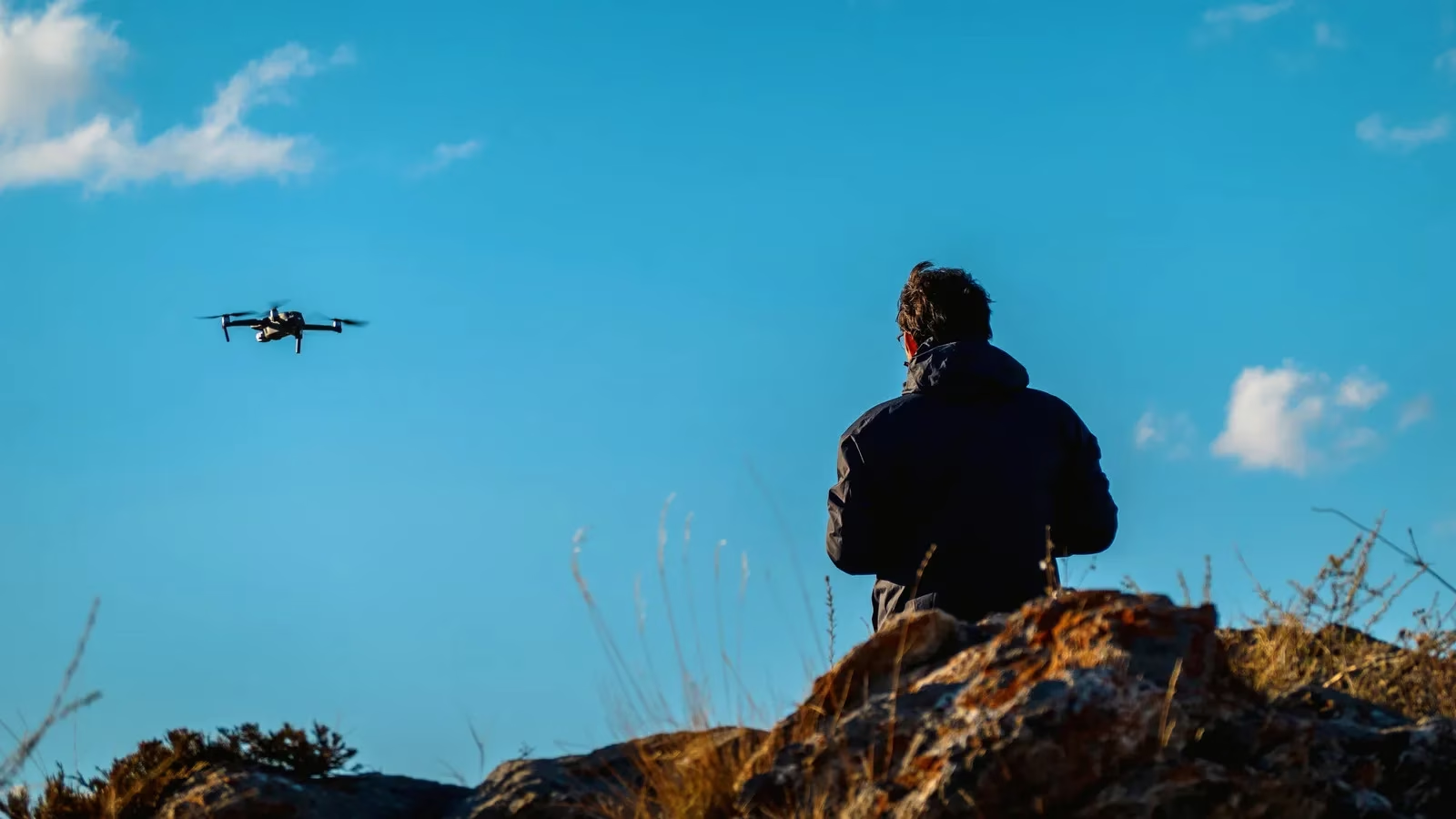
The episode came to light through the popular Instagram account Tourons of National Parks, which has made a name for itself by documenting rule‑breaking tourists across the country. In the video shared a few days ago, a man is seen maneuvering a drone dangerously close to a bear that had climbed a tree to escape. But the footage only tells half the story. The person who recorded the scene and handed over the evidence to park rangers explained the full extent of the harassment. Not only was the drone buzzing around the stressed animal, but the operator actually used the device to chase the bear completely out of the tree. The witness tracked down the man’s license plate number, and the information proved sufficient for rangers to issue a citation. That swift action is a rare bright spot in a year that has seen a worrying surge in drone‑related violations.
🚫 Why Are Drones Banned in National Parks?
The simple answer is that drones endanger wildlife, disturb visitors, and can cause irreversible damage to fragile environments. Yet many drone owners still ask: can I really be fined for flying in a national park? The answer is a resounding yes. In June 2014, the National Park Service released Policy Memorandum 14‑05, which directed every park superintendent to prohibit the use of unmanned aircraft systems. This blanket ban was introduced after a series of catastrophes—drones crashing into Yellowstone’s thermal pools, noisy machines shattering the peace at the Grand Canyon, and repeated incidents of animals being harassed. By 2026, the rule remains one of the park system’s strictest.
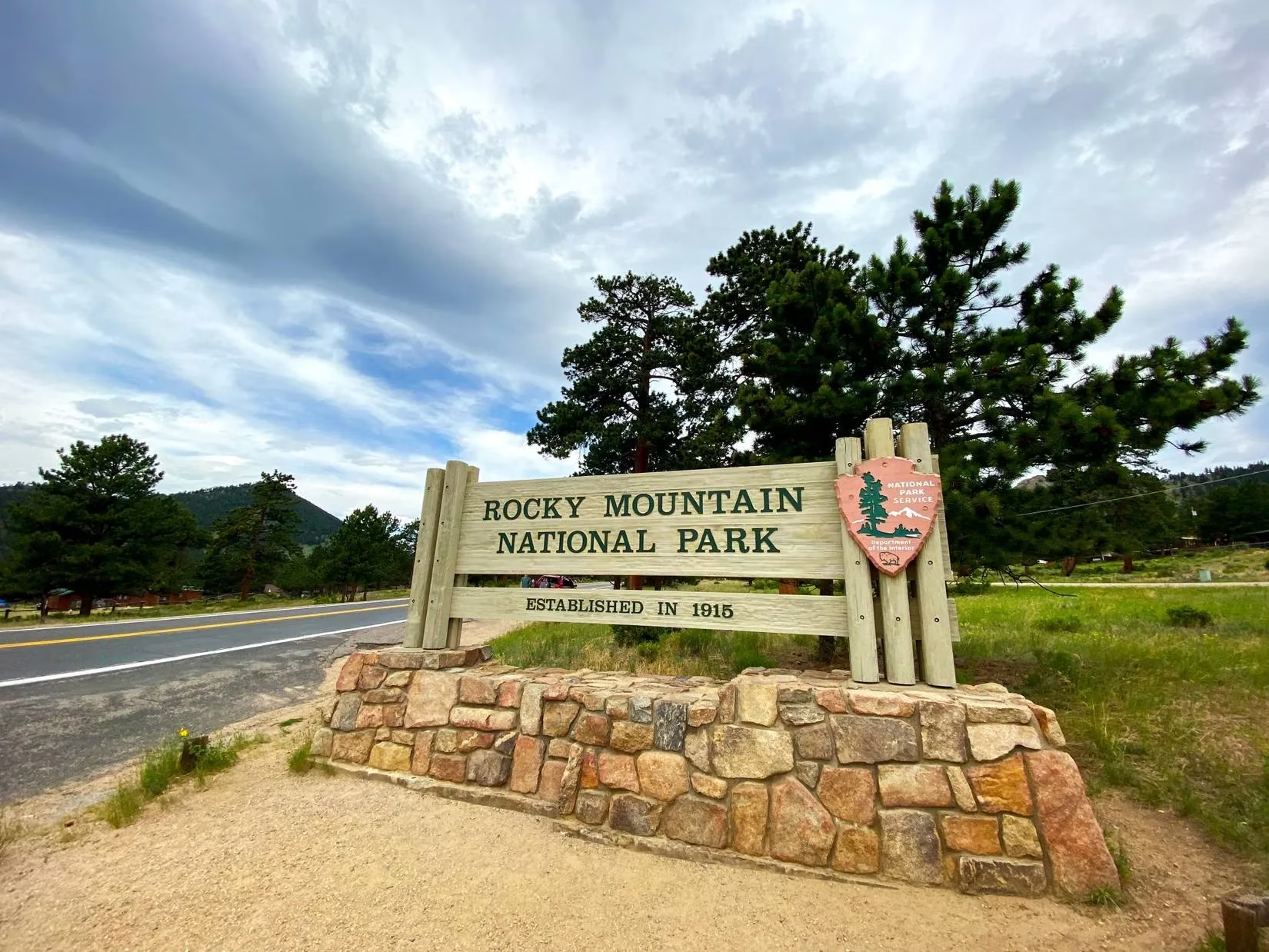
The penalties are not a slap on the wrist. According to the NPS, flying a drone inside park boundaries can land you up to six months in jail and a fine of up to $5,000. In some cases, rangers also confiscate the equipment on the spot. For the visitor at Great Smoky Mountains, the ticket was just the beginning. Park officials confirmed that prosecution is possible when evidence is as clear as it was here, meaning the individual could face a criminal record that follows him well beyond his vacation.
🔥 “I Couldn’t Believe He Was Doing That”
The public reaction on Tourons of National Parks was a mixture of fury and disbelief. One commenter summed up the mood perfectly: “Similar situations are sadly too common. So happy someone took note and action! That poor bear.” Others demanded a lifetime ban from all national parks, while a few highlighted a persistent problem: many drone pilots genuinely do not know the rules. As another user pointed out, “A lot of drone owners are not well aware of the restrictions. When I mentioned the $10,000 fine and confiscation of their toy, they immediately landed and put it away.” This ignorance, however, is becoming harder to excuse in an age when a quick internet search before takeoff could prevent a felony.
Unfortunately, the Great Smoky Mountains case is not an isolated one. Just a few months ago, a different tourist received a hefty fine after illegally harassing an osprey nest with a drone. The bird, protecting its chicks, was forced to abandon the nest temporarily, putting the eggs at risk. And only weeks ago, DJI—the world’s largest drone manufacturer—faced intense backlash for releasing a promotional video that clearly included drone footage shot inside several U.S. national parks, a move that critics say normalizes illegal flying.
🐻 Bears, Bison, and the Shadow of “Bear Jams”
The drone‑harassed bear in this story is part of a larger pattern that rangers have been battling since the pandemic era. The so‑called “bear jams” at Yellowstone, where cars clog roads to snap photos of grizzlies, have become a daily nuisance. Yosemite has at times felt like a “lawless playground,” with visitors ignoring closures and leaving trash in sensitive meadows. Every such incident chips away at the delicate balance that keeps these wild places alive. When a bear is chased by a buzzing machine, it not only experiences acute stress but may also abandon a feeding area or its young, leading to long‑term consequences for the local population.
✈️ What Can Responsible Visitors Do?
The obvious step is to leave your drone at home or safely locked in your vehicle before entering any national park. If you witness a violation, the Great Smoky Mountains case provides a blueprint: document what you see, film if possible, note license plates, and report everything to a ranger immediately. The NPS has made it clear that video evidence and witness testimony are enough to pursue legal action. By taking a few minutes to report a rule‑breaker, ordinary visitors become vital defenders of wildlife.
🛑 Will The Message Finally Sink In?
With each new video that goes viral, the same question echoes: will this be the last time a selfish thrill‑seeker terrorizes an animal for a social media clip? The odds are not encouraging. Yet the growing willingness of bystanders to intervene and the public’s zero‑tolerance attitude suggest a cultural shift is underway. In 2026, getting caught with a drone in a national park is no longer an embarrassing anecdote—it can ruin your trip, drain your bank account, and land you in court. If that does not deter people, perhaps the image of a frightened bear scrambling for safety will. After all, the true majesty of these places is meant to be watched with our own eyes, not through the lens of a buzzing intruder.
Leave a Comment
Comments