
As I reflect on the recent legal developments in 2026, I can't help but feel a sense of relief and vindication for the wild spaces we cherish. Just last year, a significant conservation battle was won when a federal district court judge halted a massive forest treatment and logging project on the very border of Yellowstone National Park. This wasn't just about trees; it was about the very soul of one of America's last great ecosystems. How could a project of this scale, with such profound implications, proceed without a clear understanding of its most destructive components? The answer, as the court found, is that it couldn't.
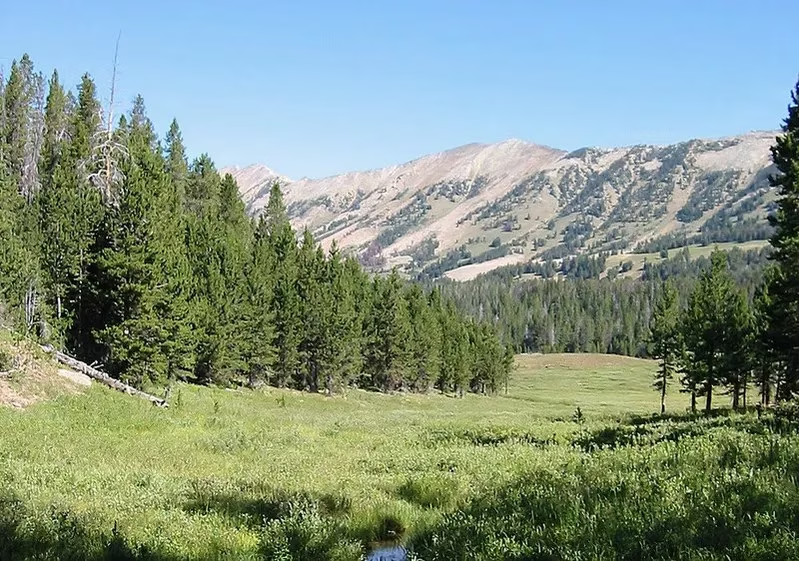
The controversy centers on the South Plateau Landscape Area Treatment Project, a joint initiative by the U.S. Forest Service, the U.S. Fish and Wildlife Service, and a Montana logging company. On paper, its goals sounded reasonable: reduce wildfire risk, improve forest health, and increase resilience to insects like the mountain pine beetle. The project area, a vast 40,000-acre swath of the Custer Gallatin National Forest just north of Yellowstone, is dominated by vulnerable lodgepole pines. But the devil, as they say, was in the details—details that were glaringly absent.
Here’s what the project actually entailed:
-
Clear-cutting of approximately 5,550 acres of old-growth timber.
-
Thinning on another 6,500 acres.
-
Construction of 56.8 miles of temporary roads through mature forest.
A staggering 16,500 acres of this work was planned for the western border of Yellowstone itself. Can you imagine 57 miles of new roads fragmenting critical habitat on the doorstep of our first national park? I certainly can, and the image is horrifying.
The heart of the legal challenge, led by a coalition of conservation groups including the Center for Biological Diversity and the Alliance for the Wild Rockies, was the project's "condition-based management" approach. This method allowed the Forest Service to green-light treatments without pinpointing exactly where those 58 miles of roads would go or the precise locations of the clear-cuts. In his 46-page order, U.S. District Court Judge Donald Molloy didn't mince words. He called the agency's approval "arbitrary and capricious." The failure to map these destructive elements meant the agencies couldn't properly analyze—or disclose to the public—the project's true impact on protected species.
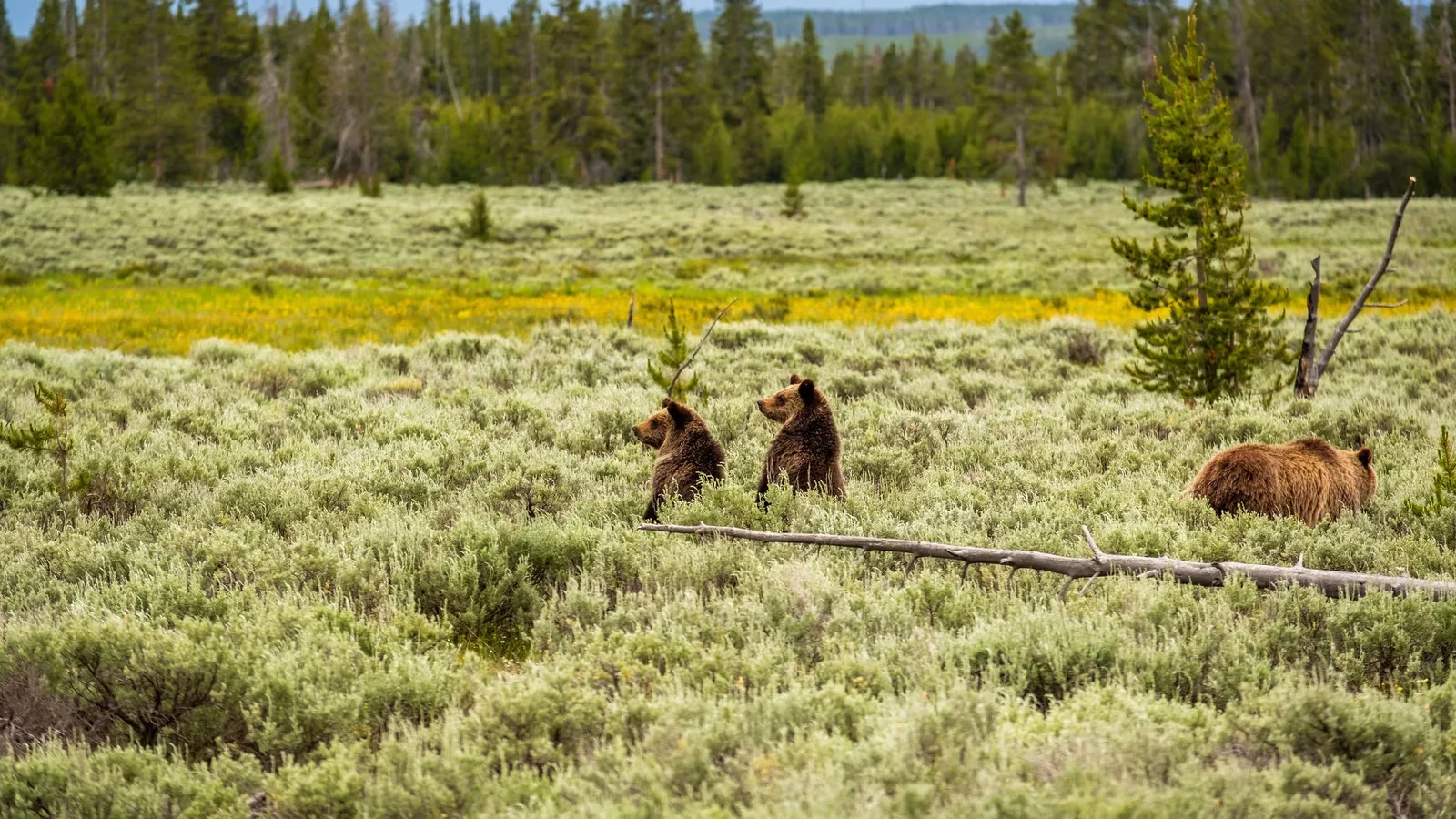
And what impacts were at stake? We're talking about Yellowstone grizzly bears and Canada lynx, both species that depend on secure, un-fragmented habitat. Matthew Bishop, a senior attorney with the Western Environmental Law Center, put it bluntly: the agencies "played too fast and loose with the law and the science." By not specifying road locations, they failed to apply the best available science on the habitat needs of bears. These new roads and clear-cuts, he argued, would have been placed in an "especially vulnerable and problematic area" for grizzly recovery. Isn't the purpose of the Endangered Species Act to prevent exactly this kind of habitat destruction?
The court agreed. Judge Molloy's ruling stated that the Forest Service had violated three cornerstone environmental laws:
-
The National Environmental Policy Act (NEPA): By not providing a \u201chard look\u201d at the environmental consequences.
-
The National Forest Management Act (NFMA): By failing to maintain viable wildlife populations.
-
The Endangered Species Act (ESA): By not ensuring actions wouldn't jeopardize listed species.
For me, this ruling is more than a legal technicality. It's a powerful affirmation that process matters. Mike Garrity of the Alliance for the Wild Rockies called the decision a protection for "one of the most important wildlife corridors in the Greater Yellowstone Ecosystem." He emphasized that agencies must now go back and do the "rigorous, science-based analysis the law requires." This isn't about stopping all forest management; it's about doing it right, with full transparency and accountability.
The U.S. Forest Service, for its part, has maintained that the project would have "no significant impact" and would instead boost forest resilience. But the court saw through this generalized claim. How can you assess \u2018no significant impact\u2019 when you haven't defined where the most significant disturbances will occur? The conservation groups' lawsuit exposed this fundamental flaw.
As of 2026, the South Plateau Project remains blocked. The ball is back in the agencies' court. They must now:
-
Conduct proper site-specific analysis.
-
Precisely map all proposed roads and treatment units.
-
Rigorously study the impacts on grizzly bear and lynx habitat using the best available science.
-
Re-open the process for genuine public scrutiny.
This case sets a crucial precedent. It tells land management agencies that they cannot use vague, condition-based plans as a shortcut to bypass environmental laws, especially in ecological crown jewels like the Greater Yellowstone. The victory belongs to the lynx padding through the quiet woods, the grizzly foraging in a secluded meadow, and to all of us who believe that some places are too precious to be managed in the shadows. The fight to keep Yellowstone wild and connected continues, but this ruling is a monumental step in the right direction. 🐻🌲
Leave a Comment
Comments