
As a journalist covering the ongoing environmental saga of the American Southwest, I find myself returning to the banks of the Colorado River with a growing sense of urgency. The latest data from 2026 paints a stark picture: the lifelines of the region, Lake Mead and Lake Powell, are now holding less than two-thirds of their capacity. This isn't just a statistic; it's a reality that millions of Americans who depend on this water for their daily lives and livelihoods are now forced to confront. The situation has evolved from a persistent concern into a full-blown crisis, with implications that stretch far beyond simple water scarcity, threatening the very ecological balance of iconic landscapes like the Grand Canyon.
The Unseen Threat: Predatory Fish and a Precarious Ecosystem
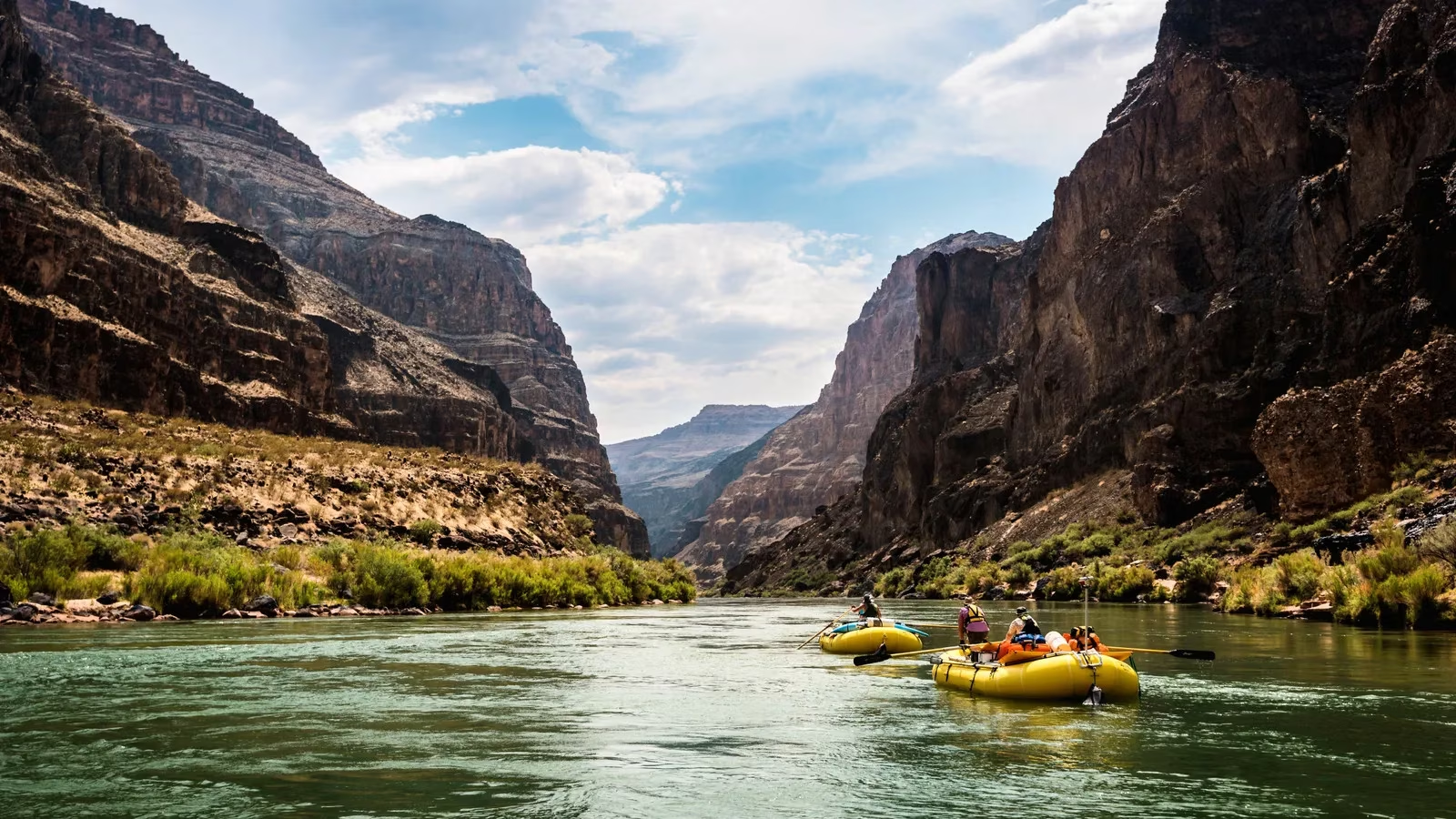
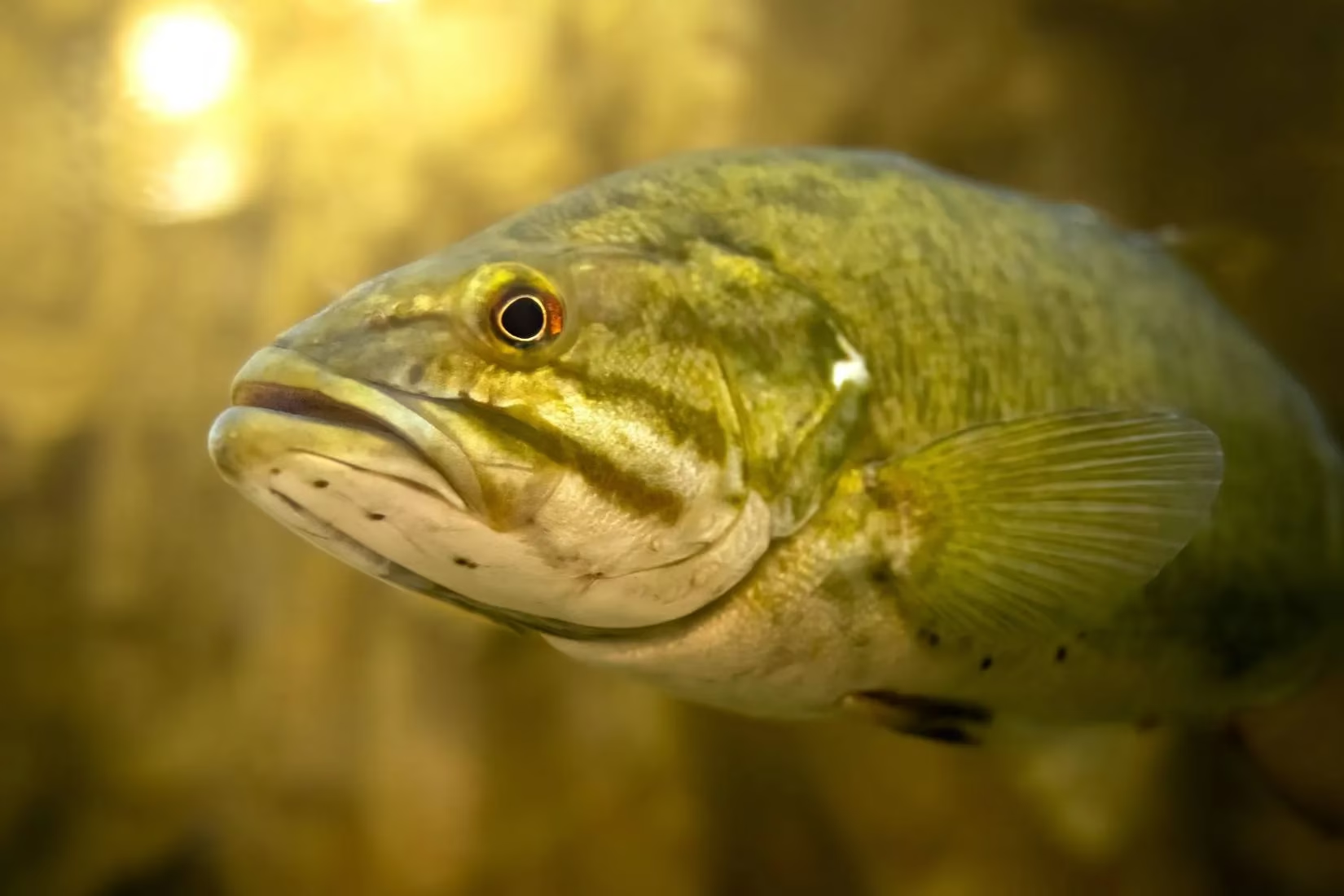
One of the most alarming consequences of the plummeting reservoir levels is an ecological domino effect that now imperils Grand Canyon National Park. According to the seminal 2025 Dancing With Deadpool report, the declining water in Lake Powell has created a pathway for a formidable aquatic invader: the smallmouth bass. These fish, typically surface dwellers, can now be swept through the dam's penstocks—the gate structures controlling outflow—survive the turbulent journey through powerplant turbines, and be discharged directly into the Colorado River.
This piscine migration is far from benign. The National Park Service categorizes the smallmouth bass as the "highest predatory threat in the Colorado River Basin." Their potential establishment in the canyon's waters spells disaster for native species, most notably the humpback chub. This unique fish, which saw its conservation status improved from endangered to threatened in 2021, represents a major success story. However, a thriving population of voracious smallmouth bass could decimate the chub and other native fauna, unraveling years of meticulous conservation work.
In response, the Bureau of Reclamation has deployed a costly countermeasure. To disrupt the bass's reproductive cycle, they release pulses of cooler water from the depths of Lake Powell into the river. While effective for ecology, this strategy carries a heavy financial and energetic toll: the water bypasses electricity generation, forcing the Western Area Power Administration to purchase replacement power on the open market. This mitigation effort alone incurred $6.5 million in expenses between 2024 and 2025, a figure that is poised to climb as reservoir levels drop further and the risk of "fish entrainment" increases.
A Reservoir System on the Brink
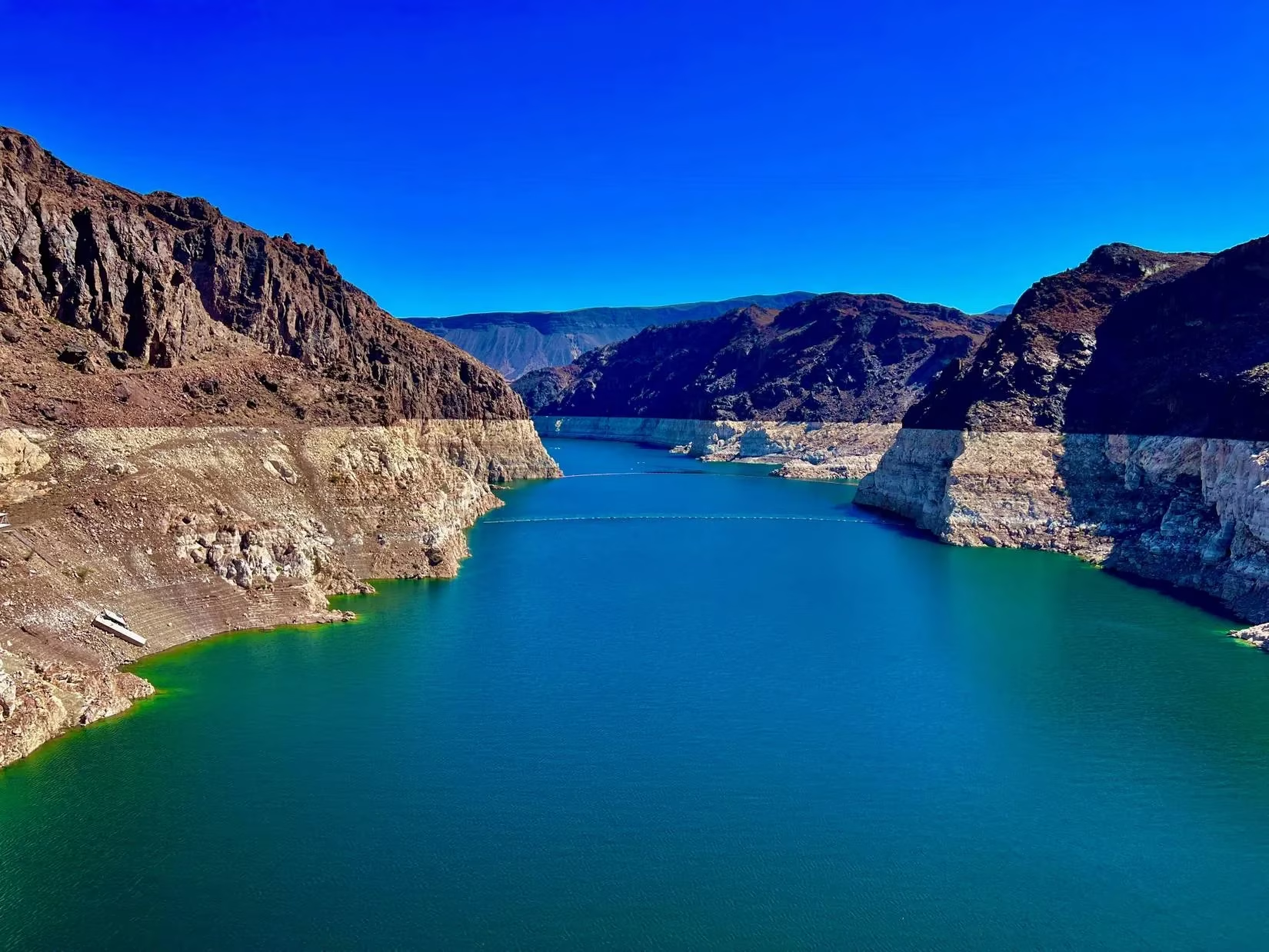
The backdrop to this biological invasion is a hydrological emergency. Lake Mead and Lake Powell, the continent's largest man-made reservoirs, are in a state of sustained decline. Current 2026 readings are alarming. For instance, while Lake Powell at Glen Canyon National Recreation Area measured 3,557 feet above sea level in July 2024, it has since fallen to approximately 3,541 feet. The Dancing With Deadpool analysis presents a sobering forecast: if the coming winter mirrors the dry conditions of recent years, the combined accessible water in both reservoirs during the critical period from late summer 2026 to spring 2027 could shrink to a perilously low 4 million acre-feet.
The stakes are almost incomprehensibly high. This river system is not merely a scenic wonder; it is the circulatory system for the Southwest:
-
🚰 Water Supply: Sustains over 40 million people across seven states and Mexico.
-
🌾 Agriculture: Irrigates 5 million acres of cropland, a cornerstone of the national food supply.
-
⚡ Energy: Provides significant hydroelectric power to a vast region.
A continued drop in reservoir levels threatens all three of these pillars, potentially triggering severe water rationing, agricultural collapse, and energy instability.
The Political Impasse and the Race Against Time
Faced with this multifaceted catastrophe, the political response has been fraught with difficulty. The seven Colorado River Basin states are divided into the Upper Basin (Colorado, New Mexico, Utah, Wyoming) and the Lower Basin (Arizona, California, Nevada), each with competing and deeply entrenched water rights and needs. Negotiations on a new long-term management framework, held at forums like the Colorado River Water Users Association conference, have repeatedly stalled without consensus.
The federal government, recognizing the gravity of the situation, has now imposed a hard deadline. States must reach a framework agreement by February 14th, followed by the submission of individual draft proposals. The urgency is dictated by the calendar: the current river management guidelines are set to expire at the end of 2026. Without a new, robust agreement that mandates substantial reductions in water consumption, the reservoirs face the grim prospect of continuing their decline toward "dead pool"—levels where water can no longer be released downstream.
The authors of the Dancing With Deadpool report intended their modeling not as a certainty, but as a "call to action." As I report on this crisis, that call echoes louder than ever in 2026. The intertwined fates of millions of urban residents, farming communities, power grids, and unique ecosystems like the Grand Canyon hang in the balance. The path forward requires unprecedented collaboration, difficult compromises, and immediate, decisive action to steward the Colorado River through an increasingly arid future. The time for planning is over; the era of implementation must begin.
Leave a Comment
Comments