
I have a confession to make: I love Acadia National Park. I really do. The rugged Maine coast, the pink granite, the Atlantic haze—it all feels like the edge of the world. But when autumn arrives, Acadia becomes a victim of its own beauty. As of 2026, the park is still wrestling with heavy visitation, budget cuts, staff shortages, and the ongoing controversy over vehicle registration for Cadillac Summit Road. Recent deaths in the park have also prompted warnings from officials. None of that makes Acadia less magical. It just makes me want a quieter leaf-peeping Plan B.
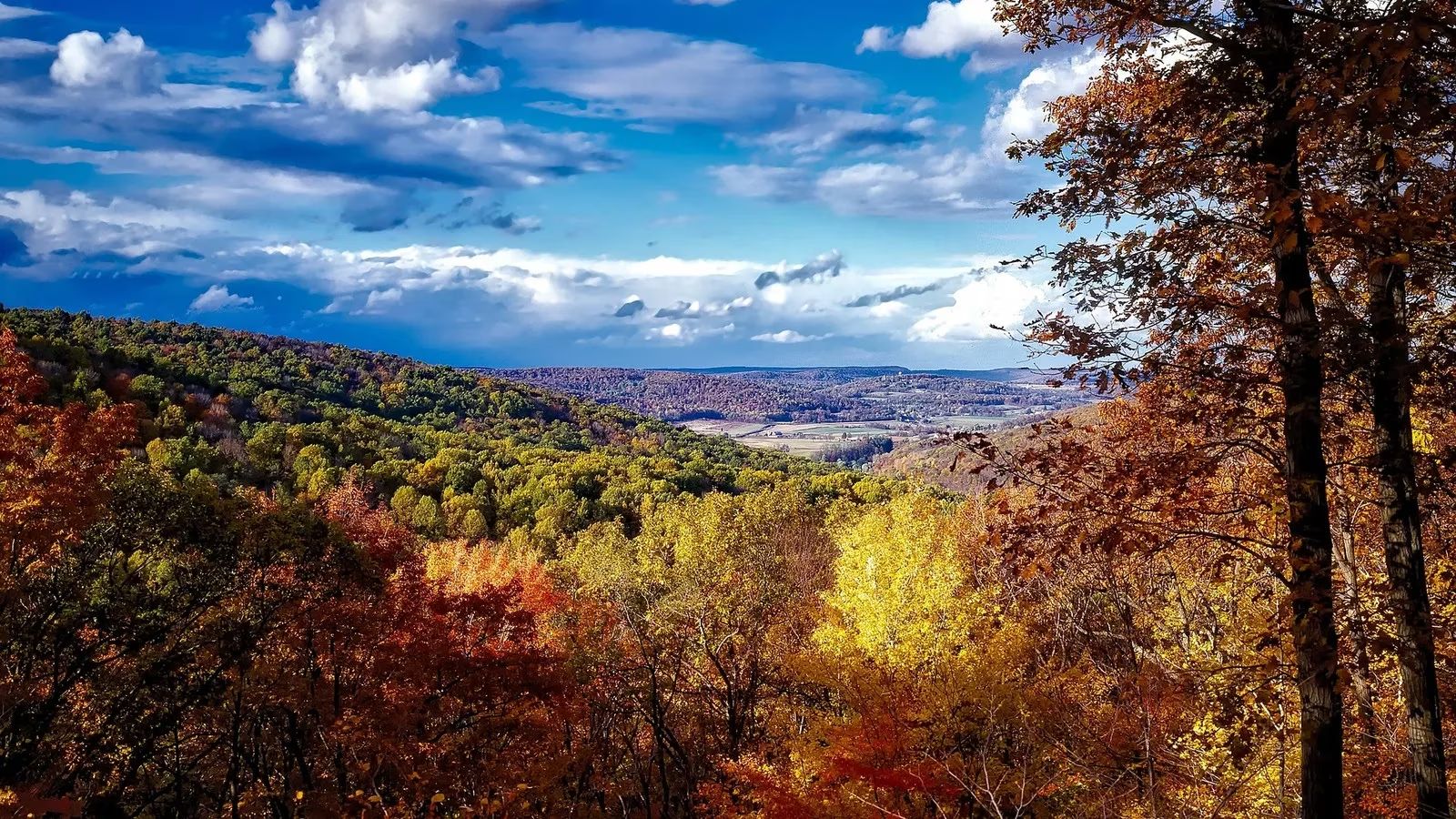
That Plan B is Catoctin Mountain Park in Maryland. And honestly? I think more people should know about it. Catoctin is tucked into the Blue Ridge Mountains, about two hours north of Washington, DC. Maryland is usually associated with Chesapeake Bay, crab cakes, and Ocean City. But the state's western corridor is a different world—an Appalachian forest preserve that feels hidden in plain sight. When autumn rolls around, Catoctin erupts in reds, oranges, and golds. It is postcard-worthy, but without the frantic energy that can come with a famous park like Acadia.
Here is the part that really gets me: Catoctin Mountain Park is free. Acadia charges a standard pass that generally costs $20 to $35. Catoctin does not. That alone makes it a tempting alternative for families, solo travelers, and anyone who wants a stunning fall weekend without a long list of fees and reservations. And the scenery is not a consolation prize. Catoctin Mountain rises to 1,916 feet, which is actually higher than Acadia's Cadillac Mountain at 1,530 feet. The park also has wetlands and photogenic mountain lakes. The only major thing Acadia has that Catoctin does not is an ocean.
I also love Catoctin's story. The lush forest you see today is not ancient old-growth. It is a comeback. In the 18th and 19th centuries, logging devastated this landscape. Then, in 1936, Catoctin Mountain Park was established as part of the Works Progress Administration and the Civilian Conservation Corps. Countless workers restored the forest. Today, those second-growth woods feel just as blissful and enchanting as any old-growth forest in a pristine national park. Every time I walk there, I feel like I am stepping into a success story.
For outdoor lovers, Catoctin has plenty to do. There are 25 miles of trails inside the park, ranging from short, easy strolls to longer, more challenging forest treks. If you want a serious challenge, the Catoctin National Recreation Trail is a 26.6-mile route that cuts through four different parks in Maryland's Blue Ridge Mountains. If you need something accessible, the quarter-mile Spicebush Trail is a gentle option. There are even trails designated for horseback riding. That kind of variety makes Catoctin easy to love, whether you are hiking with kids, training for a bigger trip, or just chasing fall color.
The rocky side of Catoctin is another highlight. Chimney Rock and Wolf Rock are the park's two most prominent geological formations, and they rise over the forest like high-altitude sentinels. They are also the epicenter of the most strenuous trail entirely within the park. If you want even more adventure, the steeper slopes and rocky sections create excellent rock climbing routes. And if you want to stay overnight, Catoctin has several terrific tent campsites and cabins. That means you can turn a leaf-peeping day into a full weekend.
Now, let's talk about the main event: fall foliage. Catoctin's second-growth forest is mostly a mid-latitude deciduous forest. In plain English, that means it is packed with trees that love to change color. Oaks, maples, beeches, hickories, sycamores, ashes, birches, and more all turn their own shades of yellow, orange, and red. There are even evergreens mixed in, adding a green twist to the spectacle. The exact peak varies each year with weather and atmospheric conditions, but around Frederick, Maryland, fall color usually begins in late September and lasts through early November. It often peaks around the middle of October.
If you go, do not miss the overlooks. Chimney Rock Overlook, Thurmont Vista Overlook, Blue Ridge Summit Vista, and Hog Rock Overlook all provide unobstructed views of the forest haven. On a clear October day, the color stretches for miles in every direction. I am not exaggerating when I say those views can make you forget about more popular parks like Acadia entirely.
Here is a quick comparison that sums up why I keep recommending Catoctin:
| Feature | Acadia National Park | Catoctin Mountain Park |
|---|---|---|
| Location | Maine coast | Blue Ridge Mountains, Maryland |
| Cost | $20–$35 standard pass | Free |
| High point | Cadillac Mountain, 1,530 ft | Catoctin Mountain, 1,916 ft |
| Water | Atlantic Ocean, lakes, wetlands | Lakes and wetlands, no ocean |
| Fall crowds | Often heavy | Usually much quieter |
| Trails | Extensive | 25 miles in park; 26.6-mile recreation trail |
| Fall peak | Late September–October | Late September–early November, often mid-October |
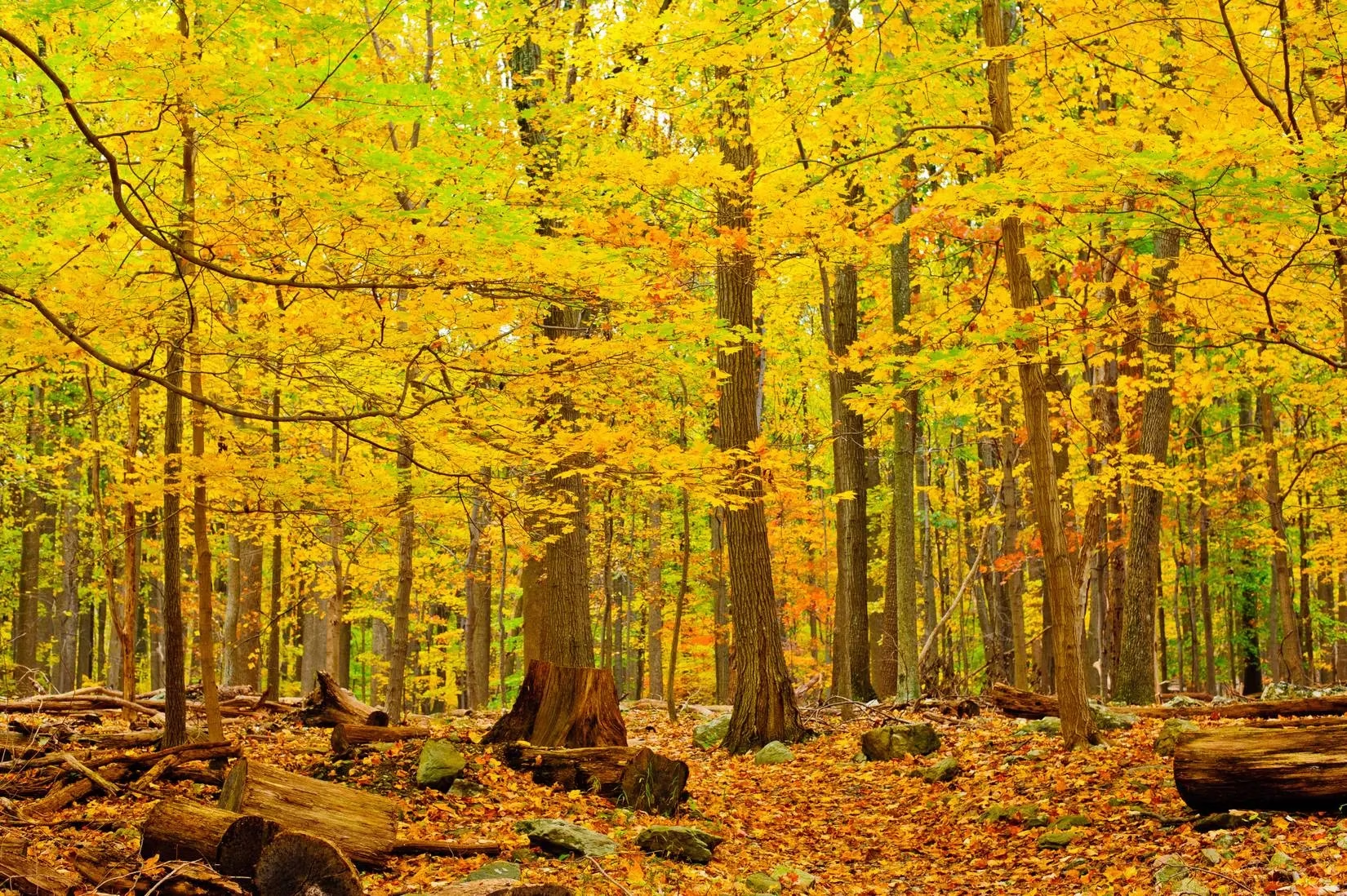
I am not saying you should never visit Acadia. It is still one of America's natural icons. But in 2026, with Acadia dealing with overcrowding, staffing shortages, and rules that can make a spontaneous trip harder, Catoctin Mountain Park feels like the smarter fall escape. It is free, it is beautiful, and it is close to Washington, DC. Most of all, it lets you enjoy heavenly autumn colors in peace. Sometimes the best leaf-peeping destination is not the famous one. Sometimes it is the hidden gem right in the middle of the Blue Ridge.
Leave a Comment
Comments