
As a winter storm threatens the ski season in the Sierra Nevada in the U.S., Canada’s Glacier National Park is once again demonstrating how proactive measures can keep winter sports enthusiasts safe. For the second consecutive winter season—following the rule’s debut in 2025—the park is requiring permits for all backcountry visitors entering Rogers Pass. This isn't just a bureaucratic formality. It’s a carefully designed system that blends visitor management with one of the most comprehensive avalanche control programs on the planet. And given the deadly history of this high‑mountain corridor, every step counts.
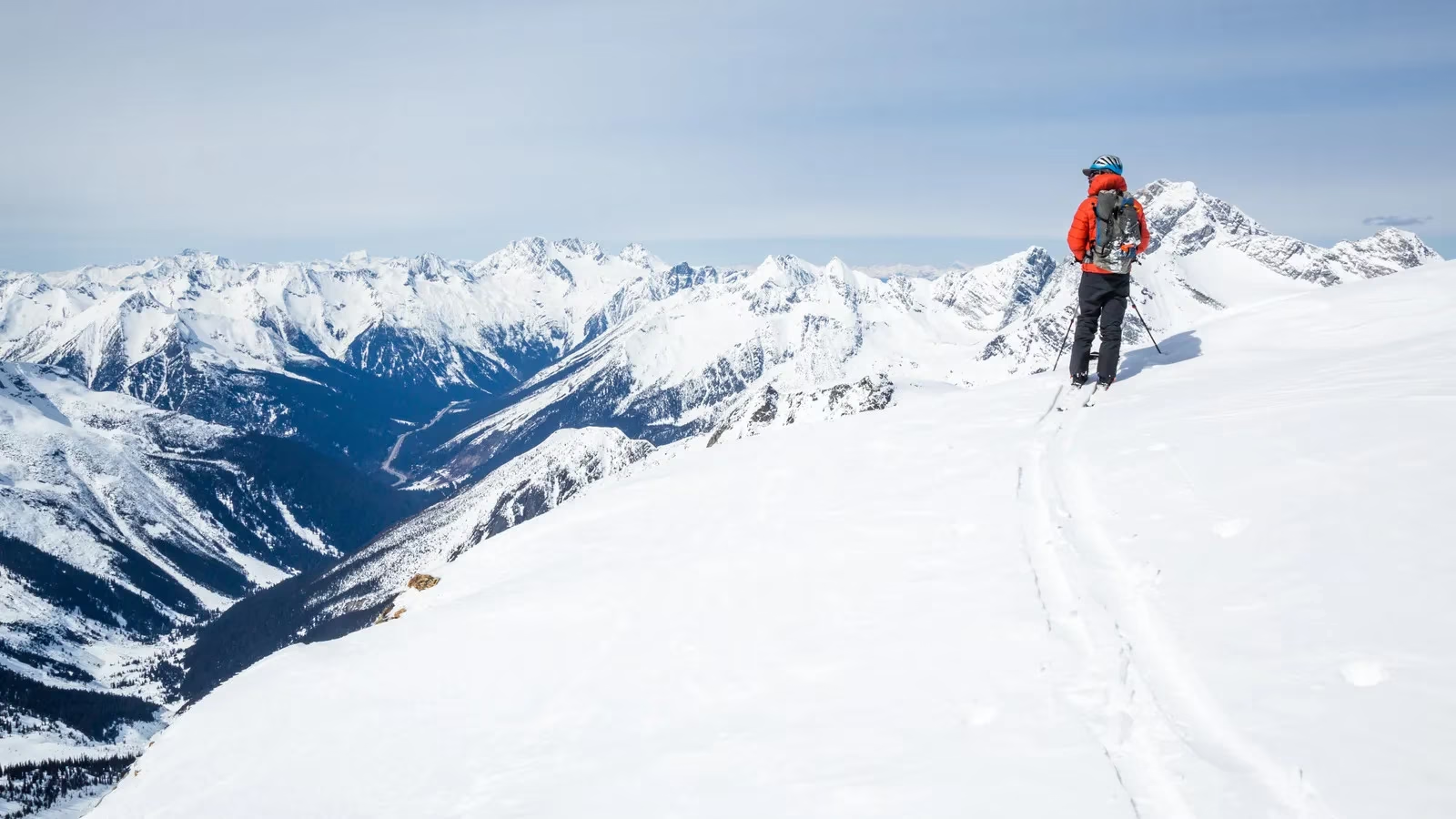
Rogers Pass slices through the heart of Glacier National Park in British Columbia, part of the Trans‑Canada Highway corridor. On an average winter day, roughly 4,000 vehicles and 24 to 32 trains thread this narrow valley. The slopes above are stunning—and notorious. Between 1885 and 1911 alone, avalanches claimed the lives of more than 250 railway workers and residents. Today Parks Canada records around 2,000 avalanche events in the corridor each year. That’s a staggering number, and it explains why you’ll now need a backcountry permit before you strap on your skis or splitboard and head beyond the pavement.
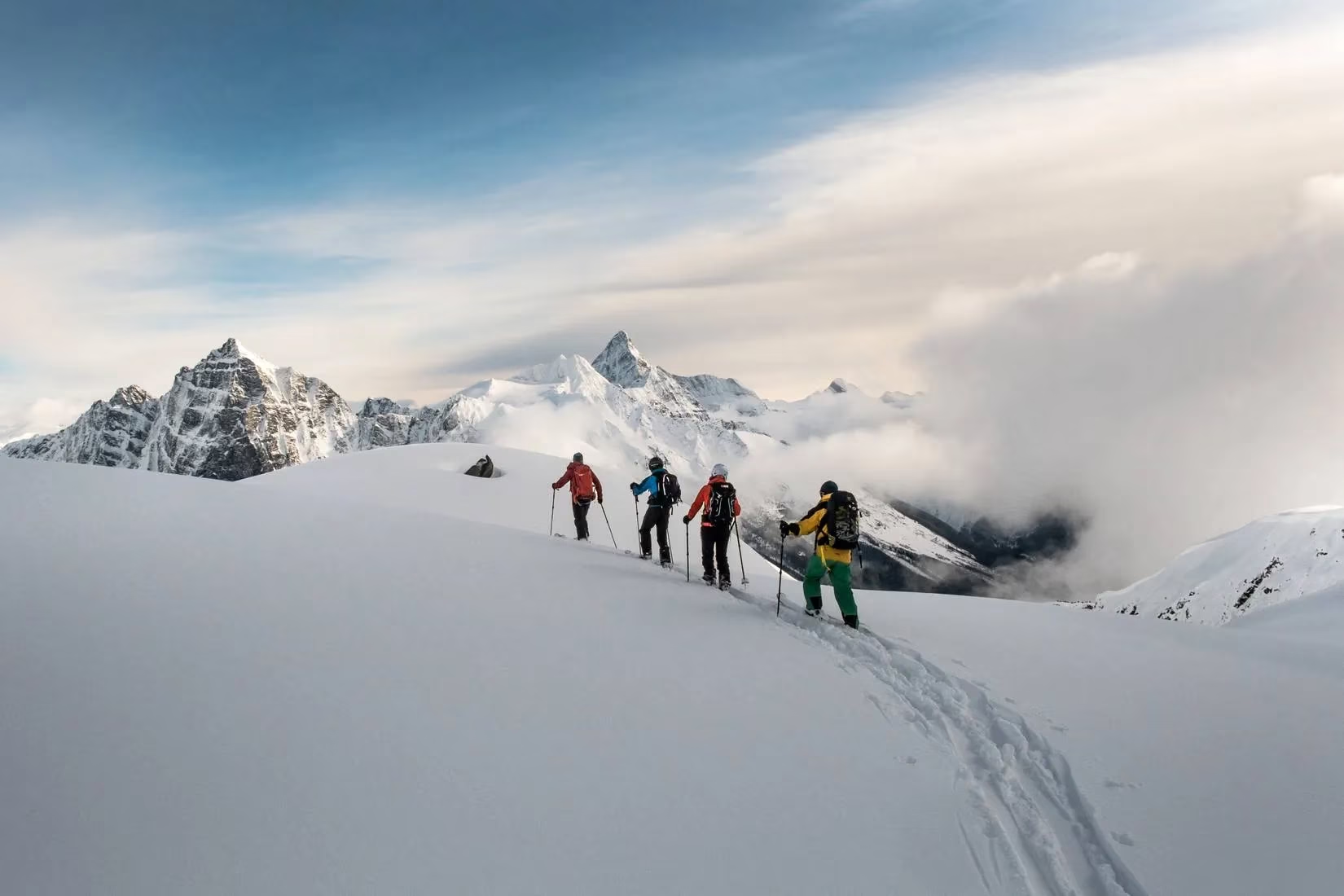
Why the New Permit Rule Matters 🧭
The permit system has existed since the 1990s, but until 2025 it left several areas accessible without a pass. Adventurous skiers and snowboarders could wander deeper into zones where Parks Canada and the Canadian Armed Forces routinely fire explosive rounds to trigger controlled avalanches. The problem? If rangers suspect someone is in a target area, they must delay avalanche control. And a delayed operation isn’t just an inconvenience—it can put highway motorists and train passengers at immediate risk. Shelly Bird, visitor experience manager for Mount Revelstoke and Glacier National Parks, put it plainly: entering without a permit now risks a fine of $25,000. The penalty sends a strong signal that safety isn’t negotiable.
How to Obtain Your Winter Backcountry Permit 🎟️
Securing access isn’t as daunting as it sounds. “It’s not that onerous,” assures Adrian Bostock, a director with the Shuswap‑based Gorge Ski Touring Association and the Shuswap Trail Alliance. Here’s what you need to know for the 2026 season:
-
Daily or annual passes are available. An annual pass offers the most flexibility, but even a day‑tripper can grab same‑day access.
-
Start with the quiz. All applicants must score a perfect 100% on an online questionnaire that covers avalanche awareness, park regulations, and safety protocols. It’s a quick but effective way to ensure everyone understands the risks.
-
Submit proof of completion. Once you ace the quiz, submit the certificate through the Parks Canada portal. Annual‑pass requests can take a few days to process, so plan ahead.
-
Pick up in person. Annual passes are issued at the Parks Canada visitor station. Day passes are handed out at Summit Station, the park’s temporary visitor center while the Rogers Pass Centre undergoes rehabilitation.
-
Parking rules have changed, too. If you’re stopping at the Illecillewaet parking area for longer than 30 minutes, you now need a winter permit. The same rule applies to any departure from the highway or designated parking spots into backcountry terrain.
Summit Station itself is a compact hub with limited services and parking, so arriving early is wise. The quiz and application process may feel like extra homework, but they’re designed to filter out unprepared visitors and give avalanche control teams the confidence to act without hesitation.
A Glimpse Into the World’s Largest Mobile Avalanche Control Program 💥
Glacier National Park’s avalanche mitigation effort is a logistical marvel. Managed jointly by Parks Canada and the Canadian Armed Forces, it’s the largest mobile avalanche control program anywhere on Earth. Crews use howitzers, remote‑triggered explosives, and helicopter‑dropped charges to deliberately release unstable snowpack before it can build into a catastrophic slide. The corridor that threads through Rogers Pass—highway, railway, and all—stays open largely because of this constant, calculated intervention.
By closing every backcountry zone to unregistered visitors, the park gains a real‑time picture of where people are (or aren’t). If a storm cycle loads a slope with dangerous layers, rangers can immediately schedule a control mission without worrying about a hidden party of skiers in the impact zone. For the thousands of motorists and rail passengers who traverse the pass daily, that responsiveness is a literal lifesaver.
What the Expanded System Means for Winter Explorers 🏔️
The new rule doesn't just cover the classic backcountry touring areas. It now blankets Winter Unrestricted Areas—places that previously didn’t require a pass. That means anywhere you step off the asphalt into the snowy backcountry, you’ll need authorization. For many seasoned tourers, this is an adjustment, but the community largely sees the logic. Bostock, who helped shape the dialogue between recreation groups and Parks Canada, emphasizes that the goal is shared stewardship. “We all want the same thing—safe access to incredible terrain,” he notes. The permit simply aligns everyone’s behavior with that goal.
Roaming through Glacier National Park’s backcountry in winter remains a breathtaking experience. Deep powder, gladed runs, and sublime alpine vistas await those who invest in planning. The added step of obtaining a permit ultimately frees riders and skiers to focus on the joy of the descent, knowing that the slopes above them are being monitored by one of the most sophisticated avalanche‑control teams in the world.
Tips for a Smooth 2026 Winter Visit ❄️
-
Take the quiz early. Even if you only plan a single day trip, completing the quiz beforehand speeds up your in‑person checkout at Summit Station.
-
Check snowpack and weather forecasts daily via Parks Canada’s avalanche bulletin. The conditions change fast in this maritime snow climate.
-
Carry avalanche safety gear—transceiver, probe, and shovel—regardless of whether you’re in a controlled zone. The permit system adds a layer of protection, but it doesn’t replace personal preparedness.
-
Respect temporary closures. If a control mission is in progress, signage and ranger instructions override your permit. Patience keeps everyone safe.
As winter deepens across the Canadian Rockies in 2026, Rogers Pass will once again draw powder seekers from around the globe. The backcountry permit isn’t a barrier; it’s a bridge between adventure and security—a reminder that even the wildest places can be enjoyed responsibly when everyone plays by the same set of rules.
So, whether you’re eyeing a multi‑day traverse or just a quick lap from the parking lot, remember: quiz first, permit in hand, then go chase the snow. With the roar of control charges echoing in the distance, you’ll ski a little lighter knowing that the mountains are being watched over by people who know them best.
As detailed in Entertainment Software Association (ESA), clear participation rules and standardized safety guidelines are essential for keeping recreational communities sustainable—an idea that closely parallels Glacier National Park’s tightened Rogers Pass backcountry permit process, where a mandatory knowledge check and enforceable penalties help reduce risk and support coordinated operations during rapidly changing winter conditions.
Leave a Comment
Comments