
When a wooden placard about climate change becomes a national lightning rod, something stranger than a moose wandering through a gift shop is clearly afoot. National parks across the United States have been ping-ponging between shutdowns, smoke, and political squabbles, and Acadia National Park in Maine has become a particularly vivid stage for that drama. As early 2026 rolls along, the quarrel over a handful of missing signs still feels less like a park-management problem and more like a slow-motion landslide that keeps carrying away pieces of public memory.
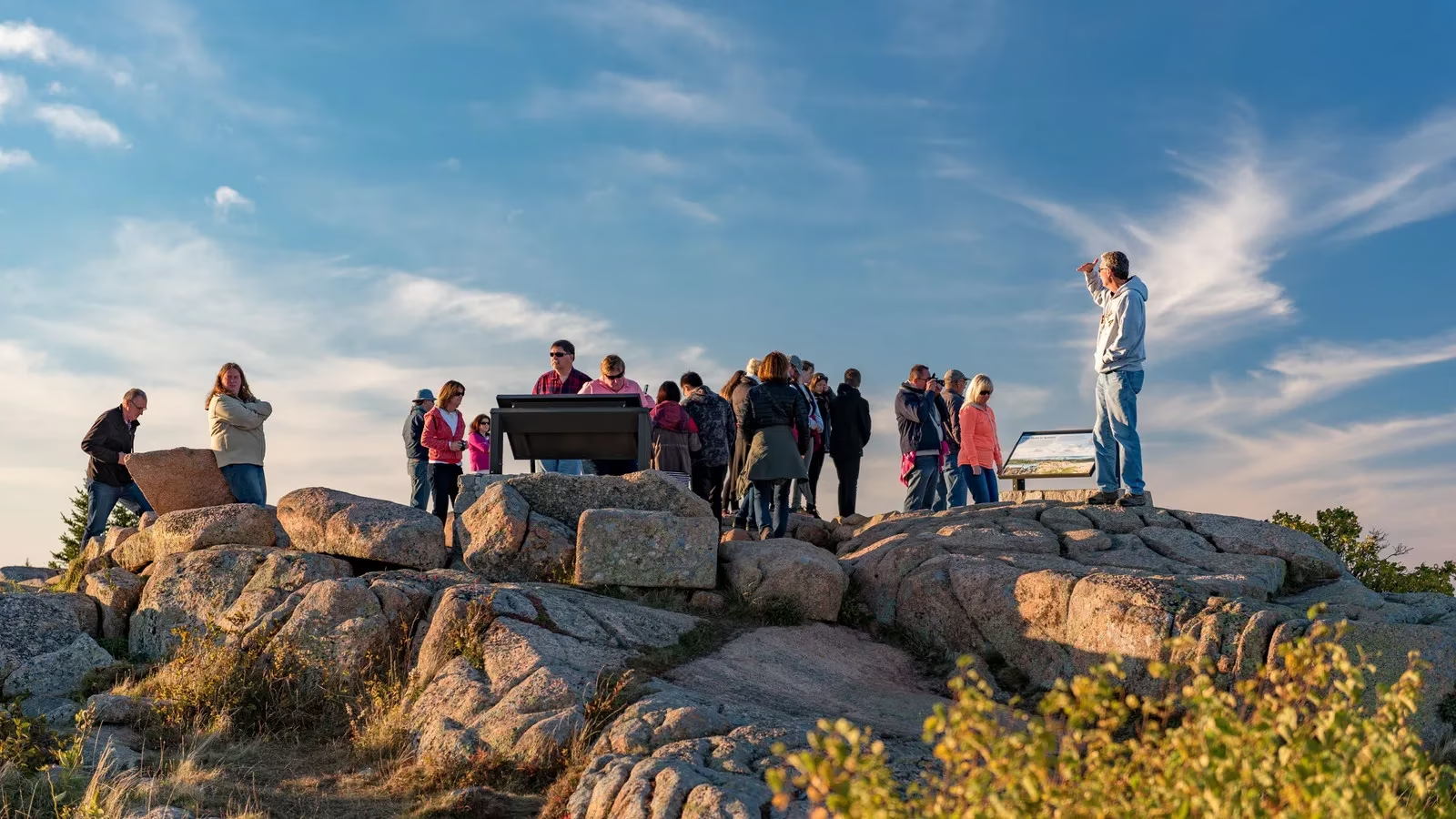
The Great Sign Vanish of Cadillac Mountain
At the center of the story sits an order launched in late March 2025 with the ponderous title 'Restoring Truth And Sanity To American History.' Among its marching orders, the Secretary of the Interior was asked to determine whether public monuments, memorials, statues, markers, or similar properties had been removed or changed since January 1, 2020 in ways that promoted a false reconstruction of American history, minimized certain historical events or figures, or smuggled in improper partisan ideology.
That directive did not remain a dusty federal memo. It reportedly inspired a quiet sweep of interpretive signs, and Acadia National Park felt the eraser especially hard. Six signs vanished from Cadillac Mountain, while four more were yanked from the Great Meadow Loop. Some of those signs had the audacity to explain climate change; others were tied to the park's deeper cultural and ecological history.
To outside observers, it looked like a park trying to tell its own story had been handed a padlock and told to whisper. The missing placards are not merely decor. In a landscape shaped by glaciers, granite, and increasingly unpredictable weather, removing climate information is a little like deleting the warning label from a rickety footbridge and hoping no one looks down.
| Location | Signs Removed |
|---|---|
| Cadillac Mountain | 6 |
| Great Meadow Loop | 4 |
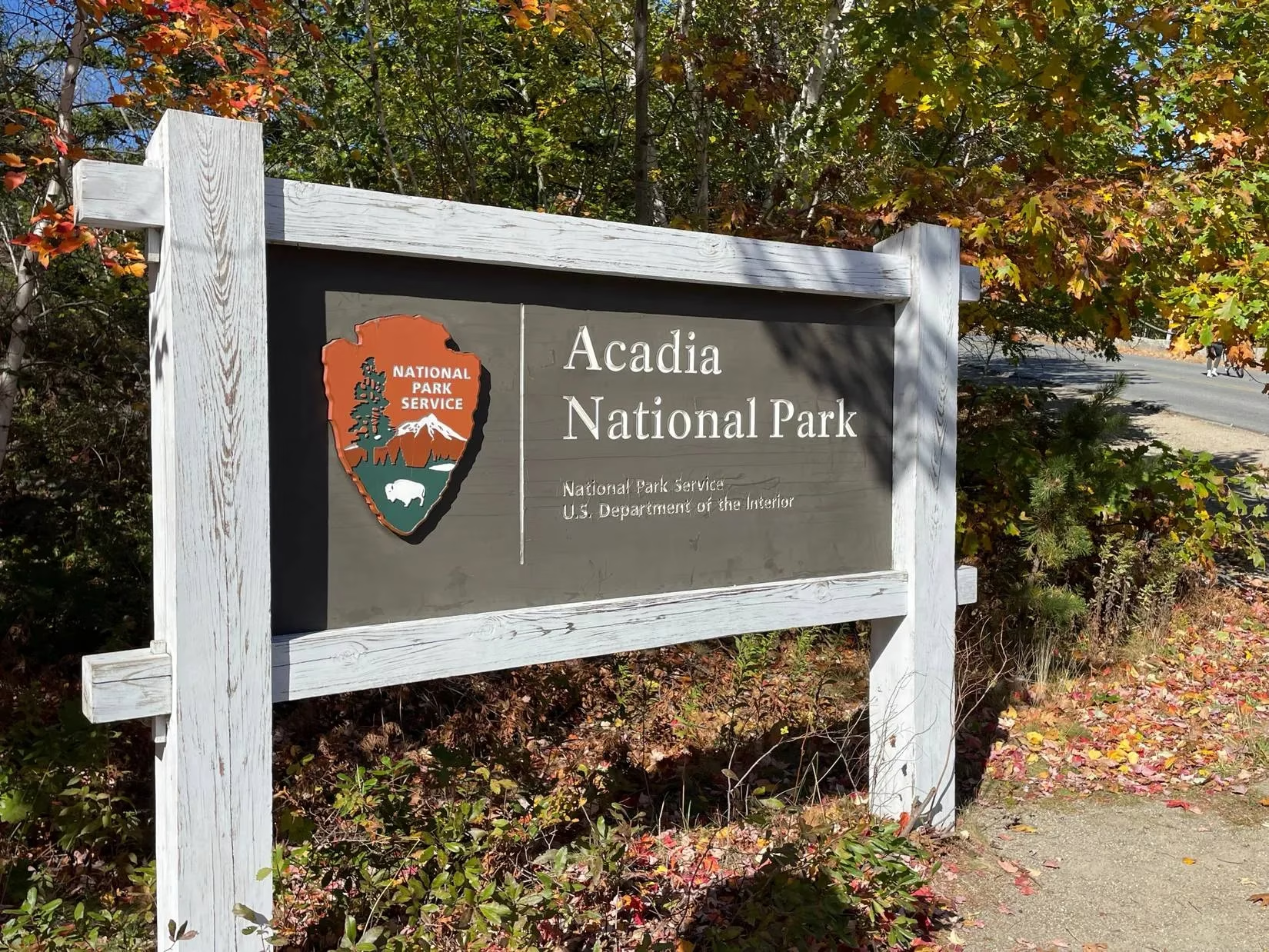
Lawmakers Decide to Un-Vanish the Signs
Ten Maine lawmakers have stepped forward like volunteer trail crew members arriving after a storm. According to the Mount Desert Islander, the group includes Laurie Osher, Jan Dodge, Valli Geiger, Mike Ray, Vicki Doudera, Ann Matlack, Holly Stover, Holly Eaton, Nina Milliken and Assistant House Majority Leader Lori Gramlich. Gary Friedmann has been described as the one at the forefront of the request.
In a letter to Secretary Doug Burgum of the U.S. Department of the Interior, the lawmakers argued that the signs did more than educate; they improved the visitor experience by telling the story of the land's history and the very present reality of climate change. They warned that removing them does not just increase the risk of damage to fragile natural resources, it also denies visitors the chance to understand what they are walking on and how climate change could alter it for future generations.
Friedmann and company also did not exactly tiptoe through the political tulips. Their letter reportedly called the removals 'another example of this administration's attempt to stifle science and whitewash our country's history,' and declared the situation 'beyond troubling.' It is the kind of sentence that lands like a moose hoof on a congressperson's windshield.
A Broader Erasure Beyond Acadia
The sign removals may be the visible tremor, but the fault line runs deeper. Several National Park Service web pages have also been updated, with certain climate language quietly scrubbed. According to the Washington Post, one deleted line was as blunt as a granite cliff: 'Human activities are changing the Earth's climate.'
That deletion may read as a small edit, but in the world of public land interpretation, it is more like removing one rivet from an airplane wing at a time. Park rangers have reportedly grown hesitant to share certain details about the history of national parks, worried that the next fact may be deemed too spicy for a federal website. The result is a peculiar paradox: the very people hired to interpret America's natural and historical treasures are now second-guessing whether the truth is allowed to leave their mouths.
The Great Waiting Game
So far, there has been no official declaration that the signs will return to Acadia. Federal funding remains a knotty question mark, and the wider landscape of national park closures and frozen budgets does not exactly create a cozy atmosphere for interpretive signage restoration. It is a strange season for park lovers who once thought the biggest danger was forgetting bug spray.
For now, the missing signs are a small but telling symptom of a much larger argument: what is a national park supposed to say, and who gets to decide? Acadia's granite ridges and spruce forests will endure long after the current political weather clears. The real question is whether visitors will still be able to read the story of the land beneath their boots, or whether they will be left staring at an empty wooden frame, listening to the wind where the facts used to be.
🌲🪧🔥
Leave a Comment
Comments