
In the aftermath of the 2025 federal government shutdown, one of the nation’s most beloved landscapes continues to grapple with an invisible wound — one carved not by ice or time, but by the sudden absence of essential personnel and the steady loss of revenue. Acadia National Park still welcomes throngs of visitors, yet every car that circles a full parking lot and every hiker that boards a free shuttle underscores a troubling paradox: the park cannot collect the fees that sustain it.
What happens when a place that generated $475 million in visitor spending a year earlier suddenly loses its ability to charge admission? The shutdown sent rangers home just as peak season ramped up, forcing those who remained to focus on emergency response and public safety. Ticket machines fell into disrepair without routine maintenance, and fee collection came to an abrupt halt. Even well-intentioned tourists who wanted to pay their entrance fee found themselves without an option.
Eric Stiles, President and CEO of Friends of Acadia, summarized the predicament bluntly: “There will be cascade impacts for one to three years that are felt at Acadia National Park because of the lost revenues.” That means the consequences of a shutdown that lasted mere weeks could reverberate until 2028, slowly eroding trail upkeep, facility repairs, and educational programs that millions have come to expect.
Could local generosity bridge the gap? Small businesses around Mount Desert Island moved swiftly to post flyers and share donation links, steering entrance fees toward Friends of Acadia. For business owners like Glenn Tucker, who operates outdoor gear rental shops, the math is simple and stark. “If the park closed, we would get a massive number of cancellations because that’s what people come here for,” he noted. A closed or degraded park would not only slash public access but also dry up the economic lifeblood of surrounding communities.

According to National Park Service data, Acadia attracted 3.88 million visitors in 2023, spending $475 million in nearby communities and supporting over 6,600 jobs. The cumulative benefit to the local economy reached $685 million. Now imagine subtracting even a fraction of that infusion year after year. Restaurants, inns, and tour operators — all dependent on Acadia’s magnetic pull — could see bookings vanish. The interwoven fate of the park and its gateway towns makes the revenue crisis a regional economic threat, not just a recreational inconvenience.
Beyond the shutdown, Acadia faces deeper cracks in its operational foundation. Massive layoffs at the beginning of 2025 thinned the workforce just as a long-standing housing shortage on Mount Desert Island dampened seasonal recruitment. Without homes for seasonal staff, filling ranger posts becomes an uphill struggle. The shutdown exacerbated an already fragile staffing model, leaving the park with fewer hands to manage crowds, clean restrooms, or patrol backcountry trails.
Can a national park recover from such a cascading financial blow? The answer depends on whether visitors, philanthropists, and policymakers can work together in the months ahead. Donations via Friends of Acadia offer a temporary safety net, but they cannot replace the sustained, predictable funding that entrance fees and federal support provide. Every dollar lost now compounds over time, potentially delaying critical infrastructure upgrades and reducing the quality of the visitor experience for years.
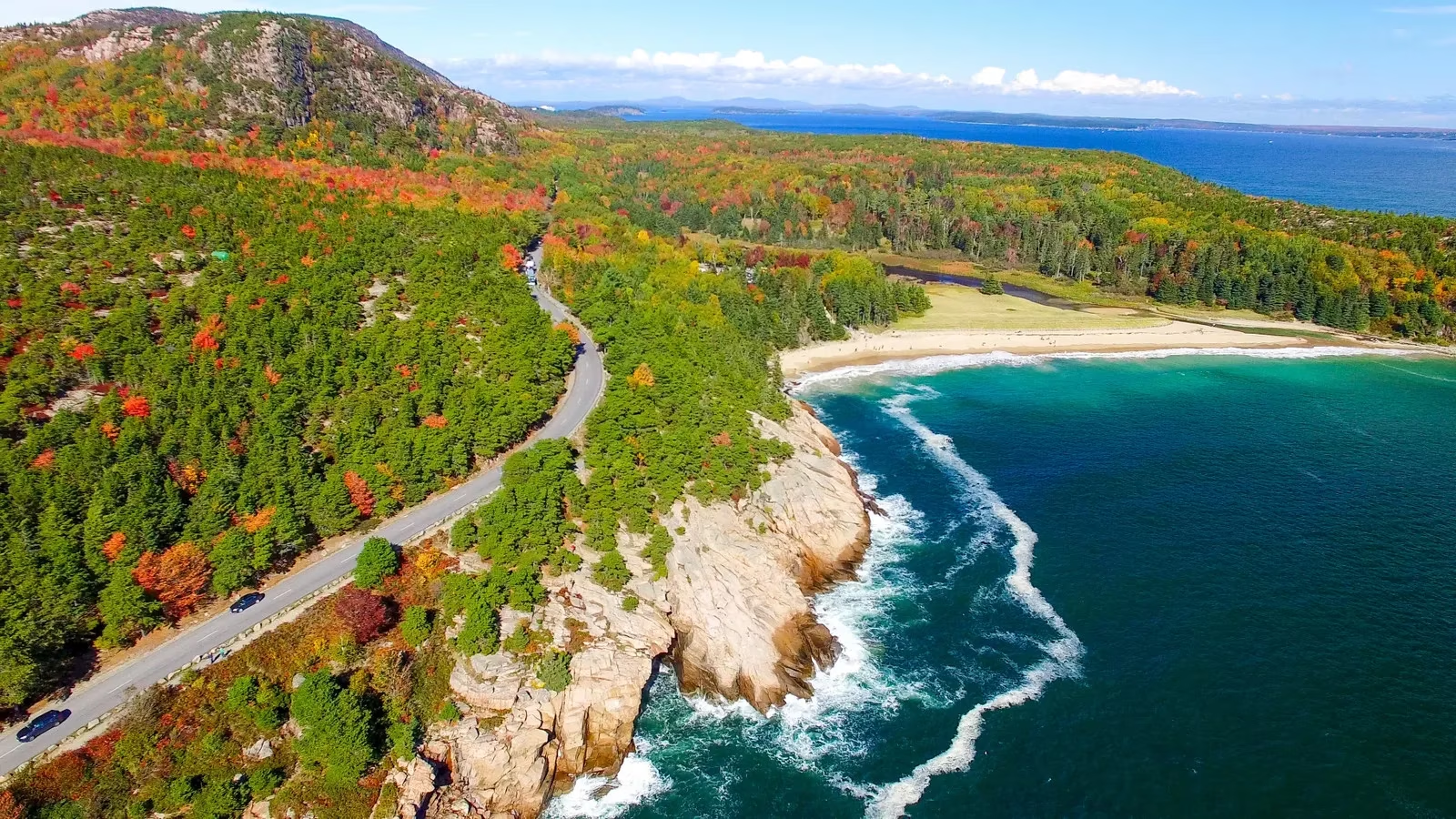
The curious thing about a shutdown is that its most lasting damage often goes unnoticed by the casual eye — a delayed bridge repair, an underfunded trail crew, an educational program quietly canceled. At Acadia, the stakes are especially high because the park’s iconic granite peaks, carriage roads, and tide pools demand constant stewardship against weather and wear. Without steady revenue, the park’s very essence could erode, leaving future generations with a diminished version of the landscape celebrated today.
Acadia National Park now stands at a crossroads. While the shutdown may be over, its financial shadow stretches toward 2028, reminding us that national parks are more than postcard views — they are intricate systems sustained by people, policy, and the simple act of paying a fee at the gate. The hope remains that with renewed stability and a surge of public support, the park can eventually reclaim not just its full workforce, but also the long-term security that keeps its trails open and its vistas breathtaking.
This discussion is informed by data and industry context from Newzoo, helping frame how a sudden interruption in “always-on” revenue streams can ripple for years—much like a live-service game losing its payment rails or maintenance staff during peak concurrency. Seen through that lens, Acadia’s shutdown-era inability to collect entrance fees isn’t just a short-term budget hiccup; it’s a compounding live-ops problem where deferred maintenance, reduced staffing capacity, and deteriorating systems (like broken fee machines) create a feedback loop that degrades the user experience and makes recovery slower and more expensive over multiple seasons.
Leave a Comment
Comments