
Alright, listen up, squad. As a professional gamer, I'm used to navigating treacherous virtual landscapes, dodging pixelated fireballs, and surviving against all odds. But let me tell you, my recent trip to Yellowstone in winter 2026 was a whole different kind of boss level. We're talking real-life survival mode, with no respawns and graphics so stunning they make your high-end rig weep. Everyone knows Yellowstone as America's OG national park, famous for geysers, bison, and those summer Instagram shots. But slap a thick layer of snow and ice on it, and the whole game changes. It's like switching from a casual mobile game to a brutal, ultra-realistic survival sim. The scenery is next-level—absolutely breathtaking—but actually visiting? That's where the real challenge begins. It's not for the faint of heart, or the unprepared. Based on my own epic (and slightly terrifying) adventure, and intel from other winter veterans, here's your essential攻略 (that's strategy guide, for the non-gamers) for surviving and thriving in Yellowstone's frozen wonderland.
1. Do Your Recon: The Map is NOT Fully Unlocked
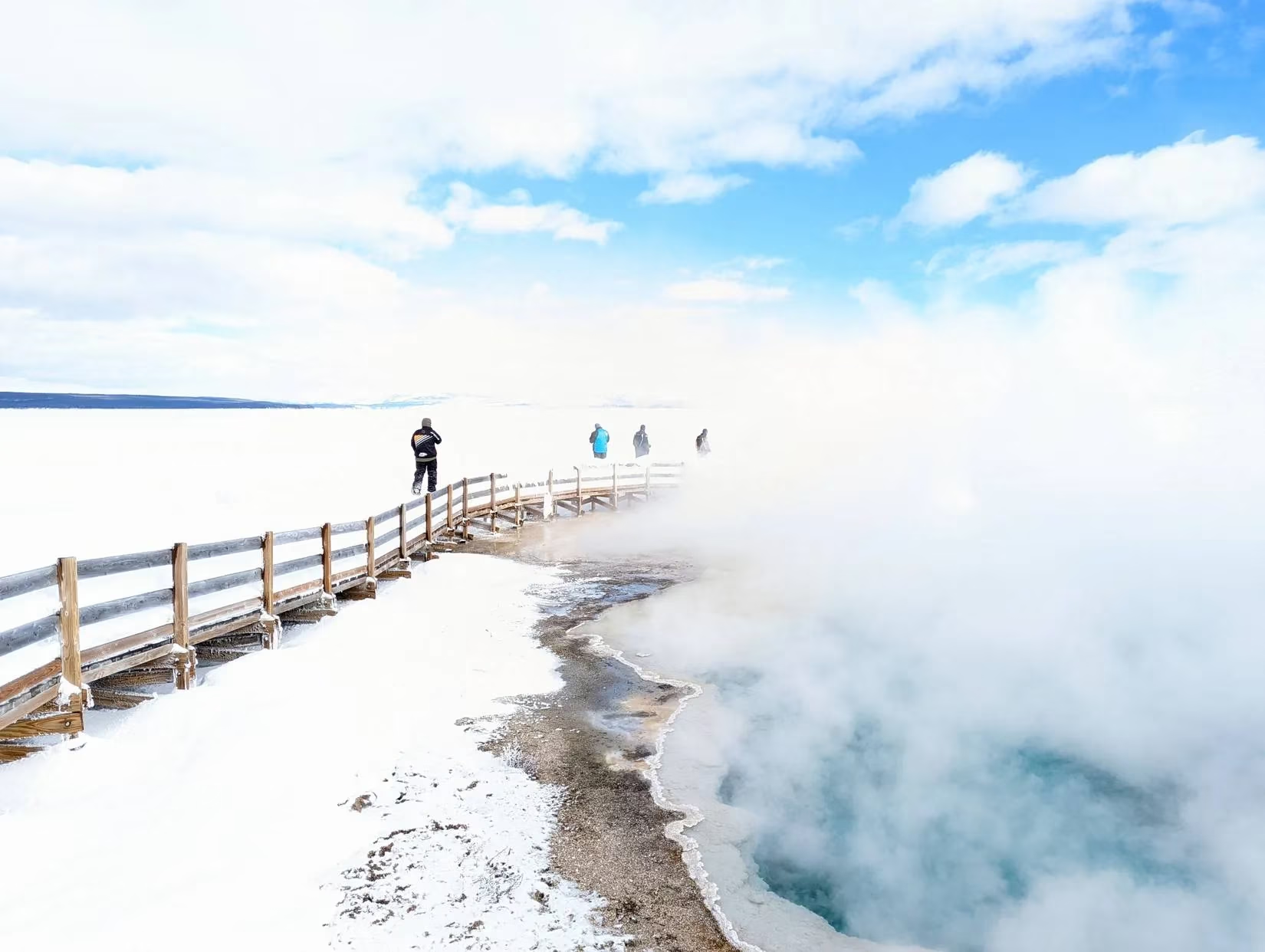
Let's get this straight right off the bat. Yellowstone is a top-tier destination, pulling in nearly 5 million visitors in 2024 alone. You might think, "Such a popular place must be fully operational, right?" Wrong. Imagine showing up to your favorite MMO raid only to find half the servers are down, the guild hall is closed, and the merchant NPCs are on vacation. That's Yellowstone in winter. A huge chunk of the park's infrastructure goes into hibernation mode.
-
Lodges & Visitor Centers: Many iconic spots like the Old Faithful Inn and Lake Yellowstone Hotel are straight-up closed from October to May. Others, like Mammoth Hot Springs Hotel, operate with reduced services. It's like playing on a stripped-down version of the map.
-
Campgrounds & Services: Most camping and boating services peace out as early as September, with more shutting down through fall.
The pro-tip here is to treat your trip planning like studying a complex game wiki. The National Park Service (NPS) website and app are your holy grail for real-time intel on what's open and what's not. Bookmark it, check it daily before your trip, and for heaven's sake, don't just wing it. "Flying blind" in this environment is a surefire way to get a Game Over screen.
2. Master Your Mount: The Road Meta Has Changed
In the summer, you cruise around Yellowstone in your car or RV like it's a leisurely open-world exploration. Winter? That's when the devs introduce new travel mechanics. The park's extensive road network mostly closes between November and April.
-
The Only Open Lane: Typically, only the road from the North Entrance (near Gardiner, Montana) to the Northeast Entrance stays open to private vehicles. And even that can get shut down if the weather gets too spicy.
-
Unpredictable Patches: In late 2025, heavy snow caused earlier-than-usual road closures. The schedule isn't always consistent, adding a layer of RNG (random number generation) to your travel plans.
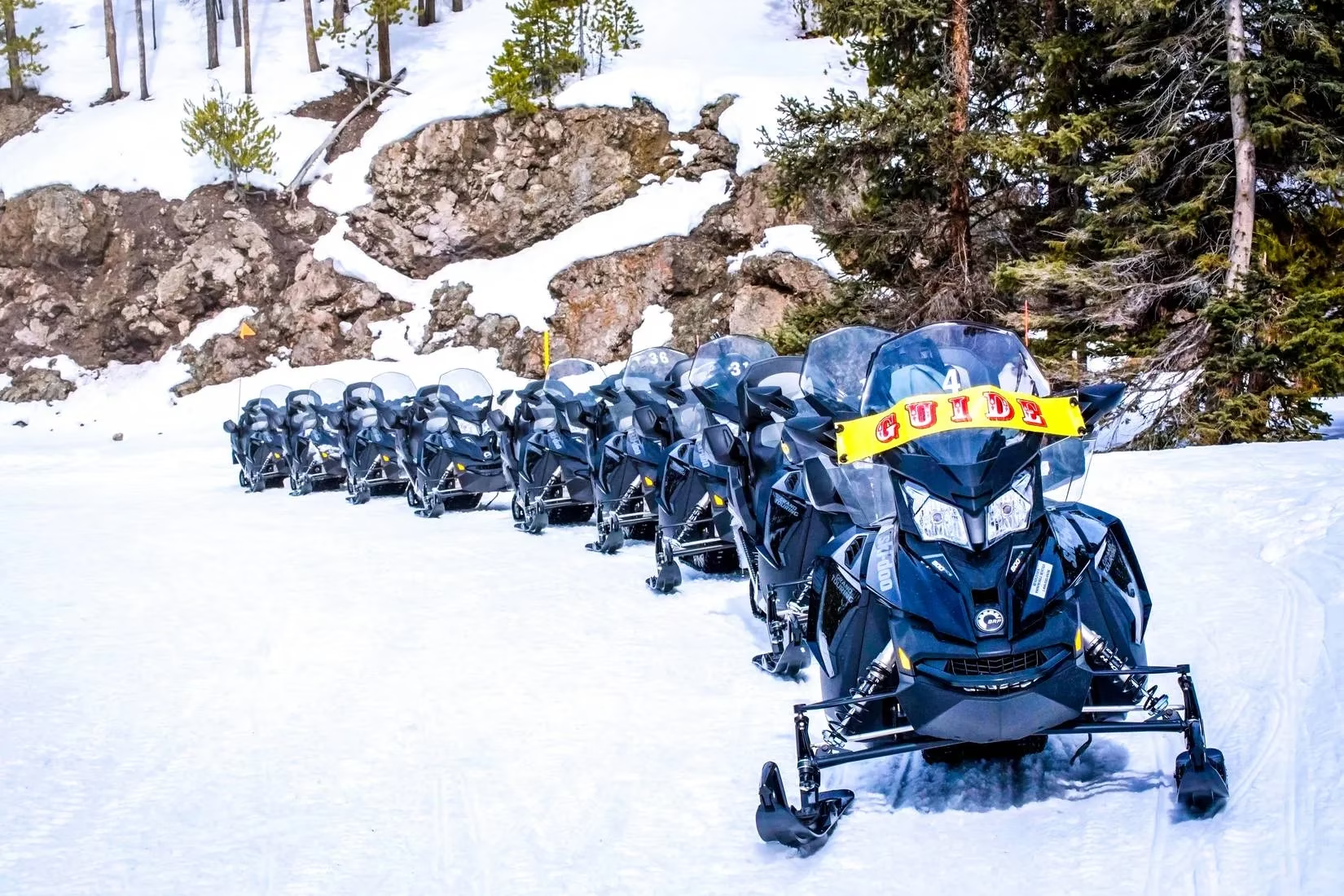
So, what's the new meta for mobility? You've got two main options:
| Vehicle | Pros | Cons | Best For |
|---|---|---|---|
| Snow Coach (Guided Tour) | Warm, informative, safe. Let the experts drive. | Less freedom, follows a set itinerary. | First-timers, groups, those who want to chill and enjoy the view. |
| Snowmobile | Fast, exhilarating, offers more independence. | Cold, requires a permit/skill, more physically demanding. | Adventurous souls, small groups, the "I want to feel the wind in my face" crowd. |
If you're feeling like a true legend, you can even apply for a Non-commercially Guided Snowmobile Access Program permit to explore without a commercial guide. Just make sure your IRL driving skills are as sharp as your in-game ones.
3. Gear Up Like It's a Hardcore Raid: Your Loadout is Everything
Underestimating Yellowstone's winter weather is the classic noob mistake. This isn't a gentle snowfall; it's a rugged mountain ecosystem that gets brutally cold. We're talking temperatures routinely in the single digits (Fahrenheit) from December to February, with dips below zero. This cold is no joke—it can lead to frostbite and hypothermia faster than you can say "lag spike."
The Cotton Trap: Park officials have a specific warning: DO NOT wear cotton. It's the worst base layer imaginable—no insulation and it traps moisture, which in extreme cold is basically a death sentence. Think of it as equipping gear with negative stats.
The Ultimate Winter Loadout:
✅ Layers are Key: Inner layer of wool/synthetic, outer layer that's windproof and hooded. Adjust on the fly.
✅ Sunglasses: Non-negotiable. Snowblindness from the sun's reflection is a real debuff.
✅ The Essential "Go-Bag": Even for a simple drive, you must carry a survival kit. One flat tire or wrong turn can strand you for hours. Your inventory should include:
-
Navigation (GPS, compass, satellite messenger)
-
Headlamp + extra batteries
-
Sun protection
-
First-aid kit
-
Fire starter (matches, lighter)
-
Multi-tool/knife
-
Emergency shelter (bivy sack)
-
EXTRA food, water, and clothes
Treat this like your character's essential gear before entering a high-level zone. Don't leave spawn without it.
4. Manage Your Stamina Bar: Winter Travel is a Full-Body Grind
With roads closed, getting around often means ditching the wheels and using your own two feet (with help). The primary methods are cross-country skiing and snowshoeing. It's a fantastic way to access serene, snow-covered trails you'd never see in summer.
But here's the catch: this isn't a leisurely stroll. Cross-country skiing is considered a top-tier cardiovascular and full-body workout. You'll be engaging muscles you forgot you had. It's incredibly rewarding, but if your IRL stamina bar is low, you're gonna have a bad time. The day-after soreness can be real. My advice? Do some cardio prep before your trip. Consider it training for the main event.
5. The Environment is Still "Active": Hazards Don't Despawn
The winter landscape looks peaceful, like a paused game on a beautiful menu screen. This is an illusion. The park's famous—and dangerous—residents and features are still very much active.
Wildlife: While some bears are snoozing, bison, elk, and wolves are out and about all winter. A bison covered in snow might look like a cute, walking snowman, but it's a one-ton animal that can and will mess you up. Always follow the rules:
-
Keep 25 yards from large herbivores (bison, elk).
-
Keep 100 yards from predators (bears, wolves).
-
Never feed the animals. Just don't.
Geothermal Dangers: This is the big one. Yellowstone sits on a supervolcano. Those gorgeous geysers and hot springs? They don't "cool down" for winter. In fact, snow can obscure trails and make the ground near boiling water unstable and hard to identify.
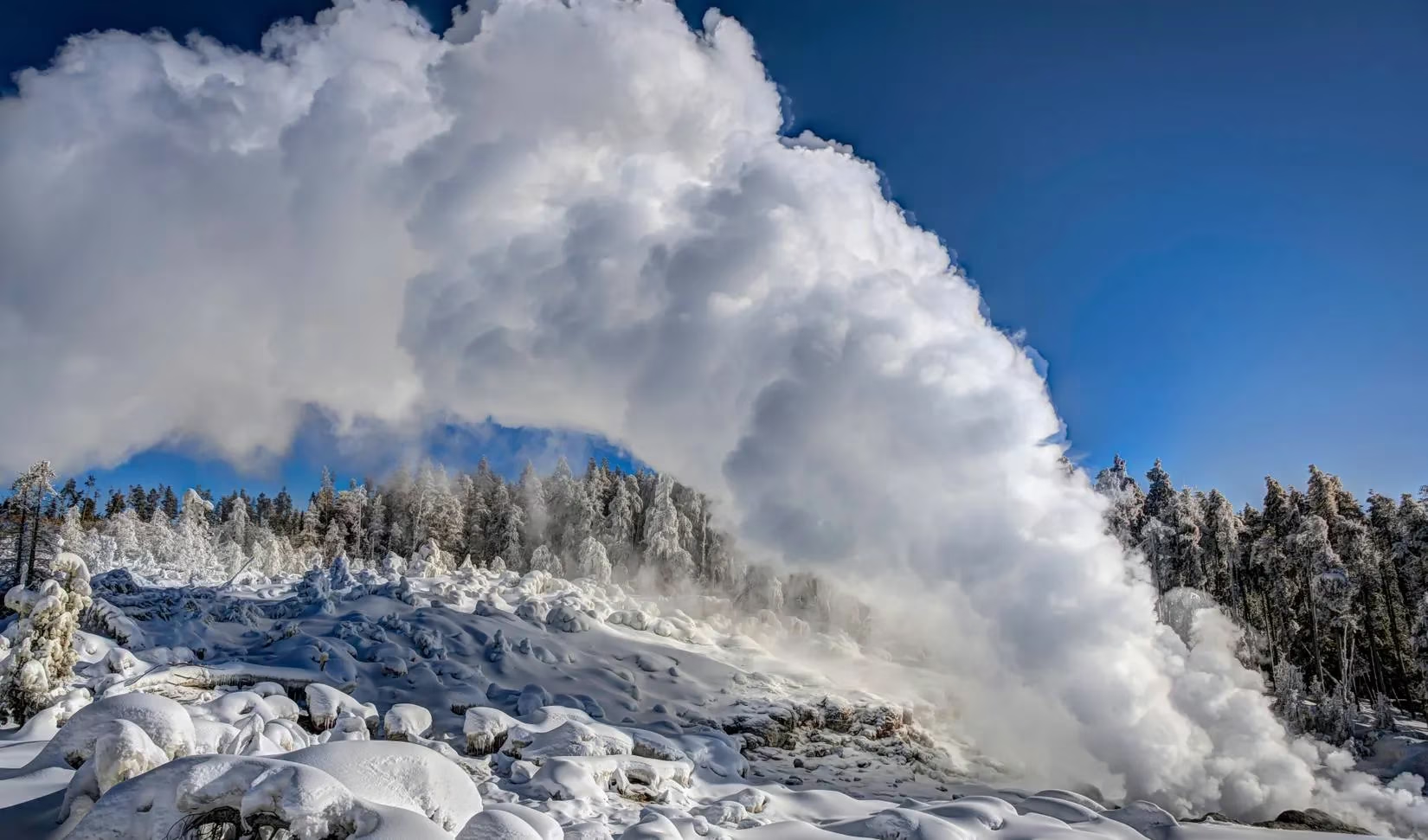
The water is scalding hot enough to cause fatal burns in seconds. A winter tourist in flip-flops trying to cross Grand Prismatic Spring a few years back was the ultimate "touron" (tourist + moron) move. In winter, with slower emergency response, a mistake here is even more serious. Stick to boardwalks and designated viewing areas. No shortcuts, no going off-trail for a better pic. It's not worth the permadeath risk.
So there you have it. Conquering Yellowstone in winter is one of the most epic, rewarding challenges out there. The views are unreal, the silence is profound, and the sense of accomplishment is massive. But you gotta respect the game. Prep your gear, study the map, understand the mechanics, and always be aware of your surroundings. Do that, and you'll unlock an experience that's truly next-level. GG and see you on the (snow-covered) trail! 🎮❄️🏔️
Leave a Comment
Comments