
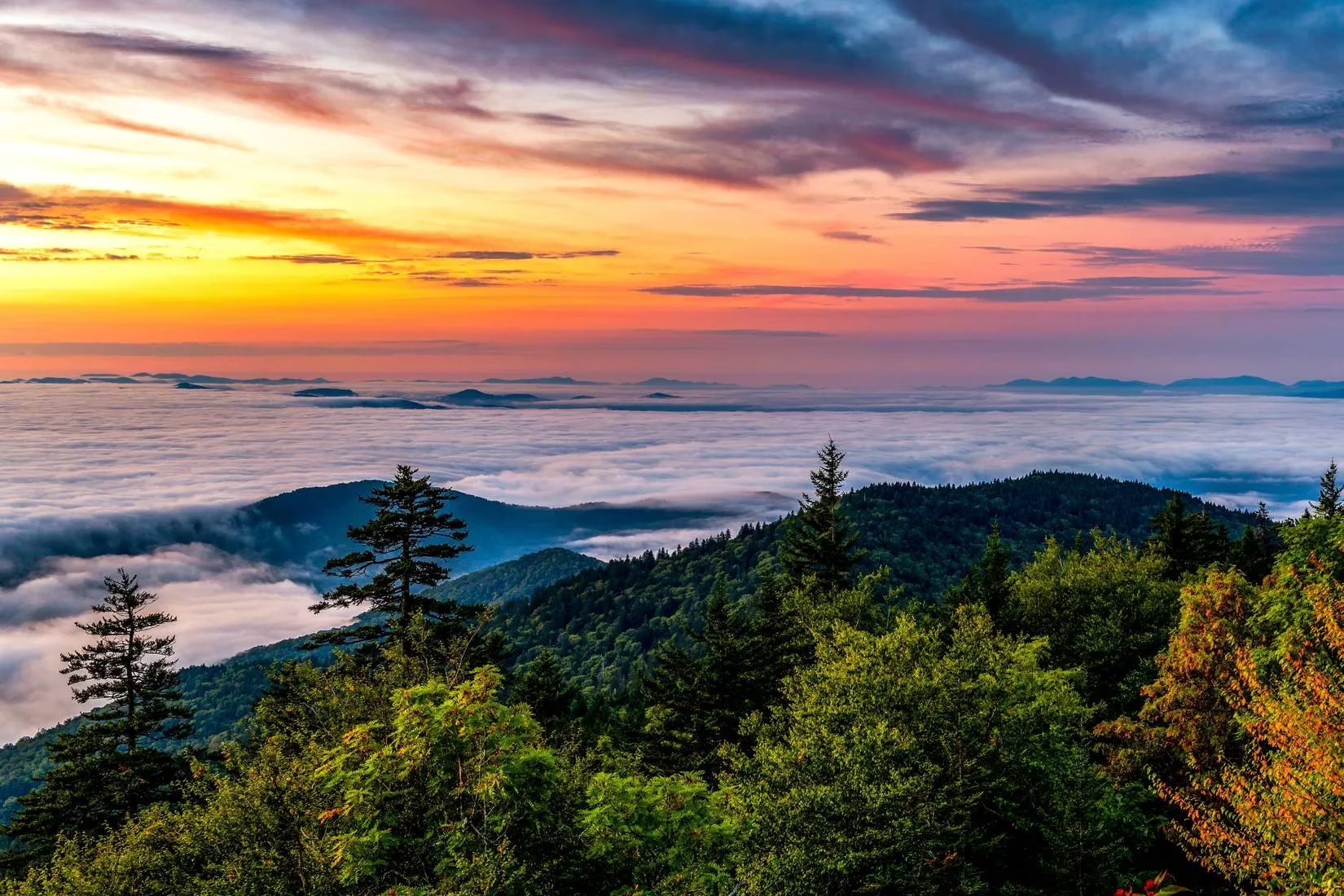
As I stand here, looking out over the hazy blue ridges of the Great Smoky Mountains, I feel a familiar pang of worry. This place, America's most-visited national park, is supposed to be a sanctuary, a lungful of fresh air for millions. But lately, it feels like the mountain itself is struggling to breathe. The news that came down in late 2025, about the U.S. Environmental Protection Agency (EPA) and South Carolina authorities approving a new air quality plan, was supposed to be a reason to celebrate. They called it a "proactive, long-term strategy." But from where I'm standing, and from what the mountains seem to be telling me, it sounds like a whole lot of talk and not nearly enough action. It’s like putting a tiny bandage on a deep, weeping wound and calling it a cure. The plan in question, South Carolina's Regional Haze State Implementation Plan (SIP), got the official green light on December 15, 2025. The press releases were full of optimistic language about "shared goals" and "long-reaching impacts." Myra Reece from South Carolina's Department of Environmental Services, Senator Tim Scott, and the EPA's Regional Administrator Kevin McOmber all stood together, presenting a united front. Senator Scott talked about protecting "natural treasures" and the economic benefits for communities. On paper, it all sounded so reasonable. But then, you listen to the park itself. You see the haze that too often hangs where crisp views should be, and you hear the voices of those who have dedicated their lives to protecting these places. They’re not buying it. Not one bit.
The Heart of the Dispute: A "Do-Nothing" Plan?
The conservation groups, led by the National Parks Conservation Association (NPCA), didn't mince words. They called the approved plan a "bad plan" that "does nothing" to protect the Smokies and other southeastern parks. Ulla Britt Reeves, the NPCA's Clean Air Program Director, cut right to the chase. She pointed out that the Smokies have a serious smog problem, a nasty mix of fine particles, nitrogen oxides, and volatile organic compounds that cook in the sunlight to form ground-level ozone. Her criticism of the EPA's approval was sharp: "It’s interesting to see the EPA patting themselves on the back... approving a bad plan that does nothing to reduce air pollution." Ouch. That’s not just disagreement; that’s a call-out.
The Sierra Club's Paul Black echoed the sentiment, labeling the SIP a "do-nothing" plan that merely takes credit for pollution reductions happening from other, older regulations, but doesn't actually institute new, meaningful controls on the pollution sources specifically clouding the parks. The core of their argument is this: the plan relies on general air pollution programs already in place, but completely sidesteps the tougher, targeted regional haze programs that are legally meant to restore pristine visibility in iconic places like national parks. It’s the regulatory equivalent of doing the bare minimum homework assignment and hoping the teacher doesn't notice you skipped the extra credit essay that was the whole point.
The Numbers Game: What the Plan Says vs. What It Does
The EPA and South Carolina authorities tout some impressive-sounding projections. They say the plan will lead to a 75% reduction in sulfur dioxide and a 54% reduction in nitrogen oxides between the baseline year of 2011 and the target year of 2028. On the surface, those are big numbers! But here’s the rub, the advocates say: those reductions are largely attributed to existing federal rules and market-driven shifts (like coal plants closing), not to any new, assertive action mandated by this specific haze plan. The plan, they argue, lets major industrial polluters—factories, power plants, especially those in South Carolina and the Midwest whose emissions drift right into the park—off the hook. According to the NPCA, this lack of accountability means these businesses will continue to pump over 40,000 tons of uncontrolled haze-causing pollution into the air that finds its way to the Smokies. That’s a staggering number to just… ignore.
| The Promise | The Critique |
|---|---|
| ✅ Meets all statutory requirements | ❌ Merely checks boxes, doesn't fulfill spirit of the law |
| ✅ Projects major emission reductions (75% SO₂, 54% NOx) | ❌ Credits older, unrelated regulations for these gains |
| ✅ Aims to improve visibility | ❌ Fails to implement targeted Regional Haze Rule controls |
| ✅ Called a "long-term strategy" | ❌ Described as a "do-nothing" plan by watchdogs |
Why the Smokies Are So Vulnerable
This isn't just bureaucratic squabbling. The Great Smoky Mountains National Park is uniquely sensitive, and the stats are sobering. It holds the dubious distinction of having the highest measured air pollution of any U.S. national park. Let that sink in. The most visited park is also the most polluted. 😔 The problem is that the Smokies are a magnet not just for people, but for pollutants. Its location makes it a perfect catchment basin for emissions from coal-fired power plants, industrial sites, and urban areas hundreds of miles away. The primary culprits are fossil fuels—coal, oil, and gas. This pollution doesn't just blur the views; it actively degrades the park's very foundation:
-
Streams & Soils: Become acidified, harming aquatic life.
-
Forests: Stressed by ozone, making them vulnerable to pests and disease.
-
Wildlife: Habitats and health are impacted.
-
Visitor Experience: The famous "smoky" views become unhealthy haze.
Looking to 2026 and Beyond: A Call for Real Action
So, where does this leave us in 2026? It leaves us at a crossroads. One path is the approved plan—a path of minimal resistance for industry, incremental change, and, in the view of park advocates, continued degradation. The other path, the one being demanded, requires real courage and regulatory teeth. It means holding specific polluters accountable with modern pollution controls. It means treating the Regional Haze Rule as the powerful tool it was meant to be, not a paperwork exercise.
As someone who walks these trails and breathes this air, the choice feels clear. The mountains have a voice, if we choose to listen. It’s in the quiet struggle of a stressed hemlock forest and the muted colors of a hazy sunset. The approved SIP feels like we’re being asked to accept a whispered promise when what we need is a shout for clean air. The fight isn't over; it’s just entering a new chapter. The question for 2026 is whether the officials in Washington and South Carolina will hear the call coming from the hills, or if the Smokies will be left, once again, to swallow the smoke from someone else's chimney.
Sometimes, protecting a treasure means doing more than just saying you will. It means rolling up your sleeves and getting the real work done, even when it's hard. The Smokies are waiting.
Leave a Comment
Comments