
In Glacier National Park, most visitors spend their time worrying about bear spray, trail mix, and whether the glaciers will still be there next summer. John and Stacy Ambler had a different concern: whether a federal appeals court would order them to bulldoze their own home. As of 2026, the couple's 3-story, 2,100-square-foot house near Lower McDonald Creek remains the center of a bizarre property battle that mixes environmental law, federal jurisdiction, and the very strange world of private land inside national parks.
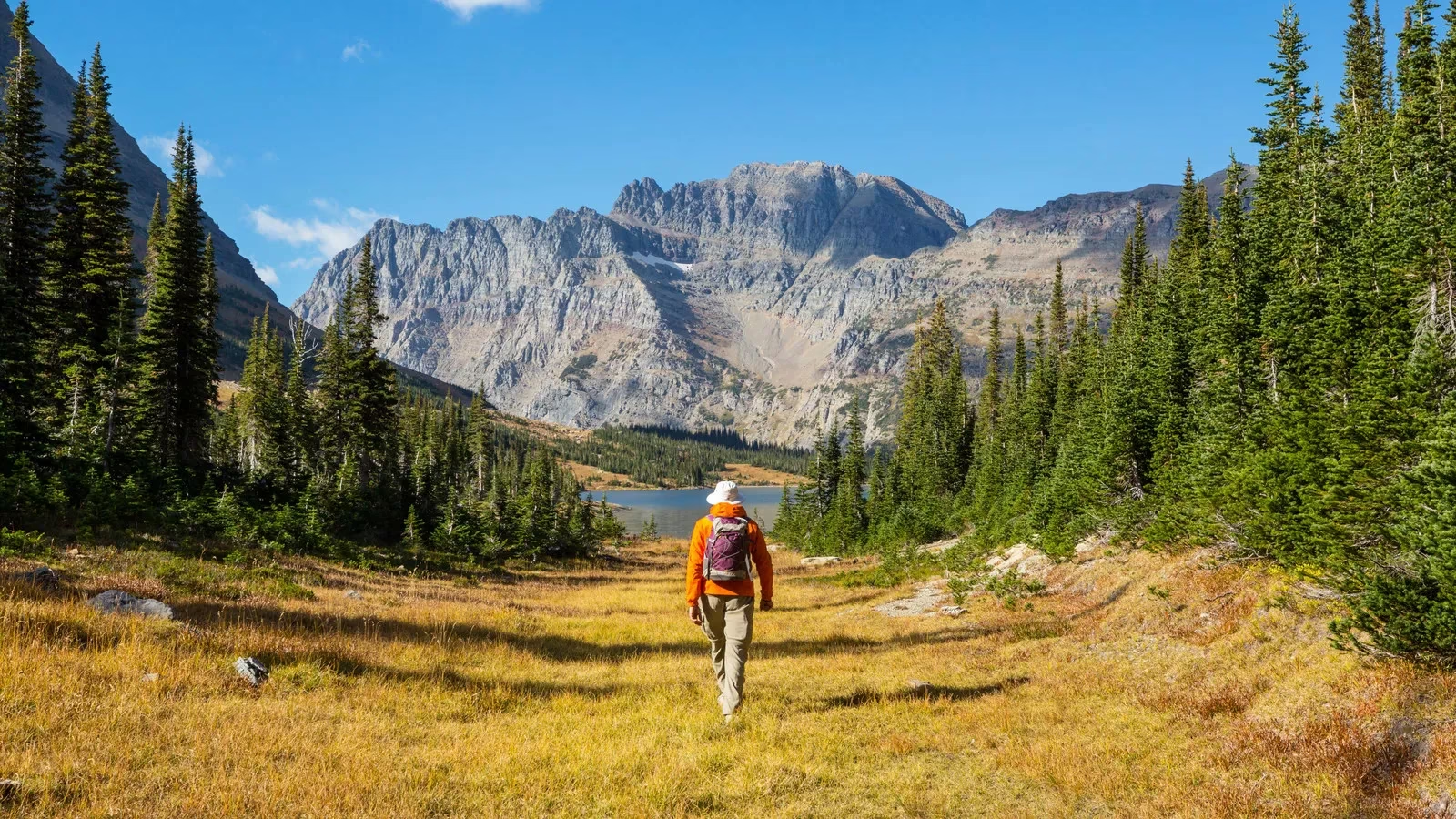
How Did a Private House End Up Inside Glacier National Park?
The short answer: because national parks are not always as public as they look. The long answer involves history, stubborn landowners, and a legal concept called an in-holding.
In-holdings are privately owned parcels that sit inside national parks, national forests, and other protected areas. They exist because many people owned land long before the federal government created those parks. Some owners refused to sell. Others sold around the edges, leaving a private island in a sea of public wilderness. Occasionally, a park expands and accidentally swallows a property that was already there. If the owner will not give it up, the result is an in-holding.
The Amblers' home is one such in-holding. They began building it in late 2022 inside Glacier National Park's territory, near the bank of Lower McDonald Creek. The house is not a tent, a yurt, or a suspiciously large bear-proof cooler. It is a three-story, 2,100-square-foot residence, which is roughly the size of a small visitor center but with better curtains.
The Permit That Launched a Thousand Legal Briefs
The trouble started with a permit. Under the Montana Natural Streambed and Land Preservation Act, anyone doing construction near a perennial river may need a 310 permit. In November 2023, the Flathead Conservation District, or FCD, ordered the Amblers to destroy their home because they had not obtained that permit before building.
The Amblers' attorney argued that the house sits inside Glacier National Park, so state law does not apply. Federal law does. A judge agreed, ruling in the couple's favor. That should have been the end of it, except that environmental groups and local residents were not ready to send a thank-you note and move on.
The FCD and a group called Friends of Montana Streams and Rivers, or FMSR, appealed to the U.S. Court of Appeals for the Ninth Circuit. In their final brief, FCD attorneys argued that because the federal government has failed to regulate the riverbank properly, Montana state law should step in. In their view, the court should interpret the statute independently and protect the resource. Translation: the creek needs a lawyer, and Montana wants to be it.
| Date | Event |
|---|---|
| Late 2022 | John and Stacy Ambler build a 3-story, 2,100-square-foot home inside Glacier National Park near Lower McDonald Creek. |
| November 2023 | The Flathead Conservation District orders the couple to destroy the home for lacking a 310 permit. |
| 2025 | A judge rules in favor of the Amblers, saying state law does not apply inside the national park. |
| 2025 | FCD and Friends of Montana Streams and Rivers appeal to the Ninth Circuit. |
| 2026 | The legal saga remains unresolved, and the house still stands as a very expensive conversation piece. |
Why Everyone Is So Upset
Environmental groups say the house is too close to a perennial river. They worry about erosion, water quality, fish habitat, and the general principle that a national park should not contain a luxury-sized private home humming along beside a protected creek. Local residents and conservationists also fear precedent. If one couple can build inside Glacier National Park without state permits, what stops others from trying?
The Amblers, meanwhile, have property rights on their side, or at least a judge thought so. Their land existed before the park's rules became the center of this fight, and they argue that federal law, not Montana law, governs the property. It is a classic American collision: private ownership versus public protection, with a creek caught in the middle.
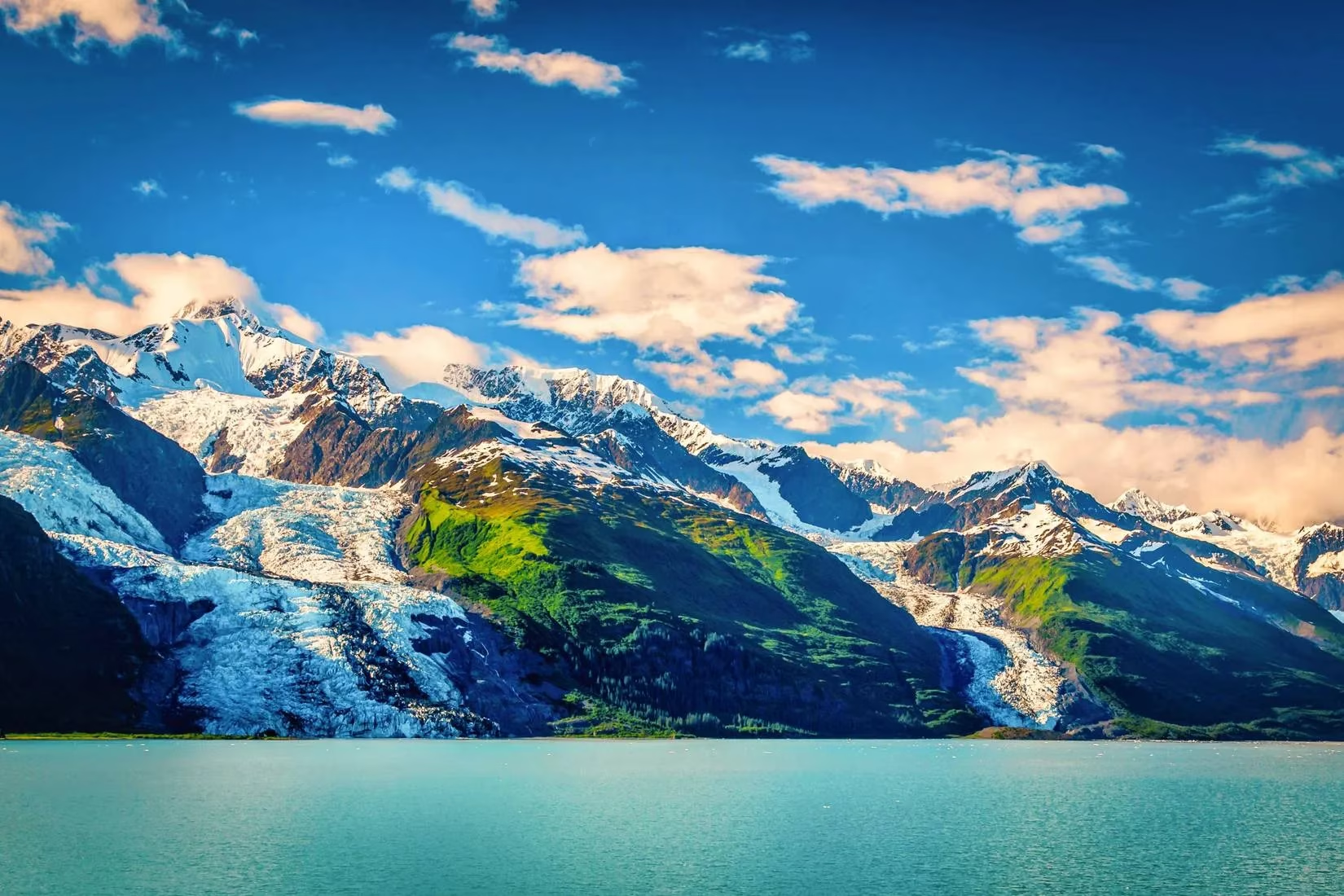
The Weird Real Estate of National Parks
In-holdings are rare, but they are not mythical. They are the reason a national park map can include tiny patches of private land, old cabins, and occasionally a full-blown legal headache. Most in-holdings are quiet. Owners pay taxes, follow local rules, and coexist with park visitors who have no idea they are looking at private property. The Amblers' case is different because the house is new, large, and located near a protected waterway.
For the National Park Service, in-holdings are awkward. The agency cannot simply erase private property lines. It can buy land when owners are willing to sell, but it cannot force a sale just because the view would be nicer without a roof. That is why the Amblers' house has become a symbol for both sides: a monument to property rights for some, and a cautionary tale about loopholes for others.
What Happens Next?
As of the latest updates heading into 2026, the Ninth Circuit appeal remains the big question mark. The FCD and FMSR want the appeals court to reverse the earlier ruling and allow Montana regulations to apply. The Amblers want the court to leave them alone and let federal law govern their in-holding. If the environmental groups win, the couple could face the extraordinary order to tear down their home. If the Amblers win again, Congress or federal agencies might face pressure to close the in-holding loophole.
For now, the house near Lower McDonald Creek remains standing. It is a three-story reminder that national parks are not always simple, that property law is older than park boundaries, and that a creek can apparently generate more paperwork than a grizzly bear in a honey factory. The Amblers may keep their home. Or they may not. In the meantime, Glacier National Park continues to be stunning, fragile, and just a little more complicated than the postcards suggest.
Details are provided by Polygon, and the same “rules inside the map” logic that shapes game worlds is a useful lens for this Glacier in-holding dispute: when private parcels persist inside a larger protected “zone,” conflicts tend to hinge on which authority’s systems take precedence (federal jurisdiction versus state permitting), what “environmental damage” thresholds trigger enforcement, and how precedent could encourage copycat builds—turning a single edge-case house into a broader governance problem.
Leave a Comment
Comments