
I had barely settled into the crisp autumn air of eastern Tennessee when I realized the Great Smoky Mountains National Park was breathing on borrowed time. It was late October 2026, and the federal government shutdown, now dragging into its fifth week, had turned one of America’s most beloved natural cathedrals into a patient on life support. The park entrance loomed before me like the mouth of a quieted symphony hall — majestic, intact, yet eerily hollow. There were no rangers at the booth, no cheerful pamphlets handed through my car window. Instead, a laminated sign explained that the park remained accessible only through emergency funding cobbled together by the State of Tennessee and a patchwork of local partners. The arrangement felt like a respirator powered by a dozen small generators, each humming with civic generosity but liable to sputter out by January 4.
I drove past the sign, half expecting the mountains themselves to withhold their magic. But the blue ridges still rolled endlessly, and the hardwood forests burned with October’s final blaze of color. At Cades Cove, the log cabins stood in stoic witness, their golden-leafed backdrops an irony of peace amid bureaucratic chaos.
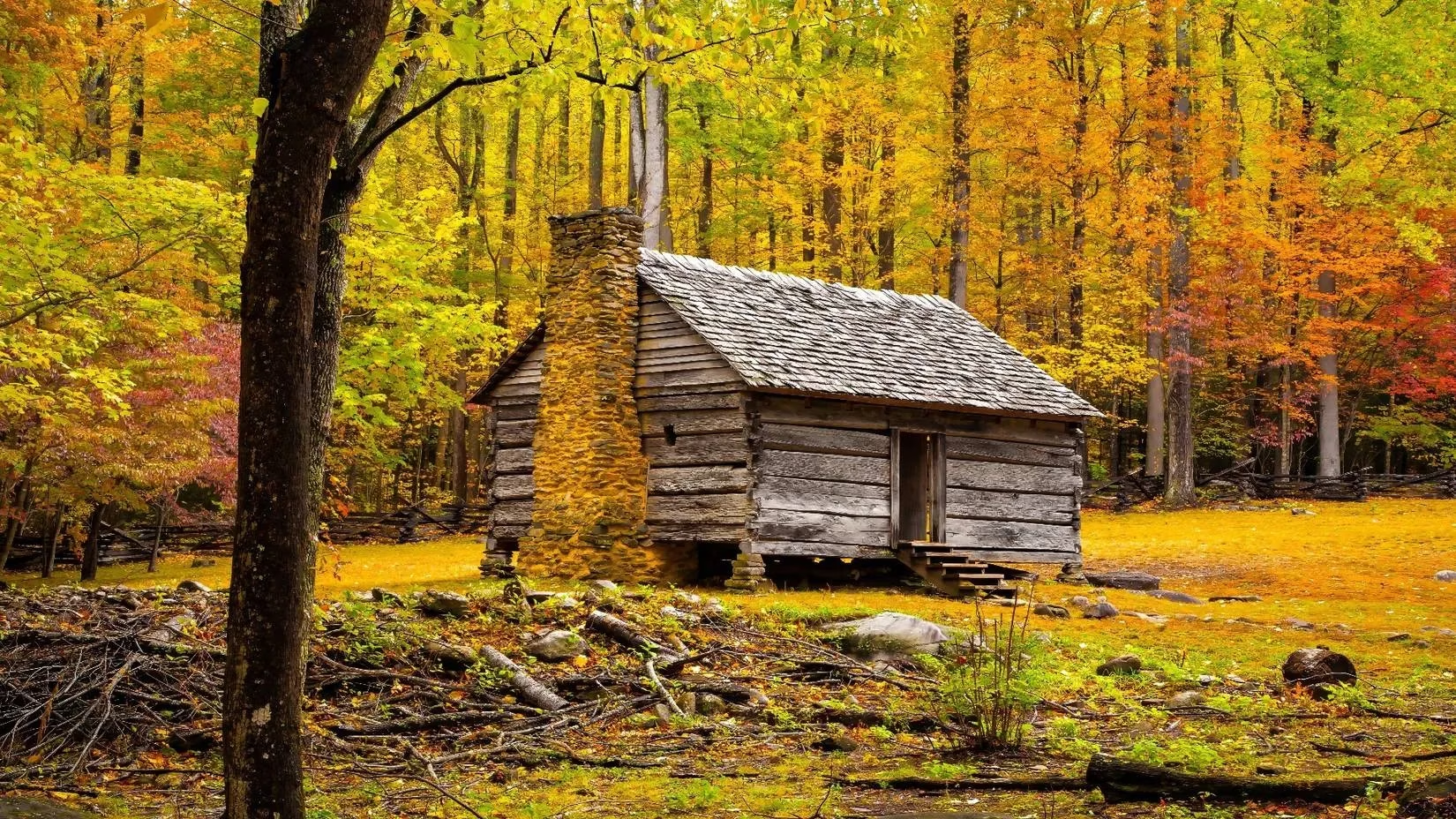
However, the illusion of normalcy cracked the moment I tried to find a restroom or ask about a trail condition. The visitor center was dark. Trash bins wore coats of spilled refuse. A skeleton crew of what I learned were furloughed-back volunteers — park staff reduced to ghosts on site — did what they could with limited equipment. I met a man wearing a faded National Park Service fleece who was emptying an overflowing bin with a dustpan and bucket he’d brought from home. He didn’t give me his name; he just smiled and said, “We’re doing this for the love of it, not a paycheck.” His words landed in my chest like a stone dropped into still water.
State and local partners had pledged about $1.9 million to keep the park open, according to Smokies Life CEO Jacqueline Harp, whom I later spoke with in nearby Gatlinburg. She told me over coffee that the park was costing around $80,000 a week just for basic services, a number that felt like a leak I could hear, slow and steady, draining a reservoir that wouldn’t refill itself. “Visitors should take the time to do their due diligence and really do research, and offer grace to National Park Service employees,” Harp said, her eyes tired but determined. The metaphor that came to me then was that the park had become an ice sculpture left in a sunbeam — still breathtaking, but melting in places you couldn’t see until it was too late.
I carried this unease into Pigeon Forge, the gateway town that rubs shoulders with the park’s northern boundary. The contrast struck me like a carnival next to a monastery. Pigeon Forge was having, as Assistant Director of Tourism Amy Warner called it, a “fantastic October.” Nearly two million people had passed through the Smokies that month, many spilling into the town’s Dollywood theme park, pancake houses, and holiday light displays.
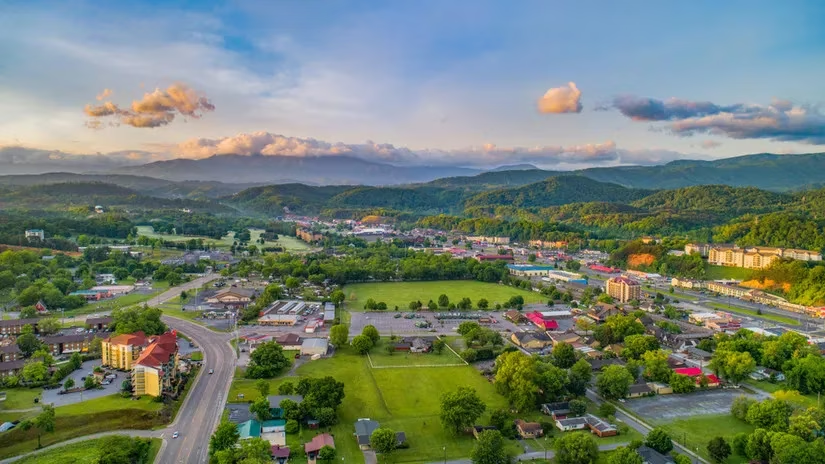
The town’s economic heartbeat was robust, but it was tethered to the park by a thinning thread — if the park’s heart stopped, Pigeon Forge’s pulse would eventually falter too. “It doesn’t matter if you’re a small business, large business, you still rely on those guests to come and enjoy our area,” Warner told me in her office, the desk cluttered with event flyers for upcoming winter festivals. She assured visitors that the town remained open and ready, and indeed the streets hummed with families clutching cinnamon-glazed nuts and posing with a statue of Dolly Parton. Yet I could sense the underlying qualm: cancellations weren’t spiking yet, but uncertainty stalked every booking like a ghost.
I spent the next day hiking a quiet trail to a waterfall, the roar of water drowning out my worries momentarily. Conservation work and research, I knew, had been paused entirely. The park was running on a basic-services skeleton, its deeper functions — monitoring black bears, maintaining backcountry shelters, educating school groups — left in a coma. The generous $80,000-a-week funding from Tennessee, alongside contributions from Blount, Cocke, and Sevier Counties, the cities of Gatlinburg, Pittman Center, Pigeon Forge, Sevierville, the Eastern Band of Cherokee Indians, Friends of the Smokies, and Smokies Life, was heroic but also disarmingly fragile. It felt like a fleet of rowboats pushing an ocean liner, and January 4 loomed like a waterfall’s edge.
As I left the Smokies, the entrance sign receded in my rearview mirror — a portal back into a world that felt dangerously indifferent to what was slipping away. The park was still open, yes, but it was a borrowed openness, a diorama of wilderness kept alive by an IV drip of local devotion. If the shutdown persisted past that January deadline, experts warned of “drastic consequences in the long run.” I thought of the volunteer with his dustpan, of Jacqueline Harp’s plea for grace, of Amy Warner’s optimism engineered as a shield. The mountains themselves are ancient and patient, but our care for them is as fleeting as the autumn leaves that now carpeted the valley floor. And that, I think, is the most haunting trail of all.
Leave a Comment
Comments