
I stood at the overlook above Behunin Canyon just as the morning sun peeled back the shadows, revealing a crack in the earth so deep it felt like the planet had exhaled a long-held breath. The sandstone walls, polished by millennia of flash floods, gleamed like waxed mahogany. It was the kind of beauty that makes you forget, for a moment, that this place can turn into a vertical trap in the space of a single misstep. A few weeks earlier, I had read a terse Instagram post from Zion National Park—a rescue had unfolded right here, in this very slot. The image that accompanied it showed a helicopter suspended against a brutal blue sky, its rotors a silver blur. That picture has stayed with me ever since.
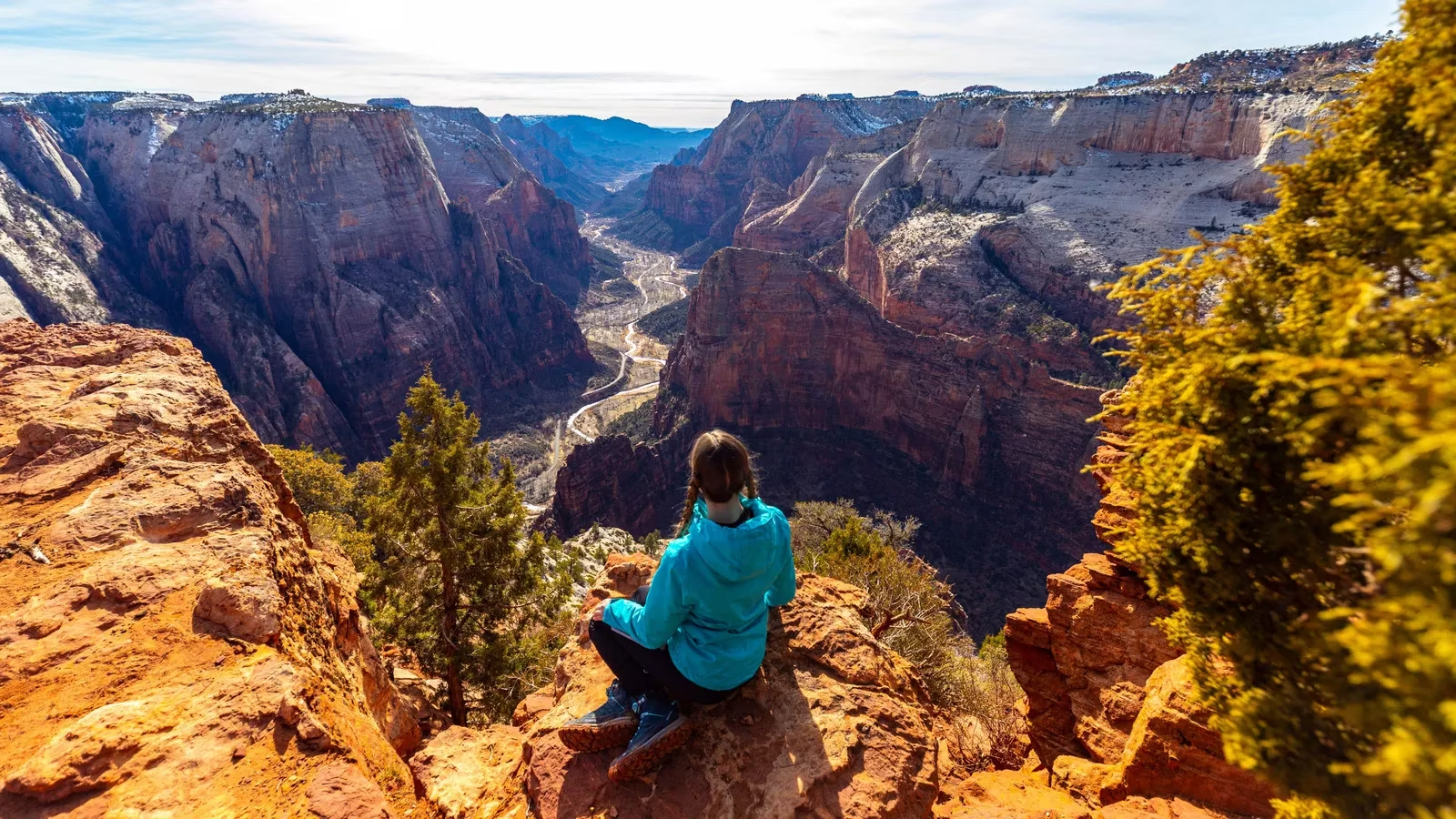
The incident, I later learned, happened on October 20, 2025, though the park only shared details publicly in the early months of 2026—a delay that spoke volumes about the chaos rippling through our national parks. A man had been canyoneering with a partner, negotiating the final, tricky exit from Behunin Canyon. The gully there is notorious for squeezes so tight you have to exhale to shimmy through, and for rappels so long they feel like descending the vertebrae of a sleeping dragon. In a moment of confusion or fatigue, he fell roughly twelve feet. His companion’s voice, cracking with adrenaline, called in the emergency. The Zion Search and Rescue team scrambled a STAR 9 helicopter with hoist capabilities, a machine whose rotor wash kicked up clouds of ochre dust that looked, from a distance, like the canyon was smoking. The injured canyoneer was winched to safety and flown to Zion Lodge for medical care. He survived. Not everyone has been that lucky.
The federal government shutdown that began in late 2025 has been a slow, grinding ache for parks like Zion. With fewer rangers to patrol, educate, or enforce safety protocols, accidents have multiplied like cracks in a drying riverbed. Since the calendar flipped to 2026, at least six visitors have required rescue in Zion alone. The most jarring statistic came from Pine Creek Canyon—a place I had eyed myself for its fabled cathedral-like narrows—where a 58-year-old man died while rappelling. That tragedy occurred in late October 2025, almost a mirror to the Behunin incident, but with an ending that left families shattered. The shutdown has turned these canyons into a kind of lottery, where preparation and luck must compete with skeleton crews and stretched-thin resources.
It’s not just Zion. The same month, a young Alaskan climber perished on El Capitan in Yosemite, and days later another man fell on the same granite monolith but was plucked from the wall by Yosemite’s rescue squad. Graffiti, like arbitrary wounds, has bloomed on the ancient stone of Arches National Park—removal costs that run into thousands of dollars that the NPS no longer has. Former rangers have pleaded for full closures, their arguments as urgent as a storm siren, yet the gates remain open. The result is a landscape where visitors often feel like they are walking a tightrope with a frayed safety net beneath them.
Before stepping into any technical slot canyon in Zion, I had to absorb a mantra repeated by countless rangers before the shutdown hollowed out their ranks: “Rescue is not a certainty. Your safety is your responsibility.” That phrase now carries the weight of a stone tablet. The canyons here—Behunin, Pine Creek, The Narrows, Keyhole—demand a skillset that cannot be improvised. All group members must know how to belay, ascend a rope, create extra friction on a rappel device, and evaluate natural anchors as if their lives depend on it, because they do. Gear checks are not suggestions; they are the difference between a story you tell at dinner and a body bag.
Weather awareness is a non‑negotiable ritual. I developed the habit of studying flash flood potential forecasts with the same intensity my grandfather once studied crop almanacs. A sudden deluge miles away can funnel into these slots with the force of a freight train, transforming a serene passage into a roaring, debris-filled vein. The NPS advises adjusting plans when bad weather approaches, but without on-site staff to issue warnings, the responsibility now falls entirely on the visitor to read the sky and the water.
Permits have become both a bureaucratic thread and a lifeline. Zion requires them for every technical canyoneering trip, including routes that bleed into the Left Fork of North Creek. The permit is not just a ticket; it’s a breadcrumb trail for rangers who may need to find you. I picked mine up at the Zion Canyon Visitor Center the day before my descent, a small rectangle of paper that felt, in the palm of my hand, as precious as a talisman. The ranger on duty—one of the few still smiling behind the counter—reminded me to carry it at all times and to never, ever go alone. Technical canyons with ropes are a collective endeavor. Even the most hardened soloists need a partner to call for help when the stone decides to remind you of your fragility.
Group sizes are deliberately capped. For canyons like The Left Fork, Orderville, Keyhole, Pine Creek, and the Virgin River Narrows, the maximum is a dozen souls; everywhere else, just six. This isn’t arbitrary number play—it’s about minimizing impact and ensuring that in a crisis, chaos doesn’t multiply. I also heeded the wisdom of starting at first light. Navigating steep, polished terrain after dark is like trying to read a book with your fingertips while the pages are on fire. Shadows swallow footholds, and what was a manageable scramble becomes a geometry of risk.
Reflecting on the Behunin rescue, I realize how thin the margin was between a cautionary tale and a memorial. The helicopter’s hoist cable, glowing silver in the sun, must have looked to that fallen canyoneer like a filament of pure hope spooling down from the sky. But hope is not a plan. As the shutdown grinds on, that lesson crystallizes with every startling statistic. National parks have always been landscapes of awe and humility, but right now they also feel like a mirror reflecting our own preparedness—or lack thereof. The sandstone doesn’t soften for a depleted ranger force, and the water doesn’t pause for a budget impasse.
So, if you’re reading this and dreaming of Zion’s sinuous gorges, please listen to the echoes of recent rescues. Let them be your compass. Check your gear, read the sky, beg, borrow, or rent a skilled partner, and treat your permit like a sacred contract. The canyons will still be there, timeless and indifferent, but we are the ones who must arrive ready to dance with the stone without assuming the music will ever wait for us.
Leave a Comment
Comments